
Creatine
Creatine for Women During and After Menopause
After menopause, creatine plus strength training adds small muscle and strength gains. Bone effects are unclear, and much of the research is industry-linked.
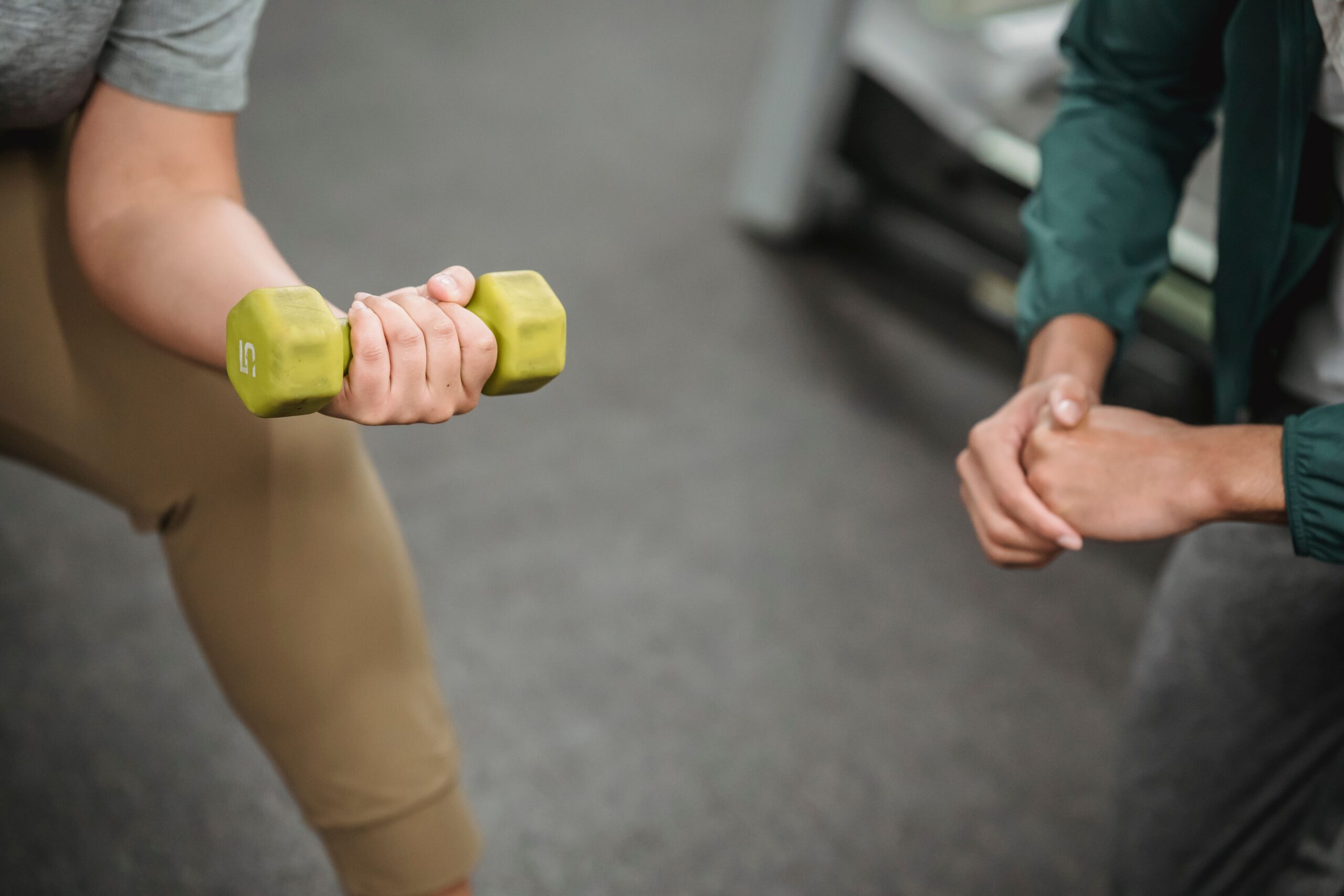
Creatine has moved from the gym shelf to menopause forums, podcasts and wellness newsletters aimed at women in midlife. It’s had a busier few years than most supplements. Humanic Blue separates what’s actually been tested in women from what’s been extrapolated from men, mice or marketing—a useful distinction if you’re considering creatine for women during and after menopause.
Here’s how the research shakes out. A 2026 meta-analysis—a study that combines results from several trials—of seven trials in postmenopausal women found small average gains in lean mass and leg-press strength, while bone density did not improve overall. The apparent benefits came mainly from trials pairing at least 5 grams a day with resistance training, but that subgroup result is exploratory rather than proof of a universal dose. One newer, eight-week trial in perimenopausal or menopausal women reported a reaction-time and brain-creatine signal from one low-dose specialty formulation; it did not establish relief from hot flashes or sleep problems. No trial shows that creatine helps women live longer. Several researchers behind the evidence have creatine-industry relationships, which matters when weighing modest and still-uncertain effects.
Below, we work through the four claims together: what’s been tested, and the funding context.
Key Takeaways
- Creatine plus resistance training produced small gains in lean mass and strength in postmenopausal women; without training, low doses showed no effect.
- Bone density didn’t change overall in pooled trials.
- Mood and cognition findings are inconsistent, and menopause-symptom relief has not been established.
Claim 1: Does creatine help muscle and strength?
The muscle-and-strength claim has been tested in several trials. A 2026 systematic review and meta-analysis in the Journal of the International Society of Sports Nutrition pooled seven randomized trials in postmenopausal women, average age about 62. The trials lasted from about three months to two years.
Compared with placebo, creatine increased lean mass—body tissue other than fat—by an average of 0.37 kg and the weight women could press on a leg-press machine by 7.5 kg. The apparent gains occurred in subgroup analyses of trials using at least 5 g/day with resistance training; trials using 3 g/day or less without training did not show measurable effects. Because these were subgroup findings across only seven trials, they are better treated as a pattern to test than a settled dose rule. Adverse events were generally mild and similar to placebo, and the reported kidney measures did not differ between groups.
For scale, 0.37 kg is less than a pound of lean mass. The pooled participants averaged about 62 years old, and the trials lasted from about three months to two years, so the estimate does not tell us what every woman in perimenopause or later life should expect. Why lean mass falls during menopause, and what else protects it, is covered in Protect Muscle During Menopause.
Claim 2: Bone
Creatine is often marketed for bone after menopause. The same meta-analysis found no significant overall improvement in bone mineral density. That leaves a possible bone benefit unproven rather than proving that no formulation, dose or longer exposure could ever help.
The two long trials behind that conclusion, one with training and one without, are covered in detail in Creatine After 50. Neither improved bone density; the training trial reported changes in hip-bone shape and structure that the researchers interpreted as favorable, a secondary finding rather than evidence of fewer fractures.
What separates a finding about muscle strength from evidence about bone density?
Claim 3: What about mood and cognition?
Creatine is studied for the brain because the brain also uses the creatine energy system. The findings most relevant to women do not all point in the same direction.
A 2012 trial in the American Journal of Psychiatry randomly assigned women with major depression to the antidepressant escitalopram plus either 5 grams of creatine a day or placebo for eight weeks. Depression scores improved faster with creatine, beginning at week two. Overall adverse-event frequency was similar, although discontinuation was higher in the creatine group (32.0% versus 18.5%). This was a small trial of creatine added to an antidepressant, not a menopause trial, and it does not justify using creatine in place of depression care.
For memory and thinking, the direct evidence in older women includes a null result. A 24-week randomized trial assigned apparently healthy older women to four small groups: creatine with or without strength training, or placebo with or without training. Strength training improved strength and depressive-symptom scores, but adding creatine did not significantly improve the measured cognitive or emotional outcomes.
A newer eight-week randomized trial enrolled apparently healthy perimenopausal or menopausal women, with a mean age of about 50, across three low-dose specialty-creatine groups and placebo. The 1,500 mg/day creatine-hydrochloride group had a better reaction-time result and higher frontal-brain creatine than placebo. With roughly nine participants per arm, multiple formulations and outcomes, and no conventionally significant mood result, this is a signal that needs independent replication—not established cognitive treatment.
How much of the mood and cognition evidence directly addresses the menopause transition?
Claim 4: Does creatine ease hot flashes, sleep or other symptoms?
This section is short for a reason. The small specialty-creatine trial enrolled perimenopausal or menopausal women and tracked clinical outcomes, but its abstract does not report a benefit for hot flashes, night sweats or sleep. We found no randomized evidence establishing creatine as a treatment for those symptoms. Treatments supported by menopause-specific evidence, including hormone therapy for appropriate candidates, are covered in Menopause and Longevity.
The funding context
Every research story has a backstory. Creatine research has close ties to industry, and the key women’s-health papers are no exception. The 2026 meta-analysis reported no conflict specific to that review, but it also disclosed that one author chairs an Alzchem-supported scientific advisory board and another leads a society that sometimes receives funding from creatine companies. Alzchem contributed to the publication fee, and the review was not prospectively registered.
That doesn’t make the findings wrong. The meta-analysis pooled randomized trials and reported null results for bone. It’s a reason to weigh the modest size of the effects and look for independent replication.
What’s Interesting
The muscle comparisons have a particular pattern: trials pairing creatine with training found small added muscle and strength gains, while trials using low doses without training found no measurable muscle effect. Those comparisons do not isolate the contribution of dose from the contribution of training, and they do not settle the separate brain or mood questions. Creatine gets the headlines; in the muscle trials, the leg press was part of the story too.
The averages also come from particular women. The pooled muscle trials enrolled postmenopausal women with an average age of about 62, the depression trial enrolled women already taking escitalopram, and the newer menopause trial was very small and short. Those populations cannot be blended into one promise for every woman during and after menopause.
What This Means in Practice
For women interested in living longer and better, these studies address muscle and strength rather than lifespan. They tested creatine alongside particular training regimens; they do not establish a supplement or exercise plan for every woman.
- Training was part of the positive muscle findings. The trials reporting added muscle benefits paired creatine with resistance training.
- The dose pattern is exploratory. The positive subgroup in the postmenopausal review used at least 5 g/day with training; comparisons between subgroups do not establish an appropriate dose for an individual.
- Bone-density and symptom benefits remain unestablished. The evidence has not demonstrated improved bone density or relief from hot flashes and night sweats.
- Tell your clinician, especially before kidney tests. The de Souza E Silva review found that creatine can modestly raise blood creatinine, a substance used to estimate kidney function, without necessarily reducing directly measured kidney filtration. That difference can complicate test interpretation.
- If you’re treated for depression, discuss any supplement with your prescriber rather than adding it yourself.
A clinician certified in menopause care can address symptoms and bone health. A physical therapist or qualified trainer can build a resistance program.
Bottom Line
Creatine for women during and after menopause has trial evidence for muscle: small average gains in lean mass and strength in trials that paired at least 5 grams a day with resistance training. Bone density did not improve overall. Mood and cognition results are mixed, and a tiny new menopause trial has not established relief of hot flashes or sleep problems. Industry relationships are common in this literature. The small muscle gains were reported when creatine was added to training; they do not establish that creatine helps women live longer.
A NOTE FROM LONGEVITY365
We read research, consult expert perspectives and work to make complicated health information easier to understand. What you’re reading here reflects how we’ve interpreted and organized that information. It is educational content—not personal medical advice, diagnosis or treatment guidance.
We’re not perfect, and neither is the available research. Evidence changes, new studies emerge and what’s appropriate for one person may not be appropriate for another.
Use this article as a starting point for your own research and conversations with qualified professionals. Always talk with your doctor or another trusted healthcare professional before making decisions that could affect your health, particularly if you take medications, are receiving treatment, have existing health conditions, are pregnant or have other circumstances that could affect what’s appropriate for you.
Reader Questions
A few questions to carry into the comments or your next conversation. Please leave out identifying or personal medical details.
- 01What would you want to know before putting "Creatine for Women During and After Menopause" into the same conversation as sleep, food, movement, and medical care?
- 02Which evidence boundary stood out most: lifespan, function, symptoms, biomarkers, dose, safety, or who was actually studied?
- 03What question would help keep a supplement conversation grounded instead of turning it into a shopping list?
Extra Insights & Sources
The evidence summaries and linked sources behind this article.
What We Know
- In subgroup analyses, trials combining resistance training with at least 5 g/day showed small gains in lean mass and strength in postmenopausal women. Supported, with subgroup uncertainty.
- Trials using 3 g/day or less without training showed no measurable muscle effect. Supported (null subgroup).
- Bone density didn’t change overall. Supported (null).
- Creatine was well tolerated in these trials, with no change in kidney measures. Supported.
What We Don’t Know
- Whether creatine prevents falls, fractures or disability after menopause. Unknown.
- Whether creatine meaningfully helps mood or thinking during menopause. Unknown; small trials conflict or are inconclusive.
- Whether creatine improves hot flashes or menopause-related sleep problems. Unknown; efficacy has not been demonstrated.
- Whether creatine affects lifespan. Unknown.
Sources
- Naddafha et al., Journal of the International Society of Sports Nutrition (2026), PMID 42141930 — Systematic review and meta-analysis of seven randomized trials (608 postmenopausal women; mean age about 62; 12–104 weeks). Supports the pooled lean-mass, leg-press, bone-density and adverse-event findings. The dose/training patterns are subgroup results; most included trials had some risk-of-bias concerns. The review was not prospectively registered and disclosed creatine-industry relationships and publication support.
- Lyoo et al., American Journal of Psychiatry (2012), PMID 22864465 — Eight-week double-blind randomized trial in 52 women with major depressive disorder taking escitalopram. Supports the faster depression-score improvement and adverse-event/discontinuation figures; it was small and not menopause-specific.
- Alves et al., Experimental Gerontology (2013), PMID 24098469 — Twenty-four-week randomized trial in 56 apparently healthy older women, divided among creatine/placebo and training/no-training groups. Supports the null creatine findings for measured cognition and emotional state; each arm contained only 14 participants.
- CONCRET-MENOPA trial, Journal of the American Nutrition Association (2026), PMID 40854087 — Published March–April 2026, volume 45(3), pages 199–210; first published online August 25, 2025; DOI 10.1080/27697061.2025.2551184. Eight-week double-blind randomized trial in 36 apparently healthy perimenopausal or menopausal women testing three low-dose specialty-creatine regimens against placebo. Supports the reaction-time and frontal-brain-creatine signals and the lack of a conventionally significant mood result. Its small arms, multiple outcomes and formulations limit inference; the abstract does not establish hot-flash or sleep benefit.
- de Souza E Silva et al., BMC Nephrology (2026), PMID 42507286 — Systematic review and meta-analysis of creatine and kidney-function measures. Supports the distinction between a modest creatinine rise and no significant change in measured glomerular filtration; study heterogeneity and generally short follow-up limit long-term certainty.
Leave a Reply