
Epigenetic Clocks
Epigenetic Age Tests Explained
An epigenetic age test reads methylation tags on your DNA and runs them through a statistical clock. Here's what the number is made of, and what it isn't.
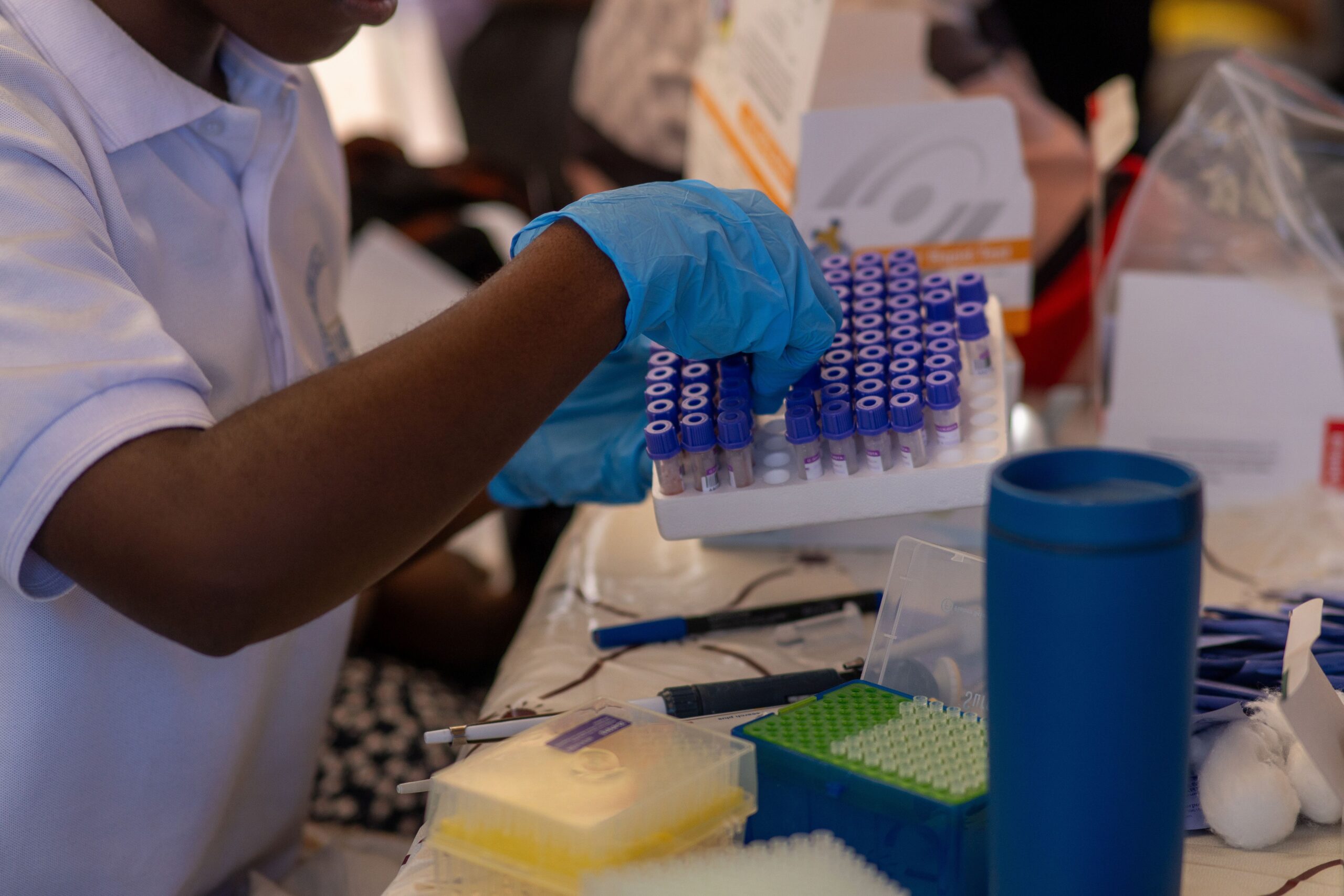
An epigenetic age test reads DNA methylation—chemical marks at specific locations on DNA—and applies a statistical model called an epigenetic clock. The result may estimate calendar age, age-related risk or pace of aging, depending on the clock. Those are three different questions wearing one very convenient name tag. Humanic Blue is unpacking which question each clock can answer.
In large human cohorts, newer clocks are associated with disease and mortality. That does not make one person’s score a diagnosis, a lifespan forecast or proof that lowering the number will help them live longer. Repeat testing can also be affected by laboratory noise, tissue type and the population used to build the model. For living longer and better, the result is best understood as a research-derived biomarker with important limits—not a second birth certificate.
Key Takeaways
- DNA methylation can estimate chronological age across many tissues. Established.
- Outcome-trained clocks are associated with disease and mortality in cohorts, but they are not individual diagnoses or expiration dates. Supported observational evidence.
- In one two-year randomized calorie-restriction trial, DunedinPACE changed modestly while PhenoAge and GrimAge did not. Long-term clinical benefit was not tested. Preliminary.
- Technical replicates, sample tissue and ancestry can change clock performance. Supported limitation.
- Lowering a consumer epigenetic-age score has not been shown to extend human lifespan or healthspan. Unknown.
What does an epigenetic age test measure?
Methylation is the attachment of a small chemical group to DNA, often at locations called CpG sites. These marks can be related to gene regulation, and their patterns change with age. A test extracts DNA from blood or saliva, measures methylation at many locations and feeds selected values into an algorithm.
Steve Horvath’s foundational 2013 multi-tissue clock was developed from about 8,000 samples across 51 healthy tissues and cell types. Its formula used 353 CpG sites to estimate chronological age. That showed that age-related methylation patterns were measurable across tissues; it did not establish that the selected marks cause aging.
The laboratory may read hundreds of thousands of sites, but the clock uses a defined subset or combination of them. The output depends on the model, its training data, the sample tissue and how the laboratory processes the sample. Same chemistry, different recipe.
Why different clock generations answer different questions
First-generation clocks such as Horvath and Hannum were trained mainly to reproduce chronological age. A close match to a birthday shows age prediction, not necessarily disease prediction.
Second-generation clocks were trained with health-related outcomes. DNAm PhenoAge combined age with nine clinical blood measures before building a DNA-methylation model to estimate that combined blood-test score. DNAm GrimAge used methylation-based estimates related to proteins in the liquid part of blood and smoking to predict time-to-death in cohorts.
Pace clocks ask how quickly measured physiology changed rather than how old it appears. DunedinPACE was built from a group of about 1,000 New Zealanders born in the same year whose cardiovascular, metabolic, kidney, liver, immune, dental and lung measures were tracked from age 26 to 45. Its 173-site methylation algorithm estimates pace relative to roughly one year of physiological change per calendar year.
These labels matter. A chronological-age clock, an outcome-trained risk marker and a pace measure are not interchangeable, even if every report uses the word age.
Which question is a clock answering: calendar age, health risk or pace of change?
What do age acceleration and pace mean?
An age-acceleration result usually describes the difference between a clock estimate and the value expected for someone of the same chronological age. A positive value means the estimate is higher than expected; a negative value means lower. It does not mean that many literal years have been added to or removed from a life.
A pace result uses a different scale. DunedinPACE is centered near 1.0, representing about one year of measured physiological change per calendar year in its reference framework. A value above or below 1.0 is a model output, not a stopwatch inside the body.
For either result, the comparison group is doing much of the work. The number says how the sample fits a model trained in other people. It does not directly observe every organ, determine a cause or predict a date of death.
What the human evidence supports
A large 2025 Nature Communications comparison followed about 19,000 people in Scotland for ten years. Newer clocks were more closely linked to later disease than clocks designed mainly to estimate birthdays. But adding a clock to a prediction model improved its accuracy by more than one percentage point in only a minority of the clock–disease links examined. A score can be statistically linked to illness while adding little to a model’s ability to predict it. The exact comparisons are below.
Intervention evidence is thinner. An additional methylation analysis of the CALERIE calorie-restriction trial included healthy adults without obesity assigned to calorie restriction or an unrestricted control diet for two years. The intervention produced a roughly 2%–3% relative slowing on DunedinPACE, but no significant change in PhenoAge or GrimAge. The effect was small, the clocks disagreed, and the study did not test whether changing a clock reduced disease or extended life.
That distinction matters for living longer and better. A biomarker may respond before a clinical outcome, which makes it useful in research. But until trials connect a clock change with better health outcomes, the changed number remains an indirect measure, not proof of benefit.
Why can the number wobble?
Technical repeatability is one limit. In a 2022 Nature Aging study, six established clocks differed by as much as nine years when the same sample was measured again. Redesigned versions used a statistical method called principal components to reduce noise and brought most repeat results within 1.5 years. The authors disclosed licensing and commercial relationships with Elysium, and Elysium supplied replicate datasets.
Tissue is another limit. A 2025 Clinical Epigenetics analysis pooled paired blood and saliva from about 100 people ages 5 to 74. Cross-tissue agreement was moderate for PCGrimAge and DunedinPACE and poor for first-generation clocks. Blood and saliva are therefore not automatically interchangeable, even when the report format looks identical.
Population fit matters too. A 2026 eLife study found that many clocks predicted age less accurately in groups of people with mixed genetic ancestry than in White comparison groups. Age-acceleration patterns related to Alzheimer’s disease also differed across groups. The analysis does not invalidate every clock or consumer product. It does show why a model’s training population belongs in the interpretation.
Causality remains unsettled. A 2024 Nature Aging study used genetic methods to identify methylation sites potentially related causally to aging traits. Those potentially causal sites were not especially common among the sites used by existing clocks. A clock can be associated with aging outcomes without identifying what drives them.
What would help separate measurement noise from a lasting change in an epigenetic score?
Regulation and current consumer products
Consumer tests also sit in a changing regulatory landscape. The FDA says support varies across direct-to-consumer tests. Its 2024 rule asserting broader oversight of laboratory-developed tests was vacated by a federal court in March 2025, and the agency restored the earlier regulatory text in September 2025. That history should not be compressed into a blanket claim that every epigenetic test is either FDA-approved or wholly unregulated.
The products describe themselves more narrowly than the word age may imply. As checked September 29, 2026, TruDiagnostic TruAge listed a finger-prick test for $499, and Elysium Index listed a saliva kit for $299. Vendor pages support those mechanics and prices; they do not independently establish clinical benefit. DunedinPACE is licensed to TruDiagnostic, and the Higgins-Chen clock-reliability work has disclosed Elysium relationships.
What’s Interesting
The word clock makes the result sound like time being read from a dial. It is closer to a scoring formula trained for a particular job. Change the job—from birthday prediction to mortality association to pace—and the meaning changes with it.
CALERIE makes that visible: the same intervention moved one pace clock but not two age clocks. The disagreement is not necessarily a failure. It is a reminder that the models were built to answer different questions.
What This Means in Practice
Before buying or retesting, ask the vendor:
- Which clock produces each reported number, and what was it trained to predict?
- Was the clock independently validated in the same tissue—blood or saliva—used by this test?
- What is the published test-retest error in years or pace units?
- Will a later sample use the same laboratory platform, clock version and tissue?
- Which populations were represented in development and validation?
- What clinical decision, if any, should change because of the result?
- Who can access the sample and results, may the data be shared or sold, how long are both kept, and can you request deletion?
If you already have a report, do not treat a single result as a diagnosis or compare scores produced by different clocks as if they were the same unit. If a result is worrying, review it with a clinician who can place it beside standard medical history, examination and validated tests. For personal tracking, changing the clock version, tissue or laboratory platform can make results harder to compare. Even with those held constant, a change larger than the stated laboratory error may still reflect short-term biological variation rather than lasting health improvement.
The three clock names readers encounter most often are compared directly in DunedinPACE vs. GrimAge vs. PhenoAge.
Bottom Line
Epigenetic age tests measure real methylation patterns and apply legitimate statistical models. Newer clocks predict health outcomes in groups better than early birthday clocks. The harder question is what one score means for one person.
Technical noise, sample type, ancestry and model choice can all affect the answer. Intervention evidence has not shown that lowering a consumer score causes longer life or better health. The useful interpretation is therefore narrow: this is a research-derived biomarker, not a diagnosis, lifespan forecast or verdict on how well someone is aging.
A NOTE FROM LONGEVITY365
We read research, consult expert perspectives and work to make complicated health information easier to understand. What you’re reading here reflects how we’ve interpreted and organized that information. It is educational content—not personal medical advice, diagnosis or treatment guidance.
We’re not perfect, and neither is the available research. Evidence changes, new studies emerge and what’s appropriate for one person may not be appropriate for another.
Use this article as a starting point for your own research and conversations with qualified professionals. Always talk with your doctor or another trusted healthcare professional before making decisions that could affect your health, particularly if you take medications, are receiving treatment, have existing health conditions, are pregnant or have other circumstances that could affect what’s appropriate for you.
Reader Questions
A few questions to carry into the comments or your next conversation. Please leave out identifying or personal medical details.
- 01After reading this, what would you want a test result to actually help you decide?
- 02Which distinction changed how you read the evidence: "What does an epigenetic age test measure" or "Regulation and current consumer products"?
- 03What would you ask a clinician, lab, or qualified professional before letting a number change a health decision?
Extra Insights & Sources
What We Know
- Age-related DNA-methylation patterns can estimate chronological age across tissues. Established.
- Outcome-trained clocks are associated with disease and mortality in human cohorts. Supported observational evidence.
- Technical replicates and sample tissue can produce materially different results. Supported.
- Clock performance can vary across populations and genetic ancestries. Supported limitation.
What We Don’t Know
- Whether changing an epigenetic-age score causes a person to live longer or avoid disease. Unknown.
- Whether a consumer report adds useful prediction beyond standard clinical information for an individual. Uncertain.
- Whether every commercial laboratory’s stated reproducibility applies to real-world repeat samples. Unknown.
- Which single clock, if any, should guide clinical decisions. Uncertain.
Clock-development details
Horvath, 2013. The multi-tissue model was developed from approximately 8,000 samples in 82 methylation datasets spanning 51 healthy tissues and cell types. It selected 353 CpG sites to predict chronological age. Broad tissue coverage supports age prediction; the study did not test consumer use or show that clock sites cause aging.
Levine et al., 2018. PhenoAge was developed by first combining chronological age with nine clinical measures in 9,926 NHANES III adults, then creating a 513-CpG methylation predictor in 456 InCHIANTI participants. It was tested in several cohorts and associated with mortality and health outcomes. The associations are cohort estimates, not individual forecasts.
Lu et al., 2019. GrimAge was trained in 1,731 Framingham participants using methylation surrogates related to seven plasma proteins and smoking, then validated in 6,935 people across five cohorts. It predicted time-to-death and disease outcomes, but its name and scale do not make it a clinical diagnosis.
Belsky et al., 2022. DunedinPACE was derived from 1,037 members of a 1972–1973 New Zealand birth cohort. Nineteen organ-system measures were assessed at ages 26, 32, 38 and 45, then distilled into a 173-CpG blood algorithm. Development in a single-year, single-city cohort is an important generalizability limit, and the authors called for follow-up in more diverse samples.
Prediction and intervention details
Mavrommatis et al., 2025. The prospective Generation Scotland analysis included 18,859 participants, 14 clocks, 174 incident diseases and ten years of follow-up. Second- and third-generation clocks outperformed first-generation clocks. Among 176 statistically significant clock–disease associations, adding a clock improved classification accuracy by more than one percentage point in 32. The analysis demonstrates association and incremental prediction, not clinical utility or causation.
Waziry et al., 2023 (CALERIE). The post hoc analysis used blood from a two-year randomized trial of 220 healthy adults without obesity, ages 21–50, assigned to a 25% calorie-restriction target or unrestricted intake. Participants in the intervention achieved about 12% restriction on average. DunedinPACE slowed by roughly 2%–3%; PhenoAge and GrimAge did not change significantly. The study did not measure effects on chronic disease or mortality, and the authors described the effect as small.
Reliability, tissue and population details
Higgins-Chen et al., 2022. Across six established clocks, technical replicate differences reached nine years. Principal-component versions brought most replicate pairs within 1.5 years. The work addresses analytical reliability, not whether a more repeatable clock is clinically useful. Metrics developed by Morgan Levine and Albert Higgins-Chen were licensed to Elysium through Yale; Elysium supplied replicate datasets, and authors disclosed employment or advisory relationships.
Zarandooz and Raffington, 2025. The researchers pooled paired blood and saliva data from 107 people ages 5–74 across three datasets. After cell-composition correction, cross-tissue agreement was 0.76 for PCGrimAge and 0.68 for DunedinPACE, while first-generation clocks ranged from 0.19 to 0.25. The small, age-diverse pooled sample supports caution about substituting saliva for blood.
Cruz-Gonzalez et al., 2026. The eLife Version of Record evaluated commonly used clocks in genetically admixed participants from the Americas and replicated findings in three external cohorts. Most clocks were less accurate in admixed groups than in White comparison groups, especially with substantial African ancestry. This supports a population-transportability limitation; it does not test every consumer laboratory.
Ying et al., 2024. The study applied epigenome-wide Mendelian randomization to identify CpG sites potentially causal for lifespan, healthspan, frailty and related traits. Existing clocks and ordinary age-related methylation changes were not enriched for those sites. Mendelian-randomization assumptions and the need for further validation limit causal interpretation.
Sources
- Horvath S, Genome Biology (2013). Primary multi-tissue chronological-age clock study; approximately 8,000 samples, 82 datasets, 51 tissues/cell types and 353 CpG sites. Supports mechanism and development details, not consumer clinical use. Open paper
- Levine ME, et al., Aging (2018). Primary PhenoAge development and validation study. Supports its clinical-measure training target, 513-CpG model and cohort-level mortality/health associations; does not provide individual prognosis. Open paper
- Lu AT, et al., Aging (2019). Primary GrimAge development and multi-cohort validation study. Supports training population, methylation surrogates and time-to-death associations; observational prediction is not causation. Open paper
- Belsky DW, et al., eLife (2022). Primary DunedinPACE development study in the 1,037-member Dunedin birth cohort, using 19 organ-system measures over two decades and a 173-CpG algorithm. Supports pace interpretation and development limits. DunedinPACE is licensed to TruDiagnostic, which Belsky has advised. Open paper
- Mavrommatis C, et al., Nature Communications (2025). Prospective comparison of 14 clocks against 174 diseases and mortality in 18,859 Generation Scotland participants over ten years. Supports group-level predictive comparisons and the limited incremental-classification result. Open paper
- Waziry R, et al., Nature Aging (2023). Additional methylation analysis of the two-year CALERIE randomized trial in 220 healthy adults without obesity. Supports the small DunedinPACE change and null PhenoAge/GrimAge results; no disease or mortality endpoint was tested. Paper
- Higgins-Chen AT, et al., Nature Aging (2022). Technical-reliability study of six clocks and principal-component versions. Supports nine-year replicate deviations and improved repeatability; commercial licensing, supplied data and author relationships are disclosed above. Paper
- Zarandooz S, Raffington L, Clinical Epigenetics (2025). Paired blood–saliva analysis of 107 people ages 5–74. Supports the tissue-substitution limitation and reported agreement estimates; the pooled sample was small. Open paper
- Cruz-Gonzalez S, et al., eLife (2026). Version-of-Record study of methylation-clock portability across genetically admixed populations with replication in three external cohorts. Supports the population-generalizability limitation. Open paper
- Ying K, et al., Nature Aging (2024). Genetic causal-inference study of methylation sites and aging traits. Supports the finding that existing clocks were not enriched for identified causal sites; the method does not settle causality by itself. PubMed
- FDA, Laboratory Developed Tests and Direct-to-Consumer Tests. Current federal regulatory context: the 2024 LDT rule was vacated in March 2025 and the earlier text restored in September 2025; FDA notes that scientific and clinical support varies among consumer tests. LDT status; consumer-test overview
- Current vendor pages, accessed September 29, 2026. Used only for sample type, listed price and product-description facts, not independent evidence of prediction or benefit. TruDiagnostic; Elysium
Leave a Reply