
Cardio & VO2 Max
Improve VO2 Max After 50
Aerobic capacity declines faster later in life, but a standardized 20-week program produced similar percentage gains across adults ages 17 to 65.
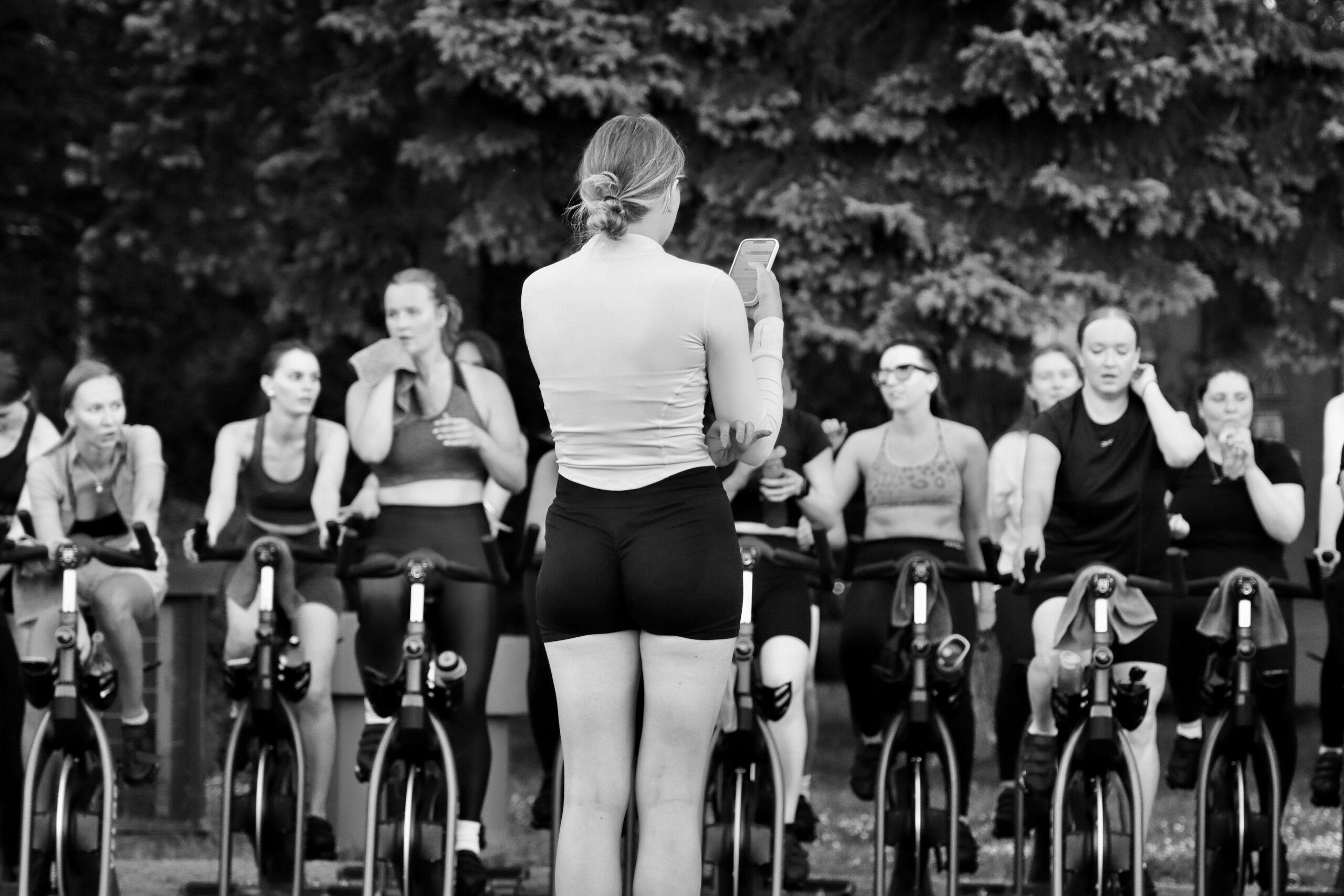
After 50, many people notice that the hills feel steeper and recovery takes longer. That’s partly real: aerobic capacity declines faster the older you get. Humanic Blue asks whether training can still move the number, and by how much.
VO2 max describes how much oxygen your body can use during hard exercise. It can improve after 50: in the HERITAGE Family Study, sedentary adults up to 65 gained a similar percentage across age groups after supervised cycling, although individual changes varied. Aging still brings a faster decline in aerobic capacity. Training gains and age-related decline can happen together. Whether raising VO2 max after 50 helps people live longer is a separate question: higher fitness is associated with lower death rates, but the trials here did not test lifespan.
Below: how fitness changes with age, what training studies found and why a small measured change can be hard to interpret.
Key Takeaways
- In the Baltimore aging study, aerobic capacity declined faster in later decades, especially in men.
- In HERITAGE, age had little influence on the percentage gain from the same supervised training program in adults up to 65.
- A small study in young men measured response by cycling power, not VO2 max. It cannot show that more exercise will make every adult over 50 respond.
Why does the fitness curve get steeper?
Most early estimates of fitness decline came from comparing people of different ages at one point in time. The Baltimore Longitudinal Study of Aging, run by the National Institute on Aging, instead repeatedly tested adults ages 21 to 87 without clinical heart disease over several years.
Its statistical model estimated that peak oxygen uptake declined 3% to 6% per decade in participants in their 20s and 30s and more than 20% per decade in the 70s and beyond. Decline was steeper in men from the 40s onward. Similar rates appeared across four groups defined by their reported leisure activity, but that observational comparison did not assign training and cannot show that exercise fails to help.
The body’s oxygen supply depends both on how much blood the heart pumps and how much oxygen working tissues take from it. The 2005 study could not cleanly separate those contributions. A 2024 follow-up analysis of healthy participants in the same aging study did: declining oxygen use by tissues was more closely associated with declining aerobic capacity than reduced blood flow from the heart. However, the apparent difference between participants under and over 50 was not statistically conclusive. These are cohort findings, not a fixed personal forecast. Where your number sits for your age is covered in Good VO2 Max by Age.
Does age blunt the response?
The HERITAGE Family Study tested this question directly. A 2001 analysis included sedentary Black and White adults ages 17 to 65. Everyone completed the same supervised, 20-week cycling program: three sessions a week, progressing from 30 minutes at a heart rate associated with 55% of baseline VO2 max to 50 minutes at 75%.
- VO2 max increased on average in every age group.
- Older participants gained fewer absolute units but had a similar percentage change.
- High, medium and low observed changes occurred across ages, sexes, the two racial groups and starting fitness levels.
The authors judged age, sex, race and starting fitness to have little influence on percentage response under this standardized program. But HERITAGE followed families through training without randomly assigning a separate group to remain inactive, and the age analysis stopped at 65. It supports trainability through the early 60s; it does not establish the same response in every individual or in later decades.
How would you separate an average training response from the range of individual responses?

What if progress is hard to measure?
Some people train and see little measurable change in one fitness outcome. A 2017 study tested whether its response classification changed with training dose.
The researchers split healthy young men into groups doing one to five 60-minute cycling sessions a week for six weeks. They defined non-response as a change in maximal cycling power within the test’s typical measurement error—not as failure to improve VO2 max. By that definition, the share below the response threshold fell from 69% with one weekly session to zero with four or five. The full dose table is in Extra Insights.
Participants below the threshold then completed another six weeks with two extra weekly sessions; all subsequently exceeded the maximal-power threshold. Changes in VO2 max were associated with changes in maximal power, and hemoglobin mass—the total amount of the oxygen-carrying protein in blood—was the strongest measured predictor of the VO2-max change.
This does not prove that the extra dose caused every second-period change. A published critique noted the absence of a nontraining control and the absence of a group that continued its original dose for another six weeks, making training duration, biological variation and measurement error difficult to separate from dose. The authors defended their repeated-dose design. For adults over 50, the study leaves the practical question unresolved: it did not test whether adding those sessions improves VO2 max in this age group.
What could a small measured change leave unanswered about a training response?
What does a tested plan look like?
A trial centered on this age range enrolled healthy sedentary adults ages 45 to 64, averaging 53. Over two years, a progressive program improved VO2 max by 18%. It peaked at five to six hours a week with two interval sessions of four hard, four-minute efforts separated by recovery periods, then used one interval session a week during maintenance. The full eligibility limits, progression and outcome details are covered in Improve VO2 Max After 40.
A separate question—muscle loss after 50—is covered in Prevent Muscle Loss After 50.
Starting safely
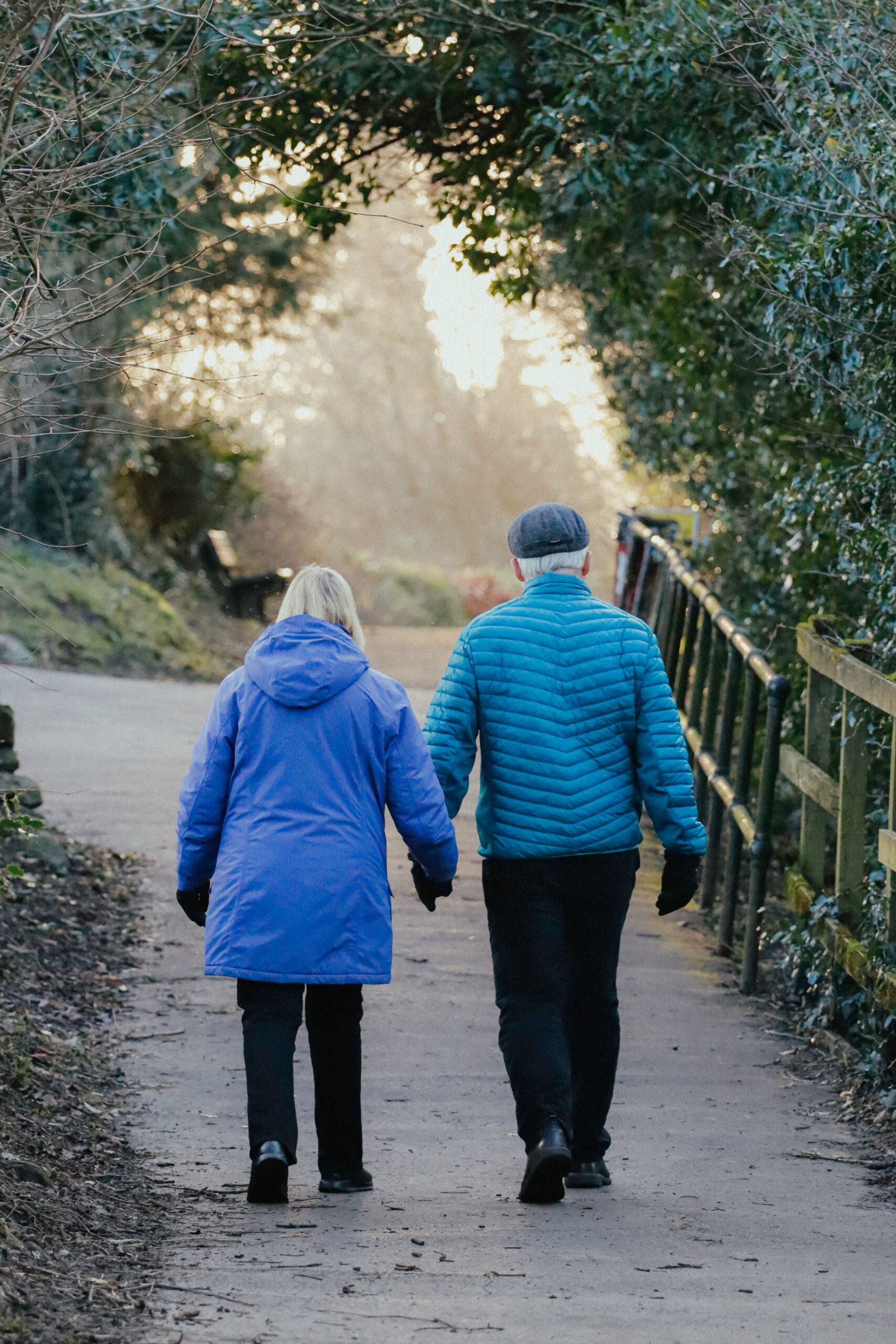
The American College of Sports Medicine’s screening model considers current activity, symptoms, known heart or blood-vessel disease, metabolic disease such as diabetes, or kidney disease, and intended intensity. Age alone does not mean every person needs medical clearance. Under that model, the starting intensity and need for clearance depend on those factors; it does not assign everyone over 50 the same plan. Heart-rate targets also need adjustment or another effort measure when medications alter heart rate.
What’s Interesting
The two big findings can seem to point in opposite directions. In the Baltimore cohort, decline was similar across self-reported activity quartiles. In HERITAGE, supervised structured training improved VO2 max across age groups. Those results are compatible because one study observed long-term trajectories and the other delivered a specific 20-week program. Self-reported leisure activity is not the same exposure as monitored aerobic training.
What This Means in Practice
For readers interested in living longer and better, HERITAGE shows that fitness can improve into the early 60s. It does not predict any one person’s gain or establish a longer lifespan. The distinction matters when reading a training result:
- Percentage versus absolute gain: a similar percentage increase can mean fewer oxygen-use units when the starting value is lower.
- A tested program versus a personal plan: the two-year trial used gradual progression in selected healthy adults; its schedule does not establish suitability for everyone over 50.
- A small measured change versus no benefit: training consistency, test conditions and ordinary measurement variation can complicate interpretation. The young-men-only dose study does not settle what to change for an older adult.
- Age versus screening factors: the American College of Sports Medicine considers symptoms, known disease, current activity and intended intensity, rather than age alone.
A clinician can advise on safety. An exercise physiologist or certified trainer can build the plan, and a lab test can measure your baseline.
Bottom Line
The studies here show that aerobic capacity can improve after 50, even as its age-related decline becomes steeper. The Baltimore cohort found that peak aerobic-capacity decline accelerates in later decades, while HERITAGE found similar percentage gains across ages 17 to 65 after the same 20-week program. A young-men-only dose study does not establish that simply doing more will make every adult over 50 respond. Higher fitness is associated with lower mortality, but whether raising it after 50 helps people live longer has not been established. The American College of Sports Medicine bases screening on symptoms, known disease, current activity and planned intensity.
A NOTE FROM LONGEVITY365
We read research, consult expert perspectives and work to make complicated health information easier to understand. What you’re reading here reflects how we’ve interpreted and organized that information. It is educational content—not personal medical advice, diagnosis or treatment guidance.
We’re not perfect, and neither is the available research. Evidence changes, new studies emerge and what’s appropriate for one person may not be appropriate for another.
Use this article as a starting point for your own research and conversations with qualified professionals. Always talk with your doctor or another trusted healthcare professional before making decisions that could affect your health, particularly if you take medications, are receiving treatment, have existing health conditions, are pregnant or have other circumstances that could affect what’s appropriate for you.
Reader Questions
A few questions to carry into the comments or your next conversation. Please leave out identifying or personal medical details.
- 01Which measurement or milestone would feel useful to track without letting it take over the whole point of moving?
- 02Which real-world barrier did the article address most usefully: time, confidence, access, recovery, or knowing where to start?
- 03What question would you bring to a clinician, physical therapist, trainer, or exercise professional after reading about Improve VO2 Max After 50?
Extra Insights & Sources
The evidence summaries and linked sources behind this article.
What We Know
- Peak aerobic capacity declined faster in later decades in one longitudinal healthy-adult cohort, especially in men. Supported.
- Sedentary adults up to 65 had similar percentage gains across age groups after the same 20-week supervised cycling program. Supported.
- Observed response magnitudes varied across participants, but separating true individual trainability from measurement and biological variation requires controlled repeated testing. Uncertain at the individual level.
What We Don’t Know
- Whether raising VO2 max after 50 adds years of life. Unknown. The mortality link is observational.
- Whether more training reliably changes VO2-max response in adults over 50. The cited dose experiment studied maximal cycling power in young men. Unknown.
- How much the decline itself can be slowed by lifelong training. Uncertain. The Baltimore study found similar decline rates across self-reported activity levels.
Additional trial detail
The two-year program summarized above enrolled 61 healthy sedentary adults ages 45 to 64, averaging 53. The detailed progression and eligibility are in the linked article, Improve VO2 Max After 40.
Dose-study response results
The study classified response by change in maximal cycling power relative to the test’s measurement error. It did not define response by VO2 max, and every participant was a healthy young man.
| Sessions per week | Participants below the response threshold |
|---|---|
| 1 | 69% |
| 2 | 40% |
| 3 | 29% |
| 4 | 0% |
| 5 | 0% |
Source Materials
- Fleg et al., Circulation (2005), PMID 16043637 — longitudinal BLSA analysis of 375 women and 435 men ages 21–87, free of clinical heart disease, followed a median 7.9 years; supplies the decade-specific modeled decline, sex difference and self-reported-activity analysis. The NIA/NIH cohort was observational and its activity exposure was not assigned.
- Fleg et al., American Journal of Physiology—Heart and Circulatory Physiology (2024), PMID 38874616 — longitudinal analysis of 99 healthy BLSA participants, baseline ages 21–96 and average follow-up 12.6 years; supplies the cardiac-output versus peripheral-oxygen-use analysis. The over/under-50 contrast was not statistically conclusive.
- Skinner et al., Journal of Applied Physiology (2001), PMID 11299267 — HERITAGE analysis of 633 sedentary Black and White adults, 287 men and 346 women ages 17–65; supplies the age, sex, race, baseline-fitness and response comparisons. This was a controlled training cohort without a randomized nonexercise group.
- Sarzynski et al., HERITAGE methods review (2022), PMCID PMC9012529 — supplies the supervised 20-week, 60-session cycling progression, eligibility and test-quality details. HERITAGE was supported primarily by U.S. and Canadian public research grants.
- Montero and Lundby, Journal of Physiology (2017), PMID 28133739 — six-week dose study in 78 healthy young men; supplies the session groups and maximal-power response classifications. It measured VO2 max but defined response using maximal cycling power and had no nontraining control.
- Mazzolari, methodological letter (2018), PMCID PMC6092278 and Montero and Lundby reply, PMCID PMC6092294 — opposing interpretations of the dose study’s missing comparator, measurement error and repeated-dose design; included so the consequential response judgment is attributed rather than settled by the article.
- Riebe et al., ACSM preparticipation screening update (2015), PMID 26473759 — evidence-informed screening framework based on current activity, symptoms or known cardiovascular/metabolic/renal disease, and intended intensity.
- Kodama et al., JAMA (2009), PMID 19454641 — meta-analysis of 33 observational cohorts; supports the association between higher fitness and lower mortality, not a causal claim that increasing VO2 max extends life.
Photo credits
Images from Pexels.
- featured: Photo by Dmitry Ovsyannikov — original Pexels photo.
- inline-1: Photo by Vitaly Gariev — original Pexels photo.
- inline-2: Photo by Oliver Morgan Media — original Pexels photo.
Leave a Reply