
Sleep Trackers
Best Sleep Trackers
No sleep tracker was consistently best in a 2026 meta-analysis. Sleep-stage estimates remain limited; Apple and Samsung offer FDA-authorized apnea-risk alerts.
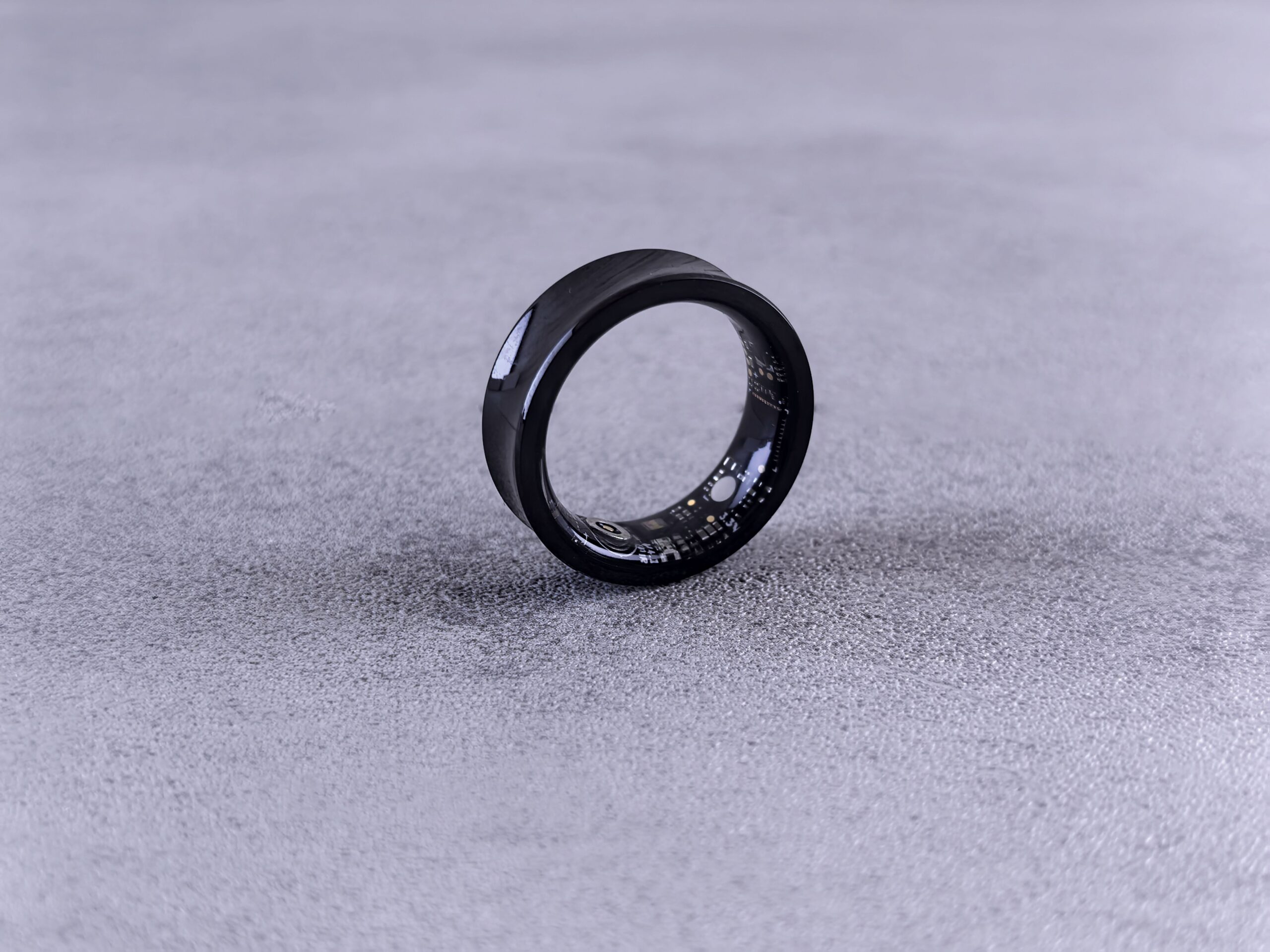
Sleep trackers have gone from novelty to tiny bedside referees, handing out sleep scores before the coffee has even started. The choice now runs from rings and watches to mattress pads and phone apps. Humanic Blue asks a more useful question than which has the prettiest graph: which sleep trackers have been tested against a real sleep lab, and what do they still get wrong?
In a 2026 meta-analysis comparing wearables with clinical sleep recordings, no device performed best across every measure. Oura Ring Gen 3 came closest for time to fall asleep and the share of time in bed spent asleep, while particular Fitbit models performed better on some stage measures. Across devices, trackers tended to overestimate total sleep and miss wakefulness. These results apply to the exact hardware and software studied; they do not establish a timeless brand ranking. Apple has an FDA-authorized watch feature that flags possible sleep-apnea risk. Samsung’s updated feature works with compatible Galaxy Watches or a Galaxy Ring. Neither diagnoses apnea. For living longer and better, treat tracker output as a clue to patterns, not a clinical verdict.
Key Takeaways
- No consumer tracker was consistently most accurate across sleep measures.
- Trackers generally estimate total sleep reasonably well but overestimate it, and sleep stages are much less reliable.
- Apple and Samsung have FDA-authorized features that notify eligible users of possible sleep-apnea risk. Samsung’s current version can use a compatible watch or ring.
- Consumer trackers can’t diagnose sleep disorders.
- Obsessing over tracker scores can worsen sleep for some people. This concern comes from expert commentary and one survey, rather than a trial establishing cause.
- No evidence shows that using a sleep tracker helps people live longer.
How do researchers test sleep trackers?
The benchmark is polysomnography (PSG), an overnight lab study that records brain waves, eye movements, muscle tone and breathing. In a validation study, the consumer tracker and the lab equipment watch the same night unfold, and researchers compare their answers in the morning.
A 2021 US Navy study of healthy young adults found that most devices recognized sleep in at least 93% of the short periods the lab marked as sleep. But they correctly recognized only 18% to 54% of the periods the lab marked as awake. The researchers found mixed results for sleep stages, and the devices tended to do worse on nights of poorer, more disrupted sleep. That last point matters: trackers are least accurate on the nights you’d most want to understand.
Which kind of accuracy is being tested: sleep duration, wake detection or sleep stages?
The trackers side by side
| Tracker type | Examples discussed here | Strength in studies | The catch |
|---|---|---|---|
| Ring | Oura Ring Gen 3; Samsung Galaxy Ring for the Samsung apnea feature | Oura Gen 3 had close agreement for sleep onset and efficiency in the 2026 meta-analysis | Results do not automatically transfer to a different generation; Oura’s detailed analysis requires membership |
| Watch | Apple Watch, Fitbit, Samsung Galaxy Watch, Google Pixel Watch | Some tested Fitbit and Pixel models classified deep sleep better than peers in one study | Every model had stage-specific errors; tested results may change with hardware or algorithms |
| Bed sensor | Withings Sleep Tracking Mat, Google Nest Hub 2 | No device on the body | Bedside devices showed systematic error in time to fall asleep in one study |
| Phone app | SleepRoutine, SleepScore, Pillow | Uses phone sensors rather than a worn device | Performance varied widely; the strongest app result came from a study with company-linked authors |
Rings
The 2026 meta-analysis reviewed 16 studies and pooled 10, largely in healthy adults. For time to fall asleep and the share of time in bed spent asleep, Oura Ring Gen 3 agreed most closely with PSG. That is a result for one generation under the included study conditions, not evidence that every Oura model or future algorithm is most accurate.
Pro: a ring avoids a watch screen and Oura Gen 3 performed relatively well on two timing measures in the meta-analysis. Con: the result is generation-specific. As of September 2026, Oura’s support page lists US membership at $5.99 monthly or $69.99 annually; without membership, Gen 3 and newer users receive three daily scores but not the detailed sleep analysis.
What have studies found about sleep-tracking watches?
Accuracy. In a 2026 study from King Abdulaziz University in Saudi Arabia, an Apple Watch Series 7, Fitbit Charge 5 and Polar Vantage M2 were compared with home PSG in healthy adults aged 18 to 45. The authors reported that the devices generally agreed poorly with PSG. Fitbit overestimated light sleep by about 58 minutes, and Apple Watch underestimated it by about 74 minutes while overestimating rapid eye movement (REM) sleep, the stage associated with vivid dreaming, by about 30 minutes. The authors ranked Apple Watch first, then Fitbit, then Polar, and concluded the devices may suit tracking yourself over time, but not clinical-grade measurement of sleep stages.
In a 2023 Korean study, 75 people recruited through a tertiary hospital and a sleep clinic used a selection of 11 wearable, bedside and phone-based trackers during in-lab PSG. Google Pixel Watch and Fitbit Sense 2 classified deep sleep better than the other tested devices, while results varied markedly across stages and products. Authors affiliated with Asleep and another author held stock or options in Asleep; the company’s SleepRoutine app led the tested products for wake and REM classification.
Sleep apnea alerts. FDA records show two over-the-counter software features authorized to assess possible apnea risk in people not previously diagnosed. Samsung’s original watch-based feature received De Novo authorization in February 2024. The version cleared in July 2026 can use a compatible Samsung Galaxy Watch or Galaxy Ring and bases its result on two nights with sufficient data. Apple’s watch-based Sleep Apnea Notification Feature was cleared in September 2024. FDA’s device classification says these features do not diagnose apnea, replace polysomnography or serve as apnea monitors.
Pro: a compatible device may combine general trend tracking with an authorized apnea-risk notification. Con: each model and software version can have different stage biases. The authorized apnea functions also have eligibility, setup, region and compatibility limits; check the manufacturer’s current instructions rather than assuming every watch supports them.
Bed sensors and apps
The 2023 Korean study also tested bedside devices, including the Withings Sleep Tracking Mat and Google Nest Hub 2, and phone apps. As a group, the bedside devices showed systematic error in estimating how long it took participants to fall asleep.
Pro: no sensor must be worn on the body. Con: sleep-onset estimation was a weakness in that study, and results from one product cannot be transferred to every contactless sensor or app.
What can sleep trackers tell you—and what can’t they?
The 2026 meta-analysis concluded that uneven performance and risk of bias keep wearables from serving as stand-alone diagnostic tools or detailed sleep-stage measures, although repeated measurements may help with personal pattern tracking or research monitoring. The 2023 European Insomnia Guideline is more cautious for people with insomnia: its task force advised against routine tracker use in that population until accuracy is better validated against PSG, because inaccurate feedback may become counterproductive.
There’s also a possible downside. Sleep clinicians use the term orthosomnia for an unhealthy preoccupation with optimizing tracker numbers. A 2023 editorial described concern that this behavior could worsen sleep or insomnia. In the same group’s 2024 cross-sectional survey of 523 respondents, prevalence ranged from 3% to 14% depending on the proposed cutoff. That survey cannot tell us how common the problem is in the general population or whether trackers cause it. Researchers are still working out how to define and measure it.
Where does tracking a pattern stop and establishing a diagnosis begin?
What’s Interesting
Here is the slightly rude trick a tracker can play: if you lie very still while awake, it may congratulate you on sleeping. Wake detection is a recurring weakness across validation studies, so a device may report more total sleep than PSG. That is one reason researchers frame these gadgets as possible long-term pattern finders rather than replacements for diagnostic testing.
What This Means in Practice
For living longer and better, a sleep tracker is most useful as a nudge toward consistent sleep, not as a scorecard.
- Match the form to your habits. A device that is not worn or positioned consistently cannot produce a useful trend.
- Watch trends over weeks, such as bedtime regularity and total sleep, rather than nightly stage scores.
- Don’t chase deep sleep or REM numbers. Stage estimates are the least reliable measure, as covered in Deep Sleep and Aging.
- Take apnea alerts seriously and follow up with a clinician for testing. See Sleep Apnea and Longevity.
- If tracking makes you anxious about sleep, take a break from it.
- Check ongoing costs, such as memberships, before buying.
A primary care clinician can review worrying trends. A sleep specialist can order a home sleep apnea test or PSG if needed.
Bottom Line
No sleep tracker was consistently most accurate across measures in a 2026 meta-analysis. Oura Ring Gen 3 came closest on two timing measures, particular Fitbit models performed better on some stage measures, and rankings varied by study. Trackers often detect sleep better than wake, and stage estimates are unreliable for an individual night. Apple watches and compatible Samsung watches or rings can support FDA-authorized sleep-apnea risk features, which are prompts for follow-up, not diagnoses. Whether tracking improves health has not been established. Use a compatible device consistently, read it for patterns and discuss concerning results with a clinician.
A NOTE FROM LONGEVITY365
We read research, consult expert perspectives and work to make complicated health information easier to understand. What you’re reading here reflects how we’ve interpreted and organized that information. It is educational content—not personal medical advice, diagnosis or treatment guidance.
We’re not perfect, and neither is the available research. Evidence changes, new studies emerge and what’s appropriate for one person may not be appropriate for another.
Use this article as a starting point for your own research and conversations with qualified professionals. Always talk with your doctor or another trusted healthcare professional before making decisions that could affect your health, particularly if you take medications, are receiving treatment, have existing health conditions, are pregnant or have other circumstances that could affect what’s appropriate for you.
Reader Questions
A few questions to carry into the comments or your next conversation. Please leave out identifying or personal medical details.
- 01After reading this, what would you want a test result to actually help you decide?
- 02Which limitation would change how you read a score: missed waking, uncertain sleep stages, or different accuracy across models?
- 03What would you ask a clinician, lab, or qualified professional before letting a number change a health decision?
Extra Insights & Sources
The evidence summaries and linked sources behind this article.
What We Know
- Trackers detect sleep well but wake poorly, and generally overestimate total sleep. Supported.
- Sleep stage estimates vary by device and are unreliable for individual nights. Supported.
- No device is consistently most accurate across all measures. Supported.
- Apple and Samsung software features are FDA-authorized to notify eligible users of possible sleep-apnea risk; Samsung’s current version supports compatible watches or a ring. Established.
What We Don’t Know
- Whether using a sleep tracker improves sleep or health over time. Unknown.
- How accurate trackers are in older adults and people with sleep disorders. Uncertain; many validation studies enrolled healthy young adults.
- Whether tracker use helps people live longer. Unknown.
Source Materials
- Agostinho et al., 2026 — wearable sleep-tracker meta-analysis. Reviewed 16 PSG-comparison studies and pooled 10, largely in healthy adults; no wearable led every measure, Oura Gen 3 performed relatively well for sleep latency and efficiency, and model-specific Fitbit results were stronger for some stages. Device generations, algorithms, small studies and risk of bias limit brand rankings and clinical use.
- Chinoy et al., 2021 — seven-device laboratory comparison. Thirty-four healthy young adults completed three PSG nights while using four wearables and three nonwearables; sleep sensitivity was high, wake specificity was low and stage performance varied, especially on disrupted nights. The small, young sample and now-older products limit current generalization.
- Alhejaili et al., 2026 — three wearables versus home PSG. Fifty-four healthy adults ages 18–45 used Apple Watch Series 7, Fitbit Charge 5 or Polar Vantage M2; agreement was generally weak, with wide individual limits and device-specific stage bias. Each product subgroup was small, and the findings do not cover later hardware or clinical populations.
- Lee et al., 2023 — 11 consumer trackers versus PSG. Prospective multicenter study of 75 clinic-recruited participants comparing five wearables, three bedside devices and three phone apps; performance varied by product, sleep stage and participant factors. Asleep employees and another author held company equity, relevant because its app led two classification measures.
- Riemann et al., 2023 — European Insomnia Guideline. Multidisciplinary guideline advising caution with consumer sleep trackers in insomnia until their PSG validity is established. This recommendation concerns patients with insomnia and should not be generalized to every wellness use.
- Jahrami et al., 2023 editorial and 2024 survey. The editorial describes concern about tracker-related sleep preoccupation; the 523-person cross-sectional survey produced prevalence estimates that varied from 3% to 14% by cutoff. Self-selection, cross-sectional design and an evolving definition prevent causal or population-wide conclusions.
- FDA Samsung De Novo authorization, 2024, Samsung v2.0 clearance summary, 2026, and Apple clearance record, 2024. Establish the authorized apnea-risk software functions and dates. FDA classifies them as risk-assessment notifications for previously undiagnosed users, not stand-alone diagnosis, polysomnography replacement or apnea monitoring.
- Oura membership terms, updated September 8, 2026. Primary company source for current US membership price and feature access; prices, countries and terms can change, and this source does not establish clinical accuracy.
Related product and service comparisons
The companion comparison explains the named devices’ wearing location, charging needs, phone compatibility and app access.
Leave a Reply