
Cardio & VO2 Max
Improve VO2 Max After 60
After 60, aerobic training remains effective. A 41-trial synthesis estimated a 3.78 mL/kg/min gain; newer trials show no universally superior intensity.

After 60, fitness can feel like something to hold onto rather than build. Humanic Blue looks at research on aerobic training in older adults, including what kinds of training moved the number.
VO2 max measures how much oxygen your body can use during hard exercise. It can improve after 60: a 2005 review found an average gain of about 16% with endurance training in sedentary groups whose average age was at least 60. Newer trials do not identify one intensity as universally superior, and they do not establish hard intervals—bouts of harder exercise separated by easier recovery periods—as necessary for everyone. For readers hoping to live longer, the evidence has a limit: fitter people have lower death rates in observational studies, but the training trials here do not establish that raising VO2 max extends life. Program suitability depends on health, conditioning and supervision.
Key Takeaways
- A 2005 review found an average VO2 max gain of about 16% in sedentary groups whose average age was at least 60.
- An older across-study analysis linked longer, moderate-intensity programs to larger gains, but newer randomized evidence found no clear high-versus-moderate winner after training volume was considered. The best intensity for an individual remains uncertain.
- Higher fitness is associated with lower mortality; whether training-induced gains extend life is untested. The association does not establish cause and effect.
How much can VO2 max improve after 60?
A 2005 meta-analysis pooled 41 controlled trials in sedentary adults whose study-group average age was 60 or older. The pool mixed randomized and nonrandomized controlled studies, and the review methods were incompletely reported.
- Average gain: about 16% compared with control groups. The oxygen-use units behind that figure are explained below.
- Program comparison: studies using more than 20 weeks of training at moderate intensity tended to report larger gains.
Those program features came from comparisons between studies, not random assignment of individuals to different durations and intensities. They are clues, not proof of a personal optimum. The main conclusion—that regular aerobic training can improve aerobic fitness after 60—has held up in more recent randomized evidence.
What is a fitness gain linked to?
VO2 max is often expressed in milliliters of oxygen used per kilogram of body weight per minute (mL/kg/min). Another unit, the metabolic equivalent or MET, represents 3.5 of those units—roughly resting oxygen use. The average training gain in the older review was 3.78 mL/kg/min, or about one MET.
A 2009 meta-analysis combined 33 observational cohorts. Each one-MET higher measured fitness level was associated with a 13% lower relative risk of death from any cause and a 15% lower relative risk of coronary heart disease or cardiovascular events. These percentages compare risks between fitness levels; they are not percentage-point reductions in an individual’s risk.
These are associations between people’s fitness levels, not trial results. They don’t show that raising your own VO2 max by one MET will lower your risk by 13%. Where your number sits for your age is covered in Good VO2 Max by Age.
What separates an observed fitness-survival association from a demonstrated effect of training?
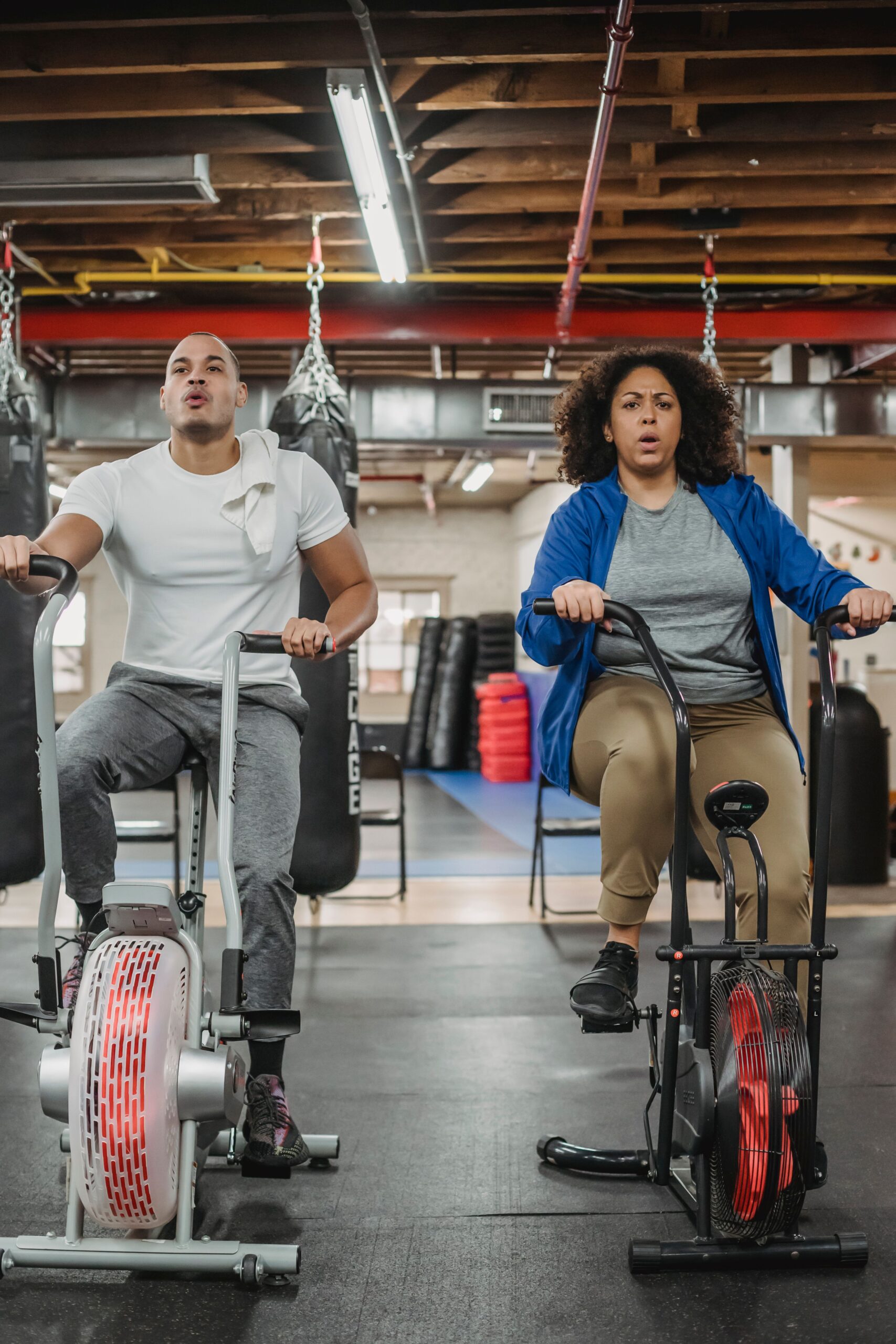
What kind of training produced gains?
Moderate, steady training. The older synthesis found larger gains in studies using roughly 60% to 70% of VO2 max for more than 20 weeks. Those programs were studied, but the comparison did not establish a best dose for an individual.
Intervals. A 2024 meta-analysis included 23 randomized trials in older adults. After accounting for how much exercise participants actually completed, the review could not clearly link higher intensity to greater fitness gains. Direct high-versus-moderate comparisons showed only a small, statistically uncertain advantage for high intensity. The authors’ evidence synthesis challenges the idea that harder is inherently better; regular aerobic work was the more consistent signal.
The decline curve. Aerobic capacity declines faster with each decade, especially in men, so part of what training does after 60 is offset a steeper slope. That’s covered in Improve VO2 Max After 50.

Is hard training safe after 60?
One large safety dataset came from people with diagnosed heart disease in supervised rehabilitation—not from unscreened adults over 60 exercising alone. A 2012 Norwegian retrospective study followed about 4,800 cardiac-rehabilitation patients, averaging about 58 years old and mostly men, through supervised exercise. Participants had a medical examination and maximal test before training, and each person took part in both intensity types.
- Moderate training: 1 fatal cardiac arrest in 129,456 hours.
- High-intensity intervals: 2 non-fatal cardiac arrests in 46,364 hours, or 1 per 23,182 hours.
- Heart attacks: none.
These are different events. The National Heart, Lung, and Blood Institute explains that cardiac arrest means the heart suddenly stops pumping; a heart attack occurs when blood flow to heart muscle is blocked. An arrest count is therefore not a heart-attack count.
The absolute event count was low, but three events are far too few to establish that the two formats are equally safe. The crude event rate was higher during interval hours, and the study was not randomized by intensity. A 2018 systematic review of 23 cardiac-rehabilitation studies found one major nonfatal cardiovascular event during 17,083 interval sessions among the interval participants. These selected, tested and monitored patients show what supervised rehabilitation can achieve; they do not establish the safety of unsupervised hard intervals in the general population.
The American College of Sports Medicine’s screening approach considers current activity, symptoms, known heart or blood-vessel disease, metabolic disease such as diabetes, or kidney disease, and intended intensity. Age alone does not require clearance for every person, but known disease, symptoms or a plan to jump from inactivity to vigorous intervals changes the decision. Stop and seek evaluation for chest pressure or pain, lightheadedness, fainting, palpitations, or unusual or extreme breathlessness.
How far can safety findings from supervised cardiac rehabilitation travel beyond that setting?
What’s Interesting
The trial average and the observational data line up neatly on paper: training added about one MET, and a one-MET fitness difference was associated with about 13% lower mortality. But joining those numbers would be a causal leap. The training synthesis measured fitness change; the cohort synthesis compared people with different fitness levels. Neither tested whether a one-MET intervention gain after 60 causes a 13% mortality reduction.
What This Means in Practice
For living longer and better, the studies above support aerobic training as a way to improve fitness after 60. Whether a particular program is appropriate depends on health, function, medications and supervision; a longer lifespan from raising VO2 max remains unproven. Points to discuss with a clinician or qualified exercise professional include:
- Duration: programs lasting more than 20 weeks were associated with larger gains in the older synthesis, but that was not a randomized duration comparison.
- Intensity: newer trials did not find a clear high-intensity advantage after training volume was considered. Intervals were studied as one option, not a requirement for everyone.
- Activity type: cycling, swimming, brisk walking and other modes place different demands on joints and balance; the suitable choice depends on the individual.
- Screening and supervision: the American College of Sports Medicine’s approach considers current activity, symptoms, known disease and intended intensity. Medication effects on heart rate can complicate target zones.
- Measurement: repeated tests under similar conditions are easier to compare than unlike tests or a single reading.
A clinician can assess whether vigorous activity or testing is appropriate. Cardiac rehabilitation programs supervise training for people with heart disease; an exercise physiologist can help interpret the evidence for an individual’s starting point.
Bottom Line
Aerobic capacity can improve after 60. An older 41-trial synthesis estimated an average 3.78 mL/kg/min gain—about 16% and roughly one MET—but its apparent best duration and intensity came from comparisons between studies. A newer 23-trial review did not find a statistically clear advantage for high over moderate intensity after exercise volume was considered. Higher fitness is associated with lower mortality, but raising VO2 max has not been shown to make people live longer. The American College of Sports Medicine’s screening approach considers current activity, symptoms, known disease and intended intensity; the suitable training and testing choices depend on individual circumstances.
A NOTE FROM LONGEVITY365
We read research, consult expert perspectives and work to make complicated health information easier to understand. What you’re reading here reflects how we’ve interpreted and organized that information. It is educational content—not personal medical advice, diagnosis or treatment guidance.
We’re not perfect, and neither is the available research. Evidence changes, new studies emerge and what’s appropriate for one person may not be appropriate for another.
Use this article as a starting point for your own research and conversations with qualified professionals. Always talk with your doctor or another trusted healthcare professional before making decisions that could affect your health, particularly if you take medications, are receiving treatment, have existing health conditions, are pregnant or have other circumstances that could affect what’s appropriate for you.
Reader Questions
A few questions to carry into the comments or your next conversation. Please leave out identifying or personal medical details.
- 01Which measurement or milestone would feel useful to track without letting it take over the whole point of moving?
- 02Which real-world barrier did the article address most usefully: time, confidence, access, recovery, or knowing where to start?
- 03What question would you bring to a clinician, physical therapist, trainer, or exercise professional after reading about Improve VO2 Max After 60?
Extra Insights & Sources
The evidence summaries and linked sources behind this article.
What We Know
- Aerobic training improved VO2 max in trials whose groups averaged age 60 or older. Supported.
- Older pooled evidence associated longer moderate-intensity programs with larger gains; newer randomized evidence does not identify one clearly superior intensity. Uncertain optimum.
- Higher fitness is associated with lower mortality. Supported (observational).
What We Don’t Know
- Whether raising VO2 max after 60 extends lifespan. Unknown.
- The best mix of steady and interval training for people over 60. Uncertain.
- How the safety of unsupervised hard intervals compares with supervised rehab settings. Uncertain.
Additional study detail
In the Kodama mortality analysis, 102,980 participants contributed 6,910 deaths. The coronary-heart-disease and cardiovascular-event analysis included 84,323 participants and 4,485 events. These were observational comparisons, not randomized training results.
The Norwegian rehabilitation study included 4,846 patients (mean age 57.8; 70% men) and 175,820 supervised exercise hours. The 2018 rehabilitation review reported its interval-session safety outcome among 547 interval participants. These details describe selected rehabilitation patients, not unscreened adults over 60.
Source Materials
- Huang et al., Preventive Cardiology (2005), PMID 16230876 — meta-analysis of 41 controlled trials and 2,102 sedentary adults in groups averaging age 60 or older; supplies the 3.78 mL/kg/min net gain, 16.3% estimate and across-study duration/intensity associations. Randomized and nonrandomized trials were pooled, and review methods were incompletely reported.
- Centre for Reviews and Dissemination assessment of Huang et al. — independent methods appraisal supporting the aerobic-capacity conclusion while warning that mixed study designs and incomplete reporting limit broader claims; no direct cardiovascular-aging or quality-of-life outcomes were shown.
- Fosstveit et al., Scandinavian Journal of Medicine & Science in Sports (2024), PMID 38389140 — systematic review of 23 randomized trials with 1,332 older adults; supplies the volume-adjusted intensity analysis and statistically uncertain high-versus-moderate difference.
- Kodama et al., JAMA (2009), PMID 19454641 — meta-analysis of 33 observational cohorts; supplies participant, event and one-MET association estimates. It does not show that a training-induced one-MET gain causes a 13% mortality reduction.
- National Heart, Lung, and Blood Institute, cardiac arrest and heart attack — institutional explanations distinguishing the heart suddenly stopping pumping from blocked blood flow to heart muscle; checked October 15, 2026.
- Rognmo et al., Circulation (2012), PMID 22879367 — retrospective safety data from 4,846 medically screened cardiac-rehabilitation patients, mean age 57.8, during 175,820 supervised hours; supplies the three arrest events and exposure denominators. The intensity comparison was not randomized and does not represent unsupervised older adults.
- Wewege et al., Journal of the American Heart Association (2018), PMID 30376749 — systematic review of 23 cardiac-rehabilitation studies, 1,117 participants; supplies the one major nonfatal cardiovascular event during 17,083 interval sessions. Safety evidence is limited to selected patients in tertiary-care rehabilitation.
- Riebe et al., ACSM preparticipation screening update (2015), PMID 26473759 — evidence-informed screening model based on current activity, symptoms or known cardiovascular/metabolic/renal disease, and intended exercise intensity.
Photo credits
Images from Pexels.
- featured: Photo by Zszen John — original Pexels photo.
- inline-1: Photo by Julia Larson — original Pexels photo.
- inline-2: Photo by Vitaly Gariev — original Pexels photo.
Leave a Reply