
Mitochondria & NAD+ Biology
Mitochondrial Health and Aging
Lower muscle mitochondrial function is linked to frailty. Exercise trials show changes, but mitochondrial markers are not proof of longer human life.

Mitochondria have gone from a biology-class footnote to a wellness selling point, with supplements, devices and clinics promising to “support” them. If you’re reading about mitochondrial health and aging, the science underneath is real. Humanic Blue asks which parts of it have actually been tested in people.
The human studies below link lower muscle mitochondrial capacity with age, fitness and frailty. They do not establish that every change comes from aging itself: activity and illness matter too. A Mayo Clinic training trial improved mitochondrial function in older muscle, but did not test lifespan. For readers interested in living longer and better, that is the distinction to keep in view: changing how muscle produces energy is not proof that an intervention slows whole-body aging.
Key Takeaways
- Studies comparing people of different ages have found lower muscle mitochondrial capacity at older ages. They cannot show how much comes from aging itself.
- Lower mitochondrial capacity is associated with frailty and slower walking in older adults; this does not establish which causes which.
- Activity levels and illness can also affect mitochondrial function.
- A Mayo Clinic trial found that aerobic interval training improved mitochondrial function in older muscle.
- The supplement studies discussed here measured short-term biological changes, not longer life or fewer diseases.
- No intervention has been shown to extend human lifespan by improving mitochondria.
What do mitochondria do?
Mitochondria turn food and oxygen into ATP, the molecule cells use for energy. They also carry their own small set of DNA. Muscle, heart and brain depend on them most because those tissues use the most energy.
Researchers list “mitochondrial dysfunction” among the hallmarks of aging, as covered in Hallmarks of Aging Explained. Put simply: as mitochondria work less well, energy-hungry tissues like muscle may lose some of their capacity. Whether that decline drives aging or reflects it is a live question.

What fades with age
In the 2005 Mayo Clinic study, K. Sreekumaran Nair’s group measured small samples of muscle tissue from about 150 healthy men and women aged 18 to 89. Mitochondrial DNA, mitochondrial proteins and ATP production were lower at older ages. Lower ATP production also tracked with lower aerobic capacity and glucose tolerance, while DNA damage linked to reactive oxygen-containing molecules was higher in older muscle. Because the study compared different people at one point in time, it cannot show each person’s rate of change or separate age from every cohort difference.
The SOMMA study, led by researchers at the California Pacific Medical Center Research Institute, measured how muscle produces energy in about 900 adults aged 70 and older, averaging 76. Lower maximal mitochondrial respiration—the muscle cells’ capacity to use oxygen to make energy—was linked to greater frailty. The link was strongest for slowness and low physical activity. The authors proposed mitochondrial deficits as a possible contributor to frailty, but the cross-sectional study cannot show which came first. Two authors reported consulting ties to aging-focused companies.
How much is aging, and how much is inactivity?
The National Institute on Aging researchers behind the GESTALT study emphasize physical activity’s role in maintaining muscle mitochondrial function and aerobic capacity. They also warn that disease and physical activity are difficult to disentangle. An age-related difference is therefore not automatically an effect of age alone.
In their data, from about 80 healthy adults aged 22 to 89, four separate measures of muscle energy were lower with age. But they also found molecular changes with age in low-fitness participants that were absent in high-fitness ones. That suggests fitness can change at least part of the picture.
What comparison would help separate aging from activity-related differences in mitochondrial function?
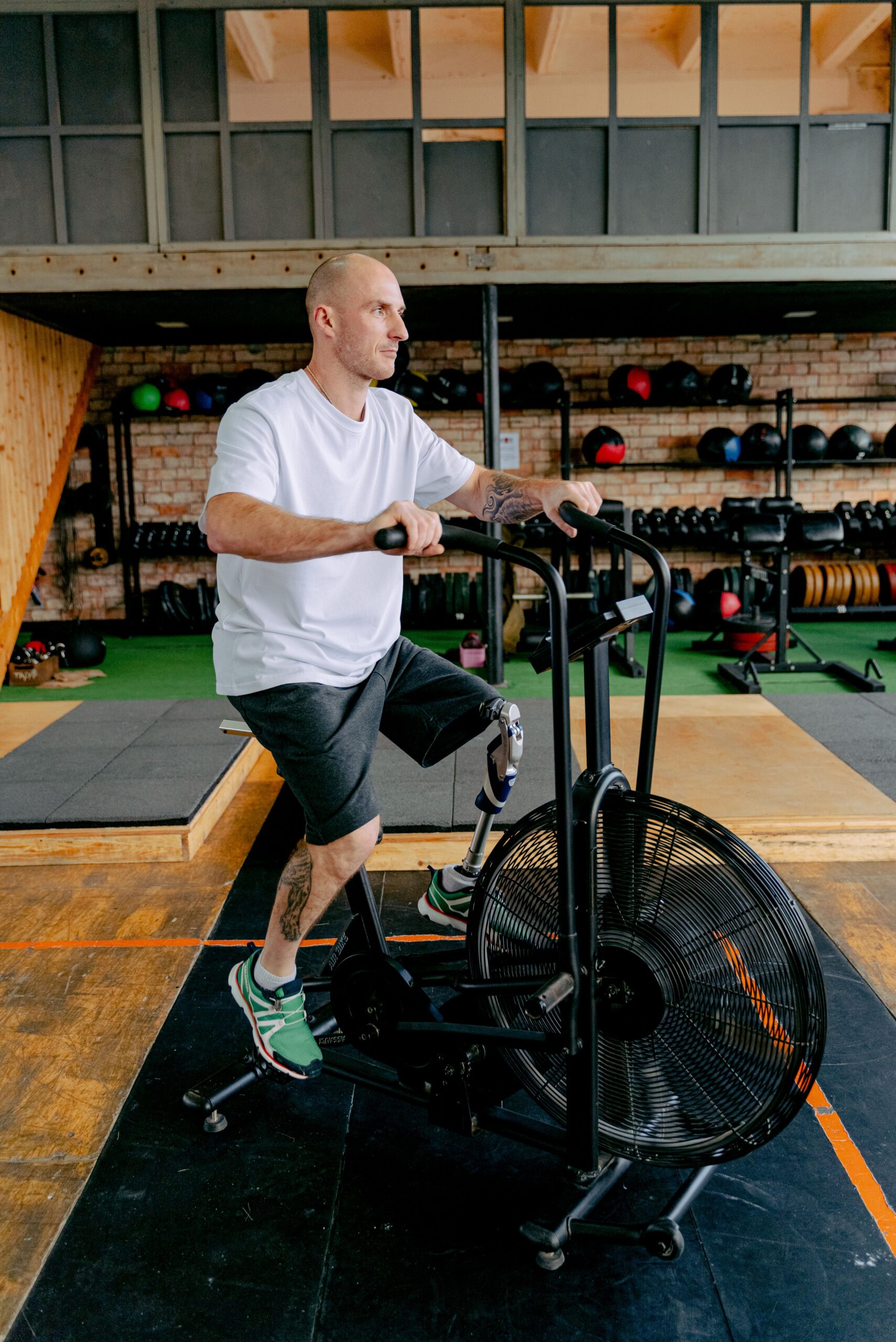
Can exercise change mitochondria in older adults?
In a 2017 Mayo Clinic trial in Cell Metabolism, sedentary adults in two age bands, 18 to 30 and 65 to 80, completed a 12-week program of high-intensity interval training, resistance training or combined training. All three modes improved insulin sensitivity (the body’s response to insulin) and lean mass (body tissue other than fat). Improvements in aerobic capacity and muscle mitochondrial respiration occurred with interval and combined training, not resistance training alone. The final groups were small and researchers measured many molecular changes, so the size of any particular benefit remains uncertain.
The researchers reported that interval training reduced many age-related differences in muscle proteins, especially mitochondrial proteins. Older muscle became more similar to younger muscle on those measurements. It was a 12-week study of muscle measures, not a demonstration of longer life or whole-body age reversal.
Whether easier, steady exercise works as well for mitochondria is debated, as covered in Zone 2 Training for Longevity.
What have mitochondrial drugs and supplements shown?
MitoQ. This mitochondria-targeted antioxidant was tested in a 2018 crossover trial at the University of Colorado Boulder in a small group of healthy adults aged 60 to 79 with impaired blood-vessel function. After six weeks of 20 mg a day, the measured ability of blood vessels to widen was 42% higher than with placebo. This was a relative improvement in a test result, not a 42% reduction in disease risk. It was a small, short study of a blood-vessel measure, not of heart attacks, strokes or aging.
Elamipretide. This drug binds to cardiolipin, a fat in the inner mitochondrial membrane. On September 19, 2025, the FDA granted accelerated approval to Forzinity (elamipretide) to improve muscle strength in adults and children with Barth syndrome who weigh at least 30 kilograms (FDA).
The approval rests on a limited kind of evidence. The main study enrolled a small group of male patients aged 12 to 35. Elamipretide did not outperform placebo on the randomized portion’s main measures of walking distance and fatigue. Strength in the muscles that straighten the knee increased during the longer follow-up, when everyone knew they were receiving the drug. FDA treated that strength change as reasonably likely to predict patient benefit and required a randomized post-approval confirmatory trial (FDA Drug Trials Snapshot).
For other diseases, the sponsor’s 48-week phase 3 trial for muscle disease caused by inherited mitochondrial problems is completed with no results posted in ClinicalTrials.gov, while its phase 3 trial for dry age-related macular degeneration, a disease affecting central vision, is active but no longer recruiting (NuPower, NCT05162768; ReNEW, NCT06373731). None of this is an approval or test of elamipretide as a general anti-aging treatment.
NAD+ precursors, urolithin A and CoQ10 are marketed for mitochondrial health and each has its own evidence record. NMN, a compound the body can use to make the energy-related molecule NAD+, is covered in NMN for Longevity; in pooled trials, it raised blood NAD+ without demonstrating meaningful benefits for muscle or metabolism.
Energy-related marketing often skips a step. A supplement can change a mitochondrial marker in blood or muscle, but that isn’t the same as better function, fewer diseases or longer life.
Which human outcomes would connect a mitochondrial marker change with a meaningful benefit?
What’s Interesting
Mitochondria connect several threads in aging research: fitness, frailty, insulin sensitivity and energy. The human data show a consistent pattern. Older, fitter people tend to have better mitochondria, and training improves them. What the data don’t yet show is that a pill can do the same thing, or that improving mitochondria alone changes how long people live.
What This Means in Practice
For living longer and better, the Mayo trial answers a specific question: interval and combined training changed mitochondrial measurements in sedentary adults, including adults aged 65 to 80. It did not establish an exercise prescription for every reader or show that those mitochondrial changes extended life.
A “mitochondrial support” claim can be checked against what its human trial measured: a blood or muscle marker, physical function, illness or survival. Those are different outcomes. Neither a marker change nor the FDA’s narrow Barth-syndrome approval establishes a general anti-aging benefit.
New, persistent fatigue also cannot identify a mitochondrial problem on its own. A clinical evaluation can distinguish possible causes such as anemia, thyroid disease, sleep apnea, depression or medication effects.
A primary care clinician can evaluate fatigue. An exercise physiologist or physical therapist can design training for your fitness level. Suspected inherited mitochondrial disease is diagnosed by specialists in genetics or neuromuscular medicine.
Bottom Line
Mitochondrial capacity in human muscle declines with age, and lower capacity tracks with frailty and slower walking. Some of that decline reflects inactivity, and aerobic interval training has improved mitochondrial function in older adults in a clinical trial. The mitochondrial supplement trial discussed here measured a short-term blood-vessel response, and the one approved mitochondrial drug treats a rare genetic disease, not aging. No study has shown that improving mitochondria extends human lifespan. The Mayo trial supports changes in muscle function from specific training programs, rather than a claim that training reverses aging.
A NOTE FROM LONGEVITY365
We read research, consult expert perspectives and work to make complicated health information easier to understand. What you’re reading here reflects how we’ve interpreted and organized that information. It is educational content—not personal medical advice, diagnosis or treatment guidance.
We’re not perfect, and neither is the available research. Evidence changes, new studies emerge and what’s appropriate for one person may not be appropriate for another.
Use this article as a starting point for your own research and conversations with qualified professionals. Always talk with your doctor or another trusted healthcare professional before making decisions that could affect your health, particularly if you take medications, are receiving treatment, have existing health conditions, are pregnant or have other circumstances that could affect what’s appropriate for you.
Reader Questions
A few questions to carry into the comments or your next conversation. Please leave out identifying or personal medical details.
- 01What did this article make clearer about the gap between an aging mechanism and a proven human outcome?
- 02Which claim would you want to see tested in people before it affected a real health decision?
- 03What question should readers keep asking when "Mitochondrial Health and Aging" shows up in longevity marketing?
Extra Insights & Sources
The evidence summaries and linked sources behind this article.
What We Know
- Mitochondrial capacity in human muscle declines with age. Supported.
- Lower mitochondrial capacity is associated with frailty, slower walking and lower fitness in older adults. Supported (association).
- Aerobic interval training improves muscle mitochondrial respiration in older adults. Supported.
- One mitochondria-targeted drug has accelerated approval for a rare inherited mitochondrial disease, based on a measure considered reasonably likely to predict benefit and with confirmation still required; it is not approved for aging. Established.
What We Don’t Know
- Whether mitochondrial decline causes aging or results from it. Contested.
- How much of the decline is aging versus inactivity. Uncertain.
- Whether any mitochondria-targeted supplement or drug improves health outcomes in aging adults. Unknown.
- Whether improving mitochondrial function extends human lifespan. Unknown. No trial has tested it.
Source Materials
- Short et al., Proceedings of the National Academy of Sciences (2005) — Cross-sectional muscle-biopsy study in 146 healthy adults aged 18–89, supporting age gradients in mitochondrial DNA, protein, ATP production and oxidative damage. It cannot distinguish within-person aging from cohort, activity or other differences.
- Mau et al., GeroScience (2024), SOMMA — Cross-sectional analysis of 879 adults aged 70 or older, mean age 76.3, linking lower maximal mitochondrial respiration to worse frailty category, especially slowness and low activity. A one-standard-deviation decrease (one measure of spread in the study’s results) was associated with 1.5 times the odds of being in a worse frailty category. This is not a 50% increase in an individual’s probability of frailty. Association does not establish direction; two authors disclosed aging-company ties.
- Donega et al., Journal of Cachexia, Sarcopenia and Muscle (2025), GESTALT — Cross-sectional NIA study of 82 healthy adults aged 22–89, used for the interaction between age, fitness and muscle-energy measures. Small and nonlongitudinal; it does not prove fitness prevents mitochondrial aging.
- Robinson et al., Cell Metabolism (2017) — Twelve-week training study in two age bands; 72 people met eligibility and the recruitment flow reports 52 completing baseline and training. Supports mode-specific changes in mitochondrial respiration, aerobic capacity, insulin sensitivity and molecular measures, not lifespan or whole-body age reversal. The paper declared no conflicts.
- Rossman et al., Hypertension (2018), MitoQ — Randomized crossover trial of 20 healthy adults aged 60–79 with impaired endothelial function. Six weeks of 20 mg/day improved a blood-vessel dilation measure; it did not test cardiovascular events, disability, aging rate or survival.
- FDA — Forzinity accelerated approval (September 19, 2025) and Drug Trials Snapshot — Primary regulatory sources for the narrow Barth-syndrome indication, 12-person pivotal population, negative randomized primary endpoints, open-label knee-strength evidence and required confirmatory trial. Accelerated approval does not validate general mitochondrial enhancement or anti-aging use.
- ClinicalTrials.gov — NuPower, NCT05162768 — Sponsor-reported phase 3 mitochondrial-myopathy record, completed with no results posted as of this review. A completed registry record without results is not evidence of benefit.
- ClinicalTrials.gov — ReNEW, NCT06373731 — Sponsor-reported phase 3 dry-AMD trial, active but not recruiting as of the current record. It has no posted efficacy result and is not a study of aging itself.
- Lachmann, Drugs (2026) — Secondary drug profile retained for pharmacologic context. Current approval facts are sourced to FDA directly rather than relying on this manufacturer-reviewed profile.
Photo credits
Images from Pexels.
- featured: Photo by Daniel Reche — original Pexels photo.
- inline-1: Photo by Antoni Shkraba — original Pexels photo.
- inline-2: Photo by Thirdman — original Pexels photo.
Featured image: Image by Weedezign_photo via Envato Elements.
Leave a Reply