
Habits
Vaccines and Healthy Aging
After 50, shingles, pneumococcal, flu and RSV vaccines target infections that hit older adults hardest. A shingles-dementia link is intriguing but debated.
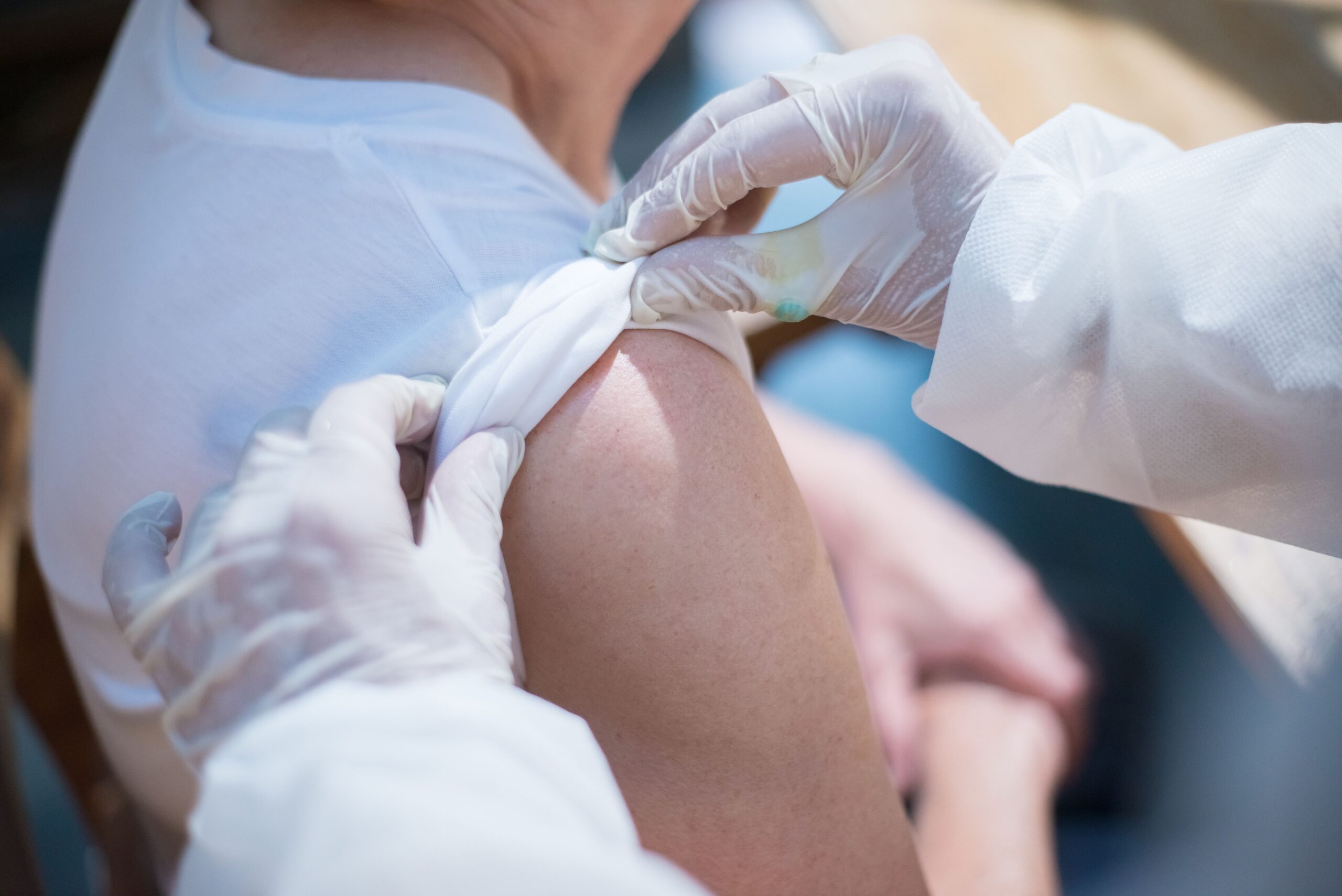
Vaccines tend to get filed under childhood, somewhere between lunchboxes and braces. Humanic Blue’s vaccine guide looks at healthy aging too: adults 65 and older face the highest risk of being hospitalized or dying from flu, RSV and COVID-19, according to the American Academy of Family Physicians. RSV is respiratory syncytial virus, a cause of lung infections. The schedule has also had an eventful couple of years.
As of September 26, 2026, the Centers for Disease Control and Prevention’s (CDC) official adult schedule, a July 2025 version reinstated after a federal court ruling, recommends two shingles shots from age 50, a pneumococcal vaccine from 50, one of the preferred enhanced flu shots from 65, and one RSV dose for unvaccinated adults 75 and older, or ages 50–74 at higher risk. The family physicians’ own schedule matches on all four. COVID-19 is where the messages diverge. For living longer and better, these shots target infections that hit hardest later in life, though the trials behind them measured infections, not lifespan.
In This Article
- Who writes the vaccine schedule right now
- The two-shot shingles vaccine prevented about 9 in 10 cases in people over 70
- One RSV dose protected for three seasons in a trial
- Enhanced flu shots from 65, and the pneumococcal shot from 50
- COVID-19, where official messages differ
- Can a shingles vaccine lower dementia risk?
- The trials, schedules and numbers behind all of this
Key Takeaways
- The CDC and the American Academy of Family Physicians agree on shingles and pneumococcal vaccination from 50, preferred enhanced flu products from 65, and one RSV dose for unvaccinated adults 75 and older or ages 50–74 at higher risk.
- The two-dose shingles vaccine prevented about 90% of shingles in adults 70 and older in a large manufacturer-funded trial.
- One dose of an RSV vaccine reduced RSV lung infections over three seasons in adults 60 and older in a manufacturer-funded trial.
- COVID-19 guidance for 2026–2027 differs between CDC pages and medical societies; the dated recommendations appear below.
- Older shingles-vaccine studies reported fewer dementia diagnoses, but other researchers dispute whether those estimates establish a meaningful effect.
- The infection-prevention trials described here do not establish how much these vaccines change overall lifespan.
Who sets the vaccine schedule right now?
For about 60 years, the CDC’s Advisory Committee on Immunization Practices (ACIP) reviewed vaccine evidence in public and voted, and the CDC director almost always adopted its advice, the Associated Press reports. In 2025, Robert F. Kennedy Jr., then heading the Department of Health and Human Services, dismissed the committee and appointed new members. In March 2026, a federal judge, ruling in a lawsuit brought by the American Academy of Pediatrics and other medical groups, found that Kennedy had likely violated federal procedures and stopped the new panel from meeting. The CDC then restored its schedules to the July 2, 2025 versions. (Note 1)
Medical societies now publish their own. The American Academy of Family Physicians (AAFP) says it no longer endorses the CDC’s schedule and posts its own 2026 version. The American College of Physicians (ACP), the internists’ society, backed the AAFP schedule in August 2026 “amid ongoing turmoil in the federal vaccine advisory process.” The Infectious Diseases Society of America (IDSA) covers people with weakened immune systems. Private insurers’ trade group has chosen to follow the societies and keep paying for the shots they recommend, the AP reports.
For people over 50, the CDC and AAFP schedules overlap almost entirely:
- Shingles (Shingrix): everyone 50 and older, two doses. Same in both.
- Pneumococcal: adults 50 and older who have not had one of the newer conjugate vaccines, which link bacterial components to a carrier protein, or whose vaccination history is unknown. Earlier vaccinations can change the schedule.
- Flu: everyone, yearly, with an enhanced version preferred from 65. The AAFP’s fall guidance also prefers an mRNA flu vaccine, which gives cells instructions to make a viral protein.
- RSV: one dose for unvaccinated adults 75 and older, or ages 50–74 at higher risk. Neither schedule recommends repeat doses at present.
- Tetanus, diphtheria and whooping cough: for adults who completed their initial series, one Tdap dose if none was received from age 10, then a Td or Tdap booster every 10 years. Tdap covers all three infections; Td covers tetanus and diphtheria.
- COVID-19: the AAFP says all adults, with a second dose from 65; the CDC’s pages send mixed messages.
How the schedules compare in detail
Shingles: two shots, a lot of protection
Shingles is a painful rash that appears when the chickenpox virus wakes up again in someone who’s already had chickenpox. About 1 in 3 Americans will get it, and the risk of shingles and its complications, such as long-lasting nerve pain, rises with age, according to the CDC. The CDC’s schedule notes recommend two doses of the recombinant vaccine, Shingrix, which uses a viral protein rather than a live virus, two to six months apart from age 50, even for people who’ve already had shingles or the older live vaccine.
The evidence comes from two large trials run by GSK, the vaccine’s maker. In ZOE-70, which tested adults aged 70 and older in 18 countries, the vaccinated group had about 90% fewer shingles cases over nearly four years. A companion trial in adults 50 and older found about 97% fewer. Reactions were common: within a week, 79% of vaccinated people reported a reaction at the injection site or elsewhere in the body, against about 30% who received an inactive comparison shot (placebo). Serious side effects and deaths were similar in both groups. (Note 2) How the trial worked
How long did one RSV dose protect in the trial?
Respiratory syncytial virus, or RSV, can cause serious lung infections in older adults. In GSK’s AReSVi-006 trial of medically stable adults 60 and older, one dose of its RSV vaccine, which includes an ingredient to boost the immune response, reduced RSV infections of the lower airways and lungs by about 63% over three RSV seasons. An exploratory 2026 analysis found similar protection in people with chronic obstructive pulmonary disease (COPD), asthma, diabetes and obesity. GSK funded the trial and the analysis, and nine of the 16 authors work for the company. (Note 3)
There’s a safety caveat. In January 2025, the FDA required a new warning on two RSV vaccines, Pfizer’s Abrysvo and GSK’s Arexvy, after a study conducted once the vaccines were in use suggested an increased risk of Guillain-Barré syndrome, a rare disorder in which the immune system damages nerves, in the 42 days after vaccination. The CDC recommends one dose for unvaccinated adults 75 and older, or ages 50–74 with higher risk, ideally from August through October. Its higher-risk groups include people with chronic heart or lung disease, advanced kidney disease, complicated diabetes, severe obesity or weakened immune systems, and nursing-home residents. The trial details
What would help distinguish protection across trial seasons from a settled revaccination interval?
Flu and pneumococcal: enhanced flu shots and the 50-plus pneumococcal shot
For people 65 and older, the CDC’s schedule prefers one of three enhanced flu vaccines, as the AAFP calls them: high-dose, recombinant or adjuvanted. These differ in the amount of viral material used to trigger immunity, how it is made, or whether an added ingredient boosts the immune response. The CDC says any age-appropriate flu vaccine should be used if the preferred versions are unavailable. The AAFP’s 2026–2027 guidance adds a new mRNA flu vaccine to that list.
The AAFP is upfront that the case for the enhanced vaccines is uneven. It notes that “the trial evidence on severe outcomes is not uniform”: a trial of older adults in Spain found fewer flu or pneumonia hospitalizations with the high-dose shot, while a trial of Danish adults 65 and older found no difference on its main measure. The family physicians’ conclusion: “The absolute benefit of an enhanced product is modest, and no eligible patient should go unvaccinated because a preferred product is unavailable.” (Note 4) The flu trial details
Pneumococcal bacteria cause pneumonia, meningitis and bloodstream infections, according to the CDC. Its schedule recommends one dose of a conjugate pneumococcal vaccine from age 50 for adults who have not had one of the specified conjugate vaccines or whose history is unknown. If the first is the version called PCV15, the schedule adds a different vaccine, PPSV23, at least a year later. Some medical conditions permit a shorter interval; previous doses also change the plan.
Why does COVID-19 guidance differ between sources?
As of September 26, 2026, even the CDC’s own pages differ. Its clinical guidance for health professionals, updated September 23, 2026, says: “Because of legal uncertainties and inquiries, the CDC states the recommendations for COVID-19 vaccination from the July 2025 immunization schedule remain in effect for the 2026-2027 respiratory illness season.” That page recommends a 2026–2027 COVID-19 vaccine for all adults 18 and older, and the July 2025 schedule it points back to adds a second dose six months later for people 65 and older. The CDC’s consumer page, last updated November 20, 2025, still describes the 2025–2026 vaccine as recommended “based on individual-based decision-making.”
The medical societies’ guidance is clearer, though not identical. The AAFP recommends a COVID-19 vaccine for all adults 19 and older, and a second dose six months later from 65. The IDSA recommends COVID-19, flu and RSV vaccination for people with weakened immune systems. The ACP’s own 2025–2026 practice points were narrower, covering adults over 65 and younger adults at increased risk. The COVID guidance in detail
Can a shingles vaccine lower dementia risk?
The dementia finding remains disputed. In Wales, eligibility for an older shingles vaccine containing a weakened live virus depended on exact date of birth. A Stanford University team compared people born just before and just after the cutoff and reported in Nature in 2025 that the vaccine cut new dementia diagnoses over seven years by about a fifth. The same team’s 2025 follow-up in Cell reported fewer diagnoses of mild cognitive impairment too, and fewer dementia deaths among people already living with dementia. (Note 5)
Other researchers aren’t convinced. In a 2026 analysis, Mika Kivimäki of University College London and colleagues worked out the vaccine effects implied by the Welsh, Australian and Canadian natural experiments. Wales implied about 18%, but the others implied reductions of 84% to 177%, which they call impossible or implausibly large. They also found no drop in national dementia rates after vaccination programs began, and concluded that the studies can’t be treated as strong evidence of a clinically meaningful effect. (Note 6)
None of these studies tested Shingrix, the recombinant vaccine now on the US schedule. The dementia studies in detail
What does the eligibility-cutoff study resolve, and what questions remain about other shingles vaccines?
What’s Interesting
The Welsh study turned a bureaucratic line, a birth date on a form, into something close to a coin toss. People born a week apart are very similar, except that one group could get the shot and the other couldn’t. The researchers argue that makes it less vulnerable to the usual problem: people who choose vaccines tend to differ from people who don’t.
The critique flips the same logic. If a method produces a vaccine that prevents more than 100% of dementia in one country, the critics argue, something besides the vaccine is likely moving the numbers. The critique reinterprets the earlier estimates and compares them with national dementia rates. It does not test a vaccine directly. That leaves a dispute about whether the method can separate vaccination from other influences on dementia diagnoses.
What This Means in Practice
For living longer and better, the schedules address specific infections that can put older adults in hospital. The infection trials described here do not establish an overall lifespan gain. The CDC and AAFP describe these age and vaccination-history rules:
- Shingles from 50: both schedules recommend two doses, two to six months apart, including after previous shingles or the older Zostavax vaccine.
- Pneumococcal from 50: both schedules recommend vaccination according to previous doses; product choice determines whether another dose follows.
- Flu each year: both schedules recommend vaccination. From 65, they prefer enhanced products but say an unavailable preferred product should not delay vaccination.
- RSV: both schedules recommend one dose for unvaccinated adults 75 and older, or ages 50–74 at higher risk, ideally in late summer or early fall. They do not currently recommend another dose for those already vaccinated.
- Tetanus, diphtheria and whooping cough: after the initial series, both schedules call for one Tdap dose if none was received from age 10, then Td or Tdap every 10 years.
- COVID-19: ask which guidance your clinician or pharmacist follows, since the CDC’s pages and the medical societies don’t say exactly the same thing.
- If your immune system is weakened: the rules differ, and the IDSA publishes separate guidance.
Trial figures describe groups of volunteers, not any one person. A pharmacist or primary care clinician can check your vaccine record, your health conditions and what your insurance covers.
Vaccination belongs inside a larger prevention schedule; Health Screenings in Your 60s places it beside the other age-specific conversations.
Bottom Line
After 50, the CDC and the family physicians’ schedules agree on shingles, pneumococcal, flu and RSV vaccines. In large drugmaker-funded trials, the shingles vaccine prevented about 90% of cases in people over 70, and one RSV dose kept protecting over three seasons. COVID-19 guidance for this season depends on whose page you read. A shingles-dementia link is contested, and the studies behind it used an older vaccine. Next time you see a pharmacist or clinician, ask for a vaccine review.
A NOTE FROM LONGEVITY365
We read research, consult expert perspectives and work to make complicated health information easier to understand. What you’re reading here reflects how we’ve interpreted and organized that information. It is educational content—not personal medical advice, diagnosis or treatment guidance.
We’re not perfect, and neither is the available research. Evidence changes, new studies emerge and what’s appropriate for one person may not be appropriate for another.
Use this article as a starting point for your own research and conversations with qualified professionals. Always talk with your doctor or another trusted healthcare professional before making decisions that could affect your health, particularly if you take medications, are receiving treatment, have existing health conditions, are pregnant or have other circumstances that could affect what’s appropriate for you.
Reader Questions
A few questions to carry into the comments or your next conversation. Please leave out identifying or personal medical details.
- 01Which distinction needs more explanation: eligibility, timing, previous doses or vaccine type?
- 02What would make differences between the vaccine schedules easier to understand?
- 03How does the uncertainty about dementia change your reading of the shingles studies?
Extra Insights & Sources
For readers who want the details behind each claim above. Confidence intervals (CI) describe uncertainty around the numerical estimates; the percentages compare groups, not an individual’s guaranteed protection. Person-years combine the number of people observed with their time in a study. Zoster means shingles, and postherpetic neuralgia is the lasting nerve pain that can follow it.
What We Know
- Shingles, pneumococcal, flu and RSV vaccines are recommended for older adults on specific schedules by both the CDC and the AAFP. Established.
- The recombinant shingles vaccine was about 90% effective against shingles in people 70 and older. Established.
- RSV vaccine protection lasted across three seasons in one trial. Supported.
What We Don’t Know
- Whether shingles vaccination prevents dementia, and whether the recombinant vaccine has any such effect. Contested.
- Whether vaccines extend lifespan in older adults. Not established by the infection trials described here.
- Where federal COVID-19 and other vaccine recommendations will settle once the court case is resolved. Unknown.
The schedules in detail
CDC. As of September 26, 2026, the CDC’s adult schedule by age, schedule notes and addendum are titled “Recommendations for Ages 19 Years or Older, United States, 2025” and dated July 2, 2025. Key notes for older adults:
- Zoster: age 50 years or older: “2–dose series recombinant zoster vaccine (RZV, Shingrix) 2–6 months apart (minimum interval: 4 weeks; repeat dose if administered too soon), regardless of previous herpes zoster or history of zoster vaccine live (ZVL, Zostavax) vaccination.” Adults 19 and older with immunocompromising conditions get the same two-dose series.
- Pneumococcal: adults 50 or older who have not previously received PCV13, PCV15, PCV20 or PCV21, or whose history is unknown, get 1 dose of PCV15, PCV20 or PCV21; if PCV15 is used, 1 dose of PPSV23 follows at least 1 year later. Adults who had earlier pneumococcal vaccines follow separate catch-up rules, some by shared clinical decision-making.
- Influenza: “Age 65 years or older: Any one of HD-IIV3, RIV3, or aIIV3 is preferred. If none of these three vaccines is available, then any other age–appropriate influenza vaccine should be used.”
- RSV: age 75 or older, unvaccinated: 1 dose (Arexvy, Abrysvo or mResvia), “Additional doses not recommended.” Age 50–74 and at increased risk of severe RSV disease: 1 dose. Risk conditions include chronic heart or lung disease, advanced kidney disease, complicated diabetes, severe obesity, moderate or severe immune compromise and residence in a nursing home; people can self-attest to a risk factor. The notes say it is best to vaccinate “ideally August through October in most of continental United States.” The addendum records the ACIP recommendation for adults 50–59 at increased risk, effective June 25, 2025.
- Tdap/Td: adults who completed the primary series and didn’t receive Tdap at age 10 or older get 1 dose of Tdap, then Td or Tdap every 10 years.
AAFP. The AAFP’s adult schedule page says: “The CDC’s 2025 immunization schedules, which are not endorsed by the AAFP, can be found here.” Its zoster, pneumococcal, flu and RSV notes for older adults match the CDC’s. The AAFP announced its 2026 schedules in a blog post by its chief medical officer, Margot Savoy.
ACP. The ACP’s adult immunization page says a commentary by Jason M. Goldman, Kristin M. Mitchell and Robert H. Hopkins Jr. reaffirms ACP’s support “for evidence-based immunization schedules developed by its partner U.S. medical societies.” The commentary was published in Annals of Internal Medicine on August 4, 2026, under the title ACP Supports Updated Adult Vaccination Schedules From AAFP and ACOG.
Background. According to the Associated Press (September 25, 2026), Kennedy dismissed the ACIP in 2025 and replaced it with a group that included several anti-vaccine voices; in March 2026 a federal judge said Kennedy likely violated federal procedures, stopped his panel from holding further meetings and suspended his decision to reduce the number of vaccines recommended for children. The Michigan Health & Hospital Association (May 8, 2026) reported that the CDC restored the child, adolescent and adult schedules to the July 2, 2025 versions “in compliance with the March 16 federal court ruling in American Academy of Pediatrics v. Kennedy.” The AP also reports that America’s Health Insurance Plans decided to follow the medical societies’ choices, and that ACP president Jason Goldman said he hoped the ruling “will mean a return to a transparent and evidence-driven process that safeguards the health of all communities and the best interests of our patients.”
The shingles trials in detail
ZOE-70 (New England Journal of Medicine, 2016; first author Anthony L. Cunningham, Westmead Institute for Medical Research and University of Sydney) was a randomized, placebo-controlled phase 3 trial in 18 countries. The analysis included 13,900 adults 70 and older (mean age 75.6) who received two doses of the herpes zoster subunit vaccine or placebo, 2 months apart. During a mean follow-up of 3.7 years, shingles occurred in 23 vaccine recipients and 223 placebo recipients (0.9 vs. 9.2 per 1,000 person-years), a vaccine efficacy of 89.8% (95% CI 84.2 to 93.7). Efficacy was 90.0% at ages 70 to 79 and 89.1% at 80 and older. In pooled data from people 70 and older in ZOE-50 and ZOE-70 (16,596 participants), efficacy was 91.3% against shingles and 88.8% against postherpetic neuralgia. The companion ZOE-50 trial in adults 50 and older found a risk of shingles 97.2% lower than placebo. Injection-site and systemic reactions within 7 days were reported by 79.0% of vaccine recipients versus 29.5% of placebo recipients; serious adverse events, potential immune-mediated diseases and deaths occurred at similar frequencies. Several authors were GSK Vaccines employees. (Note 2)
The RSV trial in detail
The 2026 AReSVi-006 analysis (ERJ Open Research; first author Alberto Papi, University of Ferrara) reports on a multi-country phase 3 trial run between May 2021 and May 2024. Medically stable adults 60 and older were randomized to one dose of the AS01E-adjuvanted RSVPreF3 vaccine or placebo before their first RSV season; efficacy analyses included 12,468 vaccine and 12,498 placebo recipients. Efficacy against RSV lower respiratory tract disease over three seasons was 62.9% (97.5% CI 46.7–74.8) overall. In exploratory analyses of subgroups conducted after the main trial analysis, it was 75.1% in people with COPD, 65.8% with asthma, 69.8% with diabetes and 74.1% with obesity. The authors concluded the vaccine “may help prevent” RSV illness and complications in older adults with conditions like COPD and asthma. The paper’s support statement says GSK “funded this trial, was involved in all stages of the study design, conduct and analysis, and took charge of all costs associated with the development and publication of this manuscript.” Nine authors are GSK employees, and several others report GSK payments. The FDA’s January 7, 2025 safety communication added this language to both labels’ Warnings and Precautions, for example for Arexvy: “The results of a postmarketing observational study suggest an increased risk of Guillain-Barré syndrome during the 42 days following vaccination with Arexvy.”
The flu vaccine evidence in detail
The AAFP’s 2026–2027 respiratory guidance says adults 65 and older “should preferentially receive an enhanced influenza vaccine (high dose, adjuvanted, recombinant or mRNA) when available—but should not have vaccination delayed in order to obtain one.” It summarizes two trials: GALFLU, a pragmatic registry-based randomized trial of 103,169 adults 65 to 79 in Galicia, Spain, where high-dose vaccine reduced influenza or pneumonia hospitalization relative to standard dose (relative vaccine effectiveness 23.7%; 95% CI 6.6–37.7), and DANFLU-2, a pragmatic randomized trial of 332,438 Danish adults 65 and older, where “the primary endpoint was neutral.” It also reports that 64% of adults 65 and older received a flu vaccine in the 2024–2025 season. (Note 4) The AP reported on September 25, 2026 that the CDC decided to maintain last year’s flu vaccine endorsements due to “legal uncertainties and inquiries,” so the new mRNA flu vaccine, mFlusiva, is not on its list.
The COVID-19 guidance in detail
- CDC, clinical considerations (updated September 23, 2026): “A 2026-2027 COVID-19 vaccine is recommended for all adults ages 18 years and older in the United States for the prevention of COVID-19.” The page says its recommendations reflect the CDC’s adult and pediatric schedule as of July 2025. That schedule’s notes tell providers to give adults 65 and older “dose 2” six months after the first (minimum interval 2 months).
- CDC, consumer page (last updated November 20, 2025): “CDC recommends a 2025-2026 COVID-19 vaccine for people ages 6 months and older based on individual-based decision-making,” and “It is especially important to get your 2025–2026 COVID-19 vaccine if you are ages 65 and older, are at high risk for severe COVID-19, or have never received a COVID-19 vaccine.”
- AAFP (September 2, 2026): “The AAFP recommends all adults 19 years and older should receive a COVID-19 vaccine,” and “Adults 65 years and older should receive a second dose of the updated COVID-19 vaccine 6 months after the initial dose to help maintain protection as immunity wanes over time.”
- IDSA (September 2, 2026): recommends COVID-19 vaccination “for everyone with a compromised immune system ages 6 months and older,” along with annual flu vaccination and RSV vaccination for eligible adults with weakened immune systems. IDSA president Ronald G. Nahass said people with compromised immune systems “deserve clear guidance grounded in the best available scientific evidence.”
- ACP (2025–2026 practice points, as described on its website): adults over 65 and those aged 18 to 64 at increased risk for COVID-19 “should receive the updated 2025-2026 mRNA-based COVID-19 vaccine.”
The AAFP released its COVID-19 recommendations in coordination with the American Academy of Pediatrics, the American College of Obstetricians and Gynecologists and the IDSA, as part of the Vaccine Integrity Project.
The dementia studies in detail
The Welsh natural experiment. Eyting and colleagues (Nature, 2025; co-first authors Markus Eyting and Min Xie, senior author Pascal Geldsetzer, Stanford University) used the fact that people born before September 2, 1933 were ineligible for the live zoster vaccine, while those born on or after that date were eligible for at least a year. Vaccination rose from 0.01% among people one week too old to be eligible to 47.2% among those one week younger. The researchers used a regression discontinuity analysis, comparing people just either side of the birth-date eligibility cutoff. They estimated that receiving the vaccine “reduced the probability of a new dementia diagnosis over a follow-up period of 7 years by 3.5 percentage points” (95% CI 0.6–7.1), a 20.0% relative reduction (95% CI 6.5–33.4). The effect was stronger in women than men, and the authors reported confirming it with death-certificate data for England and Wales. The authors declared no competing interests. (Note 5)
The follow-up. Xie and colleagues (Cell, 2025; same senior author) used the Welsh program’s age-80 eligibility cutoff to report that live zoster vaccination reduced mild cognitive impairment diagnoses and, among people living with dementia, deaths due to dementia. They note the team had previously reported similar findings in Australia. No competing interests were declared. (Note 5)
The critique. Kivimäki and colleagues (Brain, Behavior, and Immunity, 2026; Mika Kivimäki, Philipp Frank and Gill Livingston of University College London, and Pyry N. Sipilä of the University of Helsinki) converted the published eligibility effects into implied effects among people actually vaccinated. The implied reductions in dementia risk were 18% (95% CI −0 to 35) in Wales, 177% in Australia, and 84% and 111% in two Canadian analyses. Two of those estimates, they point out, are above the theoretical ceiling of 100% effectiveness, and they judge the other non-Welsh estimate implausibly large as well. Implied reductions in mild cognitive impairment and dementia deaths were 41% and 56%. The authors found no matching decline in national dementia incidence in the UK, Australia or Canada after vaccination programs began, and concluded that the natural experiments do not amount to strong evidence of a clinically meaningful effect, calling for independent replication. They declared no competing interests. (Note 6)
All of these studies concern the live-attenuated vaccine (Zostavax), not the recombinant vaccine (Shingrix) on the current CDC and AAFP schedules.
| Claim | Key evidence | Label |
|---|---|---|
| Shingles vaccine prevents shingles | ZOE-70 and ZOE-50 (randomized trials) | Established |
| RSV vaccine prevents RSV lung infection | AReSVi-006 (randomized trial) | Supported |
| Stronger flu vaccines add protection from 65 | GALFLU positive, DANFLU-2 neutral (as summarized by AAFP) | Supported, with mixed trial results |
| Shingles vaccine lowers dementia risk | Natural experiments; critique | Contested |
| Vaccines extend lifespan | Not established by the infection trials described here | Not established here |
Sources
- Centers for Disease Control and Prevention: Adult Immunization Schedule Notes, Adult Schedule by Age and Addendum (dated July 2, 2025)
- Centers for Disease Control and Prevention: Interim Clinical Considerations for Use of COVID-19 Vaccines (updated September 23, 2026)
- Centers for Disease Control and Prevention: Staying Up to Date with COVID-19 Vaccines (updated November 20, 2025)
- Centers for Disease Control and Prevention: About Shingles; About Pneumococcal Disease
- American Academy of Family Physicians: Adults 19 and Older Immunization Schedules; 2026–2027 Influenza, RSV and SARS-CoV-2 Immunization Recommendations; Fall immunization recommendations press release (September 2, 2026); 2026 schedules blog
- American College of Physicians: Adult Immunization
- Goldman JM, et al. ACP Supports Updated Adult Vaccination Schedules From AAFP and ACOG, Annals of Internal Medicine, 2026: PubMed 42546308
- Infectious Diseases Society of America: IDSA recommends respiratory vaccines for people with weakened immune systems (September 2, 2026)
- US Food and Drug Administration: GBS warning for RSV vaccines Abrysvo and Arexvy (January 7, 2025)
- Associated Press, via WSLS: report on the CDC’s stalled vaccine recommendations (September 25, 2026)
- Michigan Health & Hospital Association: CDC Restores Immunization Schedules After Federal Court Order (May 8, 2026)
- Cunningham AL, et al. ZOE-70, New England Journal of Medicine, 2016: PubMed 27626517
- Papi A, et al. AReSVi-006 over three seasons, ERJ Open Research, 2026: PubMed 42769451
- Eyting M, et al. Zoster vaccination and dementia in Wales, Nature, 2025: PubMed 40175543
- Xie M, et al. Shingles vaccination across the dementia disease course, Cell, 2025: PubMed 41338191
- Kivimäki M, et al. Implied vaccine effectiveness against dementia, Brain, Behavior, and Immunity, 2026: PubMed 42754179
Notes
Note 1: The court ruling and the schedule restoration come from published summaries, not the court’s order: the Associated Press (September 25, 2026) and the Michigan Health & Hospital Association (May 8, 2026).
Note 2: The ZOE-50 and ZOE-70 trials were funded by GlaxoSmithKline Biologicals, the maker of Shingrix.
Note 3: The AReSVi-006 trial and the 2026 analysis were funded by GSK, which also paid all costs of developing and publishing the paper.
Note 4: The GALFLU and DANFLU-2 figures and the 2024–2025 uptake figure come from a published summary, not the original trial reports: the American Academy of Family Physicians’ 2026–2027 respiratory immunization guidance.
Note 5: Both Stanford studies were funded by grants to Pascal Geldsetzer from the Phil & Penny Knight Initiative for Brain Resilience at Stanford’s Wu Tsai Neurosciences Institute, the National Institute on Aging, the National Institute of Allergy and Infectious Diseases and Chan Zuckerberg Biohub–San Francisco.
Note 6: Funding listed with the publisher’s record: the Wellcome Trust, the National Institute on Aging, the Research Council of Finland, the Päivikki and Sakari Sohlberg Foundation and the UK Medical Research Council.
Leave a Reply