
Exercise
Strength Training for Longevity
People who lift weights have lower death rates in large studies, especially alongside cardio. Trials show lower blood pressure; none has tested lifespan.
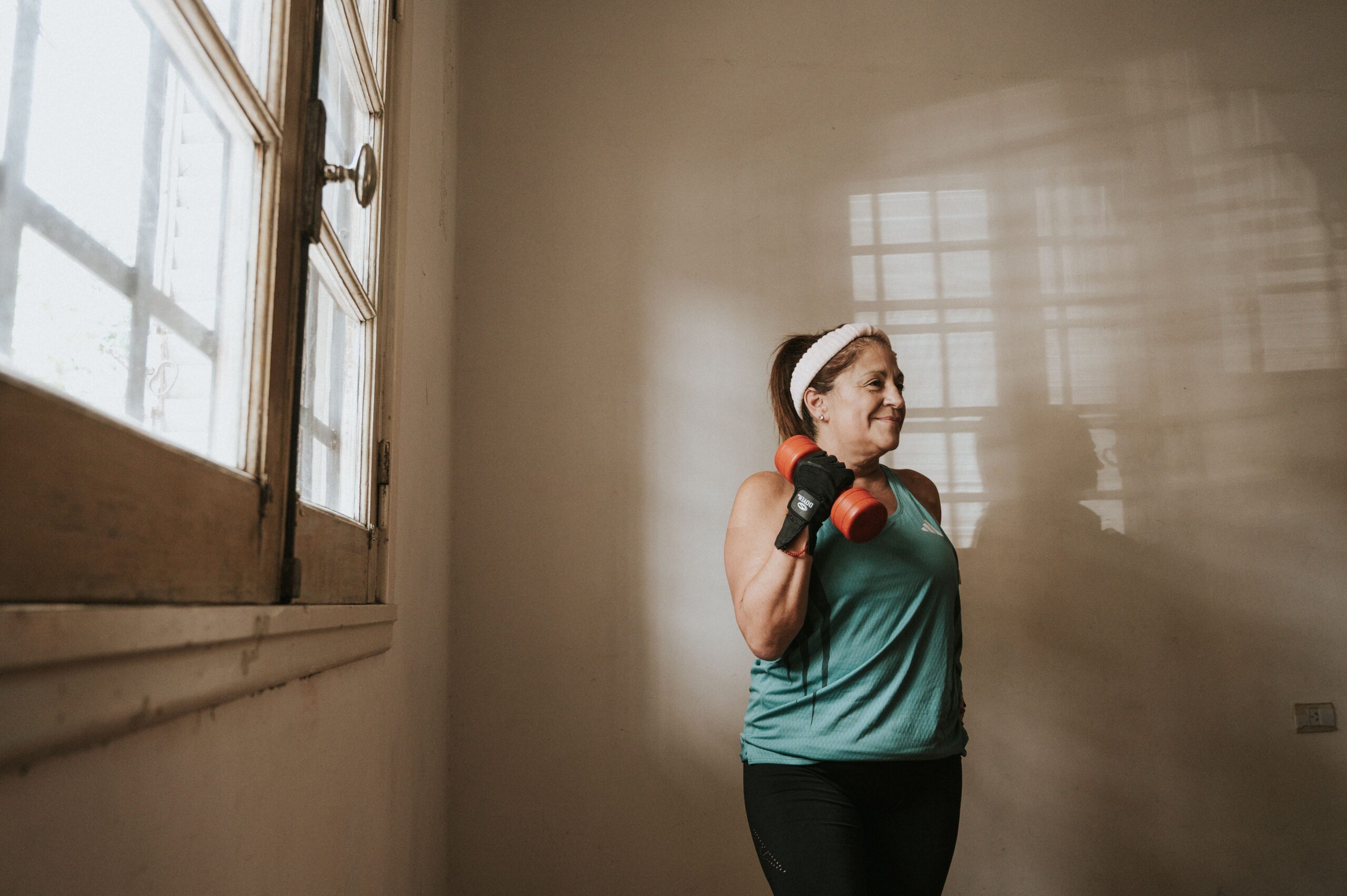
Nobody designed the bench press as a longevity intervention. Yet dumbbells, resistance bands and the humble squat now turn up in conversations about aging well, right alongside sleep and cardio. Humanic Blue is looking at the layers of strength-training research, because each supports a different kind of claim about longevity.
The top layer is a link, not proof. In a US National Cancer Institute study of nearly 100,000 older adults, people who lifted weights were about 9% less likely to die during roughly nine years of follow-up. People who lifted once or twice a week and also met aerobic exercise guidelines were about 41% less likely than people who did neither. Underneath that, trials that randomly assigned people to exercise groups show resistance training—muscle work against weights, bands or body weight—lowers blood pressure and builds strength. No trial has tested whether it helps people live longer.
In This Article
Key Takeaways
- Older adults who lifted weights had lower death rates in a large US study, even after accounting for their aerobic exercise. That is a link, not proof that lifting caused the difference.
- People who did both strength and aerobic exercise had the lowest death rates in that study.
- Trials show resistance training can lower resting blood pressure and build strength in older adults.
- The American Heart Association says the evidence suggests resistance training is “safe and effective” for heart health, with and without heart disease; its statement also calls for patient screening before a program.
- Whether strength training itself helps people live longer hasn’t been tested in a trial.
How do weightlifters’ death rates compare in long studies?
Researchers at the US National Cancer Institute, led by Jessica Gorzelitz, asked about 100,000 adults in a large cancer-screening trial whether they lifted weights. The group averaged 71 years old, and the researchers followed them for a median of nine years, checking death records. After accounting for aerobic exercise and other habits, weightlifters were about 9% less likely to die from any cause, and about 9% less likely to die from heart disease.
The combination stood out. Compared with people who did neither kind of exercise, people who met aerobic guidelines but didn’t lift had about 32% lower death rates. People who met aerobic guidelines and also lifted once or twice a week had about 41% lower death rates. The authors wrote that these adults “appeared to gain additional benefit.” Lifting wasn’t linked to fewer cancer deaths once aerobic exercise was taken into account. See the numbers
A Japanese review of 16 long-term studies, led by Haruki Momma at Tohoku University, found the same general direction: muscle-strengthening activity was linked to roughly 10% to 17% lower risk of death and several major diseases. Why Muscle Matters for Longevity covers that review in more detail.
These are associations. People who lift weights may differ from people who don’t in health, income or other habits, and weightlifting was self-reported, so these studies can’t fully separate the lifting from the lifter.
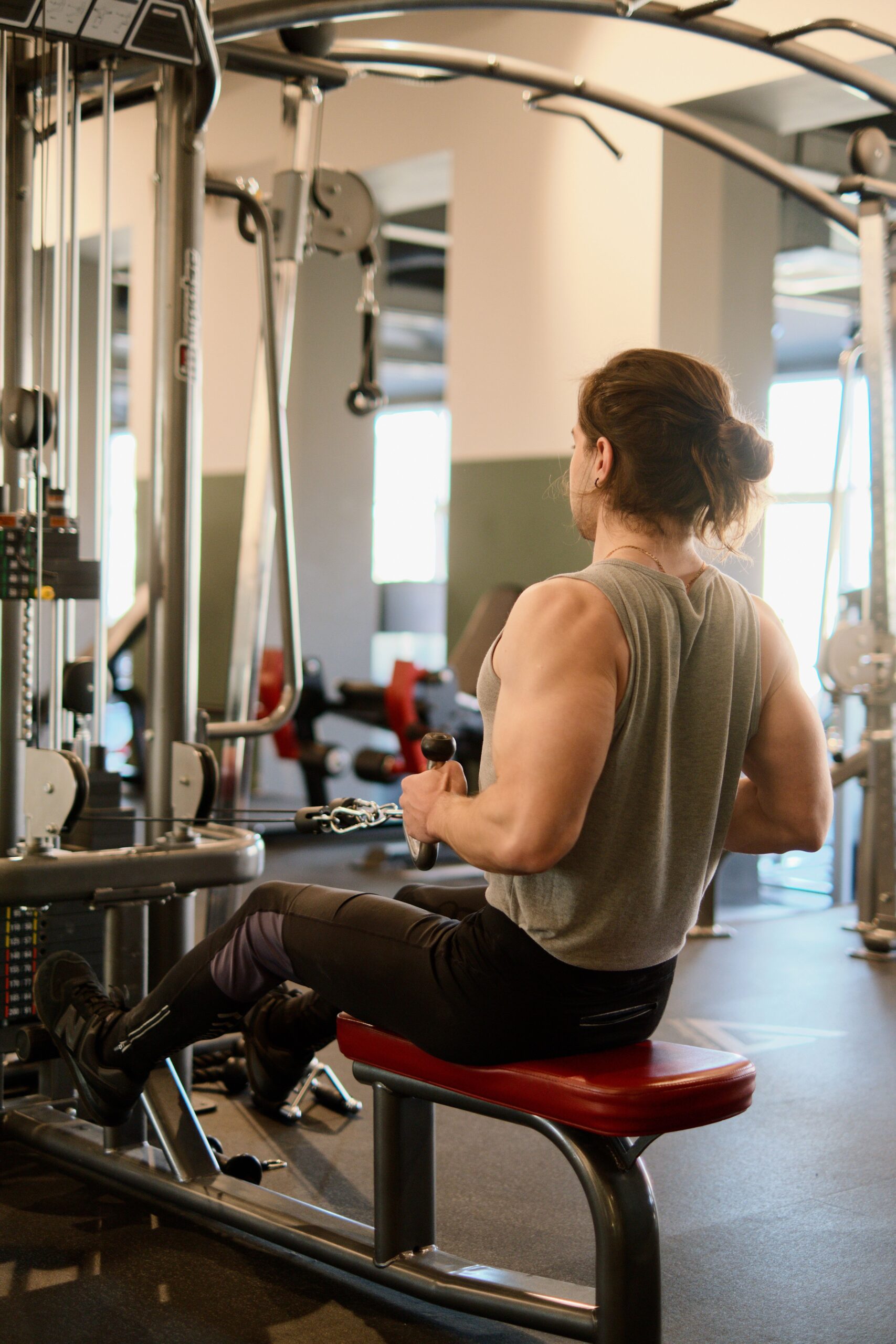
What did the training trials actually improve?
Randomized trials rarely run long enough to count deaths, but they can measure the things that tend to come before them.
Blood pressure. Researchers at Canterbury Christ Church University in England pooled 270 randomized trials with nearly 16,000 people in a 2023 analysis in the British Journal of Sports Medicine. Resistance training with moving weights lowered resting blood pressure by roughly 4.5 points on the top number and 3 on the bottom, about the same as aerobic training. Isometric exercise, which means holding a position without moving, such as a wall squat, lowered it by about 8 points on the top number. How the analysis worked
Heart health overall. The American Heart Association’s 2023 scientific statement, written by a panel led by Amanda Paluch of the University of Massachusetts Amherst, says “accumulating evidence suggests resistance training is a safe and effective approach for improving cardiovascular health in adults with and without cardiovascular disease.”
Strength and everyday function. A Cochrane review of 121 trials in about 6,700 older people, led by Chiung-Ju Liu, found progressive resistance training—making the muscle work harder as strength improves—had a large positive effect on strength, a modest effect on walking speed and a larger one on getting out of a chair. Build Muscle After 60 walks through that review, and Build Muscle After 70 covers the LIFE study, where a program combining walking, strength and flexibility training reduced loss of the ability to walk 400 meters in sedentary adults aged 70 to 89.
Which measured benefits can training trials establish without counting years of life?
Has a trial shown that lifting extends lifespan?
No randomized trial has assigned people to strength training and then counted how long they live. The closest thing is Norway’s Generation 100 study, which followed about 1,570 people in their 70s for five years with death as its main outcome. It tested aerobic training, not lifting, and the two exercise groups combined didn’t live measurably longer than a control group that was also fairly active. Zone 2 Training for Longevity covers that trial.
So the case for strength training and longer life rests on two supports: consistent links in long studies, and trial evidence that it improves blood pressure, strength and function. Neither shows that lifting, by itself, adds years.
What remains uncertain when observational survival findings and functional trials point in a similar direction?
How much lifting do the guidelines describe?
The CDC recommends muscle-strengthening activities at least 2 days a week for older adults, working “all major muscle groups (legs, hips, back, abdomen, chest, shoulders, and arms).” It pairs that with at least 150 minutes a week of moderate aerobic activity, plus balance work.
The American Heart Association’s statement gets more specific for healthy adults: 8 to 10 exercises covering the major muscle groups, 1 to 3 sets of 8 to 12 repetitions, at least twice a week. A repetition is one complete movement; a set is a group of repetitions. It adds that programs “need not be time-consuming,” requiring about 30 to 60 minutes a week, and that body-weight training “can be as effective” as machines or free weights. That 30-to-60-minute range is also where the Tohoku review saw the largest drop in death risk; whether much more adds anything is unclear. The dose details

Before you start
Strength training isn’t risk-free. The Cochrane reviewers noted that joint pain and muscle soreness were reported in many of the trials that tracked them, though serious problems were rare. They also cautioned that adverse events weren’t well reported, so results may not transfer neatly to people with health conditions.
The American Heart Association (AHA) advises that before starting a resistance program, patients should consult a physician about contraindications: health conditions that could make some exercises unsuitable. Its safety review found no significant heart events during resistance training in studies of healthy adults, low-risk heart patients and people with controlled high blood pressure.
Every body is different, too. These results are averages across thousands of people, and what worked for them may not work the same way for someone managing a specific condition.
What’s Interesting
The exercise with the biggest blood-pressure effect in the Canterbury analysis wasn’t lifting anything at all. It was isometric work, and the single top-ranked version for the top number was the wall squat: leaning against a wall with your knees bent, and holding still. It may be the only workout where the main move is not moving.
The other surprise is how few people do the twice-a-week minimum. According to the AHA, “less than one-third of US adults report participating in the recommended 2 days per week.” For a habit with this much trial evidence behind its risk-factor effects, that’s a lot of unused dumbbells.
What This Means in Practice
For readers interested in living longer and better, the CDC and AHA guidance combines muscle-strengthening and aerobic activity. The guidance describes populations, not an individual training plan:
- For older adults, the CDC recommends muscle-strengthening activity at least 2 days a week alongside at least 150 minutes of moderate aerobic activity and balance work.
- For healthy adults, the AHA describes moderate starting loads and gradual increases in resistance, sets or frequency. Its statement includes body-weight training as an alternative to machines or free weights.
- For patients, the AHA calls for a physician’s assessment of conditions that could make resistance exercise unsuitable before starting a program.
The Canterbury blood-pressure findings do not establish that wall squats are the right choice for every person with high blood pressure. The analysis compared average effects across studies; personal suitability remains a separate question. A primary care clinician can advise on heart and blood-pressure questions. A physical therapist or qualified trainer can build a program around joints, balance and past injuries.
For readers adapting training around joint symptoms, Osteoarthritis and Exercise reviews what guidelines and trials say about movement rather than rest.
Bottom Line
In a US study of nearly 100,000 older adults, weightlifting was linked to lower death rates, and people who lifted once or twice a week and met aerobic exercise guidelines had about 41% lower death rates than people who did neither. Randomized trials show strength training lowers blood pressure and improves strength and function, and the American Heart Association describes it as safe and effective for heart health. No trial has tested whether strength training extends lifespan, and the long-study links can’t rule out that healthier people are simply more likely to lift. For older adults, the CDC recommends muscle-strengthening activity at least twice a week alongside aerobic and balance activity; the AHA calls for patient screening before a resistance program.
A NOTE FROM LONGEVITY365
We read research, consult expert perspectives and work to make complicated health information easier to understand. What you’re reading here reflects how we’ve interpreted and organized that information. It is educational content—not personal medical advice, diagnosis or treatment guidance.
We’re not perfect, and neither is the available research. Evidence changes, new studies emerge and what’s appropriate for one person may not be appropriate for another.
Use this article as a starting point for your own research and conversations with qualified professionals. Always talk with your doctor or another trusted healthcare professional before making decisions that could affect your health, particularly if you take medications, are receiving treatment, have existing health conditions, are pregnant or have other circumstances that could affect what’s appropriate for you.
Reader Questions
A few questions to carry into the comments or your next conversation. Please leave out identifying or personal medical details.
- 01Which measurement or milestone would feel useful to track without letting it take over the whole point of moving?
- 02Which real-world barrier did the article address most usefully: time, confidence, access, recovery, or knowing where to start?
- 03What question would you bring to a clinician, physical therapist, trainer, or exercise professional after reading about Strength Training for Longevity?
Extra Insights & Sources
For readers who want the details behind each claim above.
What We Know
- Weightlifting and muscle-strengthening activity are associated with lower all-cause and cardiovascular mortality. Supported (observational).
- Strength plus aerobic exercise is associated with the lowest mortality. Supported (observational).
- Resistance training lowers resting blood pressure and increases strength in randomized trials, with smaller gains in everyday function. Supported.
- The AHA statement describes resistance training as safe and effective for cardiovascular health, including in selected adults with heart disease, while calling for patient screening before a program. Established (scientific statement).
What We Don’t Know
- Whether strength training extends human lifespan. Unknown. No trial has tested it.
- Whether very high training volumes add or subtract benefit. Uncertain.
- How much of the cohort association reflects the kind of people who lift weights. Uncertain.
The weightlifting cohort in detail
HR means hazard ratio, a comparison of death or event rates over follow-up; below 1 favors the lifting group. CI means confidence interval, the range of estimates compatible with the data under the analysis. These ratios describe associations, not extra years of life.
PLCO weightlifting analysis (2022). Gorzelitz and colleagues at the National Cancer Institute’s Division of Cancer Epidemiology and Genetics (senior author Charles Matthews) analyzed 99,713 adults in the Prostate, Lung, Colorectal and Ovarian Cancer Screening Trial who completed a follow-up questionnaire about weightlifting. Mean age at the questionnaire was 71.3 years, 52.6% were women, and mortality was followed through 2016 (median 9 years). Published in the British Journal of Sports Medicine.
- Weightlifting, adjusted for aerobic moderate-to-vigorous activity: all-cause mortality HR 0.91 (95% CI 0.88 to 0.94); cardiovascular mortality HR 0.91 (0.86 to 0.97).
- Joint models, versus no aerobic activity and no weightlifting: met aerobic guidelines without weightlifting, HR 0.68 (0.65 to 0.70), 32% lower; met aerobic guidelines plus weightlifting 1 to 2 times a week, HR 0.59 (0.54 to 0.64), 41% lower.
- Cancer mortality: lower without adjustment for aerobic activity (HR 0.85, 0.80 to 0.91), but the authors concluded weightlifting was associated with lower all-cause and cardiovascular mortality, “but not cancer mortality.”
- Authors’ conclusion: “Adults who met recommended amounts of both types of exercise appeared to gain additional benefit.”
- Competing interests: none declared.
Tohoku/Waseda meta-analysis (2022). Momma and colleagues pooled 16 prospective cohort studies. Muscle-strengthening activities were associated with 10% to 17% lower risk of all-cause mortality, cardiovascular disease, total cancer, diabetes and lung cancer, independent of aerobic activity. The association followed J-shaped curves: risk was lower at modest weekly amounts, then the apparent benefit weakened at higher amounts. Those curves showed the maximum risk reduction (about 10% to 20%) at roughly 30 to 60 minutes a week for all-cause mortality, cardiovascular disease and total cancer; the authors called the influence of higher volumes “unclear.” Competing interests: none declared.
The blood-pressure analysis in detail
Edwards and colleagues (Canterbury Christ Church University; senior author Jamie O’Driscoll) included 270 randomized controlled trials published between 1990 and February 2023, with 15,827 participants and exercise programs of at least two weeks against a non-exercising control group.
| Training type | Drop in resting blood pressure: top/bottom number (systolic/diastolic), in mm Hg |
|---|---|
| Aerobic | 4.49 / 2.53 |
| Dynamic resistance | 4.55 / 3.04 |
| Combined aerobic plus resistance | 6.04 / 2.54 |
| High-intensity interval | 4.08 / 2.50 |
| Isometric | 8.24 / 4.00 |
The unit mm Hg means millimeters of mercury, the standard blood-pressure unit. Dynamic resistance means moving against resistance; isometric exercise means holding a position. The table gives average changes compared with non-exercising control groups, not a guaranteed individual reduction. All reductions were statistically significant (p<0.001) in pairwise analyses, meaning the comparisons provided evidence of differences beyond chance. In the network ranking for systolic pressure, which combines direct and indirect comparisons across the trials, isometric training ranked first (SUCRA, a statistical ranking score, 98.3%; not a 98.3% blood-pressure reduction), followed by combined (75.7%), dynamic resistance (46.1%), aerobic (40.5%) and high-intensity interval training (39.4%). The isometric wall squat was the top-ranked sub-type for systolic pressure. The authors concluded that “various exercise training modes improve resting blood pressure, particularly isometric exercise.” Competing interests: none declared.
The strength and function evidence
The Cochrane review by Liu and Latham (2009) included 121 trials with 6,700 participants; most programs ran two to three times a week at high intensity. SMD (standardized mean difference) expresses effects on a shared statistical scale; MD is the difference in the original measurement units. Effects: a large effect on strength (73 trials, 3,059 participants, SMD 0.84); a modest gain in gait speed (24 trials, MD 0.08 m/s); a moderate to large effect on getting out of a chair (11 trials, SMD −0.94); and a small but significant improvement in overall physical ability (33 trials, SMD 0.14). The chair-rise result concerns the time needed to stand from sitting: less time means better performance, so the beneficial effect is negative. Higher strength and physical-ability scores mean better performance, so their beneficial effects are positive. SMD values are not percentage changes. Musculoskeletal complaints such as joint pain and muscle soreness were reported in many studies that monitored them; serious adverse events were rare and none was reported as directly related to the exercise. The authors advised some caution in applying the exercises to clinical populations, because adverse events weren’t adequately reported.
The LIFE study (JAMA, 2014) randomized 1,635 sedentary adults aged 70 to 89 to a structured moderate-intensity program (aerobic, resistance and flexibility training, twice a week in a center and three to four times a week at home) or health education; major mobility disability occurred in 30.1% of the activity group and 35.5% of the education group (HR 0.82, 95% CI 0.69 to 0.98). Full detail is in Build Muscle After 70.
The AHA statement and the dose
The AHA scientific statement, “Resistance Exercise Training in Individuals With and Without Cardiovascular Disease: 2023 Update” (Paluch et al., Circulation, published online December 2023, in print January 2024), updates the association’s 2007 statement. Key points from the full text:
- Epidemiological evidence: adults who do resistance training have about 15% lower all-cause mortality and 17% lower cardiovascular disease risk than adults who report none, with maximum risk reduction at about 30 to 60 minutes a week.
- Prescription for healthy adults: “8 to 10 different exercises involving major muscle groups,” 1 to 3 sets of 8 to 12 repetitions to fatigue, “≥2 times per week.” The statement describes beginners starting at 40% to 60% of their one-repetition maximum—the greatest weight they can lift once—and progressing gradually. “Body weight training can be as effective as training with weight machines or free weights.”
- Time: programs “need not be time-consuming to be efficacious, requiring only 30 to 60 minutes per week.”
- Safety: in studies of healthy adults, low-risk cardiac patients, people with controlled hypertension, stroke survivors and organ-transplant recipients, “no significant cardiovascular events were reported” during resistance training and strength testing. “Before initiating an RT program, patients should consult with a physician for absolute and relative contraindications.”
- Uptake: “less than one-third of US adults report participating in the recommended 2 days per week of resistance training activities.”
- Disclosures: the writing group’s disclosure table lists mainly NIH and AHA research funding; one member reported modest research support from supplement and device companies (including ChromaDex and ReserveAge) unrelated to resistance training.
The CDC’s guidance for older adults (last reviewed December 4, 2025) recommends at least 150 minutes a week of moderate-intensity aerobic activity, at least 2 days of muscle-strengthening activities that “work all major muscle groups (legs, hips, back, abdomen, chest, shoulders, and arms),” and activities to improve balance.
The lifespan gap in detail
Generation 100 (Stensvold et al., BMJ, 2020; Norwegian University of Science and Technology) randomized 1,567 adults aged 70 to 77 (mean 72.8) to twice-weekly high-intensity intervals, moderate continuous training or national activity guidelines for five years, with all-cause mortality as the main outcome. The authors concluded that combined training “has no effect on all cause mortality compared with recommended physical activity levels,” with a non-significant lower-mortality trend after interval training (HR 0.63, 95% CI 0.33 to 1.20). Control participants did more high-intensity activity than the moderate group. The trial tested aerobic training only; funding came from Norwegian public and foundation sources.
Sources
- Gorzelitz J, et al. Weightlifting, aerobic activity and mortality in PLCO, British Journal of Sports Medicine, 2022: PubMed 36167669
- Momma H, et al. Muscle-strengthening activities and mortality, meta-analysis, British Journal of Sports Medicine, 2022: PubMed 35228201
- Edwards JJ, et al. Exercise training and resting blood pressure, network meta-analysis, British Journal of Sports Medicine, 2023: PubMed 37491419
- Paluch AE, et al. AHA scientific statement on resistance exercise training, Circulation, 2024 (online 2023): PubMed 38059362
- Liu CJ, Latham NK. Progressive resistance strength training in older adults, Cochrane Database of Systematic Reviews, 2009: PubMed 19588334
- Pahor M, et al. LIFE study, JAMA, 2014: PubMed 24866862
- Stensvold D, et al. Generation 100, BMJ, 2020: PubMed 33028588
- Centers for Disease Control and Prevention: Physical Activity Guidelines for Older Adults
Photo credits
Images from Pexels.
- featured: Photo by Patricia Bozan — original Pexels photo.
- inline-1: Photo by Ivan S — original Pexels photo.
- inline-2: Photo by https://kaboompics.com/ — original Pexels photo.
Leave a Reply