
Exercise
Build Muscle After 70
Adults over 70 can gain strength and some muscle with resistance training. Mobility and hospital-function trials measured separate outcomes.

After 70, building muscle can be less about appearance and more about getting up from a chair, climbing stairs, carrying groceries and staying independent. At Humanic Blue, those everyday abilities are the reason to examine what training studies actually measured.
Yes, adults over 70 can gain strength and some muscle with resistance training—exercise against a load, such as weights. A 2020 review of randomized studies in adults 75 and older found improvements in strength and whole-muscle size, including a strength benefit in the subgroup aged 80 and older. Handgrip strength and the size of individual muscle fibers—the cells that make up a muscle—did not clearly improve. An increase in whole-muscle size is a different measurement from a change in individual fibers. Separate trials found that multicomponent activity reduced mobility disability in selected adults aged 70–89 and improved function during a short hospital stay in patients averaging 87. Those are mobility and function findings—not proof of muscle growth or longer life. For living longer and better after 70, the supported goal is preserving strength and independence.
Key Takeaways
- A review of randomized studies found strength and whole-muscle growth with resistance training after 75.
- The LIFE trial reduced loss of walking ability in medically screened, sedentary adults 70 to 89 who could still walk 400 meters at enrollment.
- One short, supervised hospital program improved daily function at discharge in patients averaging 87; it did not measure muscle growth.
- Incomplete safety reporting in studies of the oldest adults limits confidence about harms.
- Trials have not established whether training after 70 extends lifespan.
Can muscle still grow in the oldest adults?
A 2020 systematic review combined randomized controlled studies in adults aged 75 and older. Resistance training improved overall muscle strength and whole-muscle size compared with controls. A subgroup analysis also found a strength benefit in adults 80 and older. The review did not find clear effects on handgrip strength or individual muscle-fiber size, and adverse events were reported too sparsely to establish safety confidently.
One of the small studies behind this field was a 2007 controlled study in Copenhagen. A small group aged 85 to 97 completed 12 weeks of supervised resistance training; another group served as controls. The load was 80% of one-repetition maximum—the most weight a person can lift once. The published record does not describe the group assignment as random.
Knee strength improved when tested both by holding against resistance and by moving the knee. Thigh muscle area and fast-twitch muscle-fiber size also increased. The exact changes are below.
The study measured muscle size rather than inferring it from strength, but its small sample cannot establish a universal response or prove that unsupervised heavy training is safe. The landmark 1994 nursing-home trial, where strength rose sharply while thigh-size change was statistically inconclusive, is covered in Build Muscle After 60.
How much of this evidence concerns muscle size, and how much concerns usable strength?
Staying able to walk
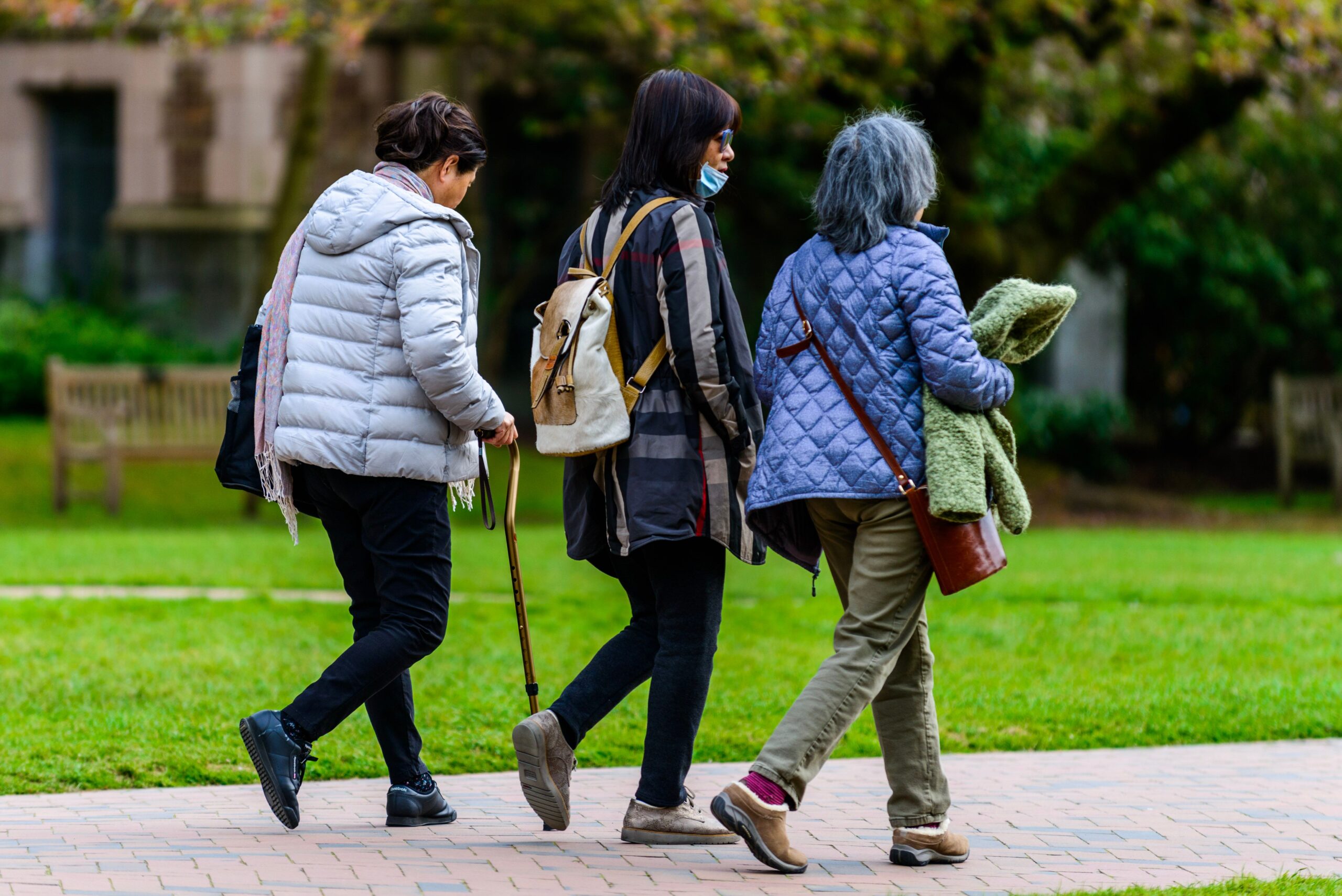
The LIFE trial enrolled sedentary adults aged 70 to 89 at eight US centers. Participants had lower-extremity limitations but could walk 400 meters in under 15 minutes and were medically cleared for the program. Half were assigned to moderate-intensity walking, lower-body strength, flexibility and balance work, with two center visits and home activity three to four times weekly. The comparison group attended health-education workshops and did upper-body stretching.
Over about three years, roughly 30% of the activity group lost the ability to walk 400 meters, compared with about 36% of the education group. That is about five fewer people in every 100—a difference in walking ability, not a measure of extra lifespan. Persistent walking disability was also less common.
Serious adverse events occurred in nearly half of each group. The comparison did not clearly establish a difference, but could not rule out some increase with the activity program. The mortality comparison was inconclusive. LIFE tested a combined program in medically screened adults like those enrolled; it did not isolate resistance training or measure muscle growth as its primary outcome. The exact results are below.
LIFE was primarily funded by the US National Institutes of Health and National Institute on Aging. An NIH sponsor held one of 12 votes on the steering committee, a role the trial report disclosed.
Can exercise protect function during a hospital stay?
A single-center Spanish trial randomly assigned hospitalized patients aged 75 to 101, with an average age of about 87, to usual care or individualized resistance, balance and walking exercises twice daily. The typical hospital stay was about a week, with exercise delivered for about five days.
By discharge, the exercise group did better on the Barthel Index, which measures independence in everyday activities, and the Short Physical Performance Battery, which tests balance, walking and chair rising. Everyday independence declined on average with usual care and improved with the exercise program. Investigators observed no intervention-related adverse effects during this short trial. The score differences are below.
This was a short, supervised intervention at one hospital. It measured physical function and independence—not muscle mass—and does not establish the safety or effectiveness of unsupervised exercise during every acute illness. The study reported public grant funding and no conflicts of interest.
How hospital stays and weight loss threaten muscle after 60 is covered in Prevent Muscle Loss After 60.
What limits the transfer of a supervised hospital program to exercise outside that setting?
What did the training programs involve?
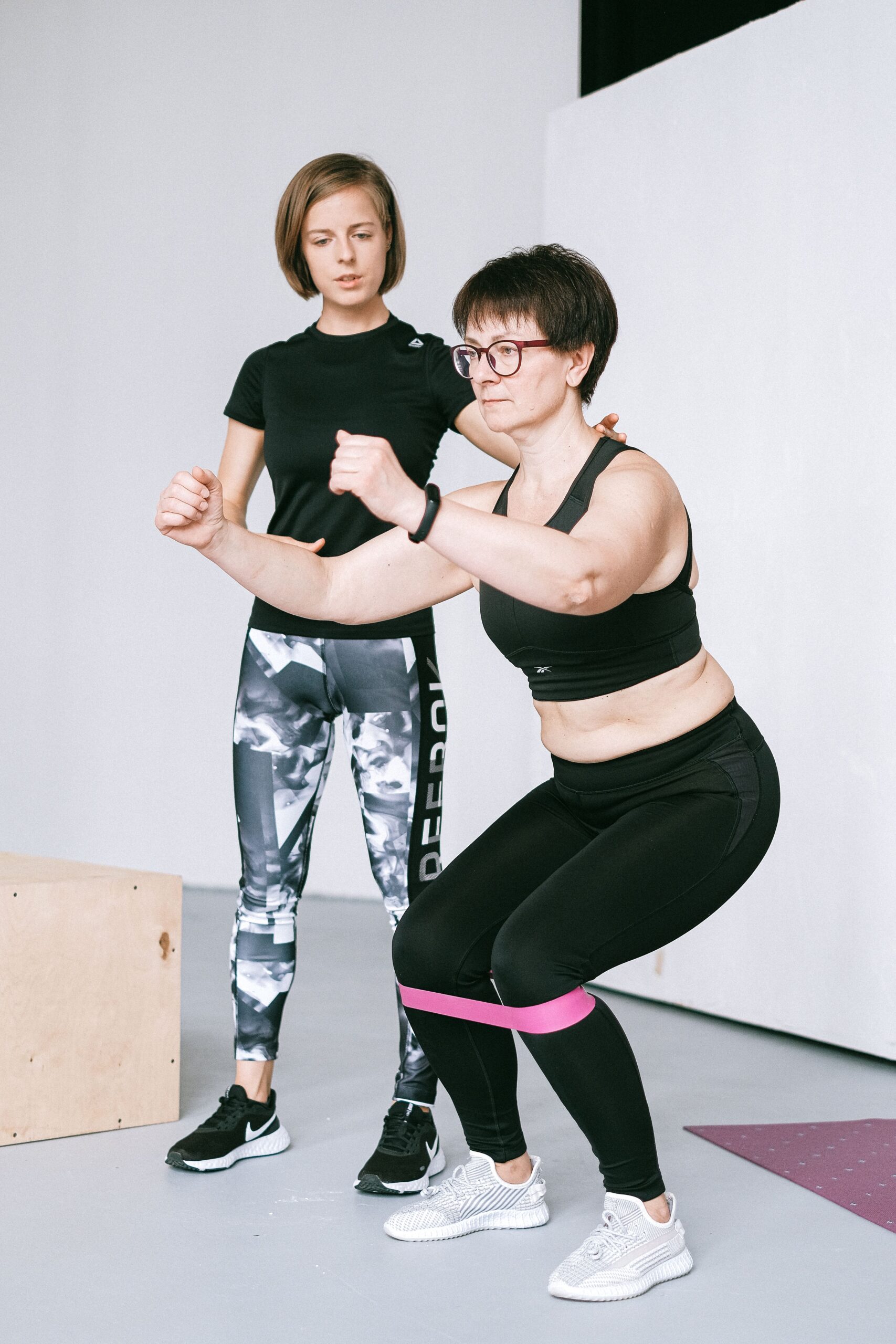
The trials tested different programs in different settings; their components do not add up to one routine for every adult over 70:
- Supervised resistance training: The small Danish study tested a heavy load under supervision. It does not establish a starting prescription for other older adults.
- Walking and balance work alongside strength training, as in LIFE.
- Frequency: LIFE combined two center sessions with home activity. Current federal guidance recommends muscle strengthening at least two days a week, aerobic activity and balance work for older adults.
- A program matched to current ability and health. Federal guidance says people with chronic conditions should understand how those conditions affect safe activity and, when the standard aerobic target is not possible, be as active as their abilities and conditions allow.
- Nutrition is a separate question, covered in Protein Needs After 70.
What’s Interesting
The outcomes answer different questions. The resistance-training studies support strength and some muscle growth. LIFE tested whether a multicomponent program preserved the ability to walk a quarter-mile. The hospital trial tested short-term function and independence. None should be used as a substitute for another, and none tested lifespan.
What This Means in Practice
For living longer and better after 70, the studies offer evidence about independence, with limits that matter in a clinical or training discussion.
- Starting ability and health: LIFE enrolled medically screened people who had physical limitations but could still walk 400 meters. Its results do not establish a plan for people unable to do that. The screening distinctions are explained in Build Muscle After 60.
- Population activity guidance: Federal guidance recommends muscle-strengthening activity for all major muscle groups at least twice weekly, aerobic activity and balance work for older adults. Its standard aerobic target is 150 minutes of moderate activity per week, with adaptation when health and ability limit activity. These are general targets, not a prescription for a person recovering from illness or living with frailty.
- A hospital stay: The Spanish trial tested an individualized, supervised program during a short admission. Whether supervised mobility or exercise is safe and available for a particular illness is a specific question for the treating team.
A physical therapist can assess movement, balance and rehabilitation needs. A geriatrician or primary care clinician can advise on heart, lung or joint conditions.
Bottom Line
Adults over 70 can gain strength and some muscle with resistance training. A randomized-study synthesis in people 75 and older supports strength and whole-muscle growth, while a small controlled study showed that measurable gains can occur even at ages 85 to 97. Separately, LIFE reduced mobility disability with a multicomponent program, and a single-center hospital trial improved short-term function. Neither trial proves muscle growth or longer life. Federal guidance recommends muscle-strengthening activity at least twice weekly alongside aerobic and balance activity for older adults, adapted to health and ability. The trials do not supply one starting routine for everyone.
A NOTE FROM LONGEVITY365
We read research, consult expert perspectives and work to make complicated health information easier to understand. What you’re reading here reflects how we’ve interpreted and organized that information. It is educational content—not personal medical advice, diagnosis or treatment guidance.
We’re not perfect, and neither is the available research. Evidence changes, new studies emerge and what’s appropriate for one person may not be appropriate for another.
Use this article as a starting point for your own research and conversations with qualified professionals. Always talk with your doctor or another trusted healthcare professional before making decisions that could affect your health, particularly if you take medications, are receiving treatment, have existing health conditions, are pregnant or have other circumstances that could affect what’s appropriate for you.
Reader Questions
A few questions to carry into the comments or your next conversation. Please leave out identifying or personal medical details.
- 01Which measurement or milestone would feel useful to track without letting it take over the whole point of moving?
- 02Which real-world barrier did the article address most usefully: time, confidence, access, recovery, or knowing where to start?
- 03What question would you bring to a clinician, physical therapist, trainer, or exercise professional after reading about Build Muscle After 70?
Extra Insights & Sources
The evidence summaries and linked sources behind this article.
What We Know
- Strength and whole-muscle size respond to resistance training after 75; a small controlled study included people up to 97. Supported, with limited oldest-old data.
- A structured activity program reduces major mobility disability in sedentary people 70 to 89. Supported.
- A five-day median in-hospital program improved discharge function in one center. Supported in that setting.
- Safety evidence in the oldest adults is incomplete. Uncertain; resistance-training reviews reported adverse events sparsely, and LIFE’s serious-event estimate could not exclude some increase.
What We Don’t Know
- Whether strength training after 70 extends lifespan. Unknown.
- How long benefits last after programs end. Uncertain.
- The best program for people with severe frailty, dementia or advanced heart or lung disease. Uncertain; these groups are underrepresented.
Detailed trial results
Danish controlled study: eleven trainees and 12 controls participated. Isometric knee-extensor strength (force without knee movement) rose 37%, and isokinetic knee strength (force during movement at a controlled speed) rose 41%–47%. Lean thigh-muscle cross-sectional area grew 9.8%, and fast-twitch muscle-fiber size grew 22%.
Spanish hospital trial: the median stay was eight days and the median intervention five days. Barthel Index scores fell 5.0 points with usual care and rose 1.9 points with exercise. At discharge, the exercise group scored 6.9 points higher on that index and 2.2 points higher on the Short Physical Performance Battery (SPPB). The Barthel Index runs from 0 (severe dependence) to 100 (independence); SPPB runs from 0 to 12, with higher scores indicating better balance, walking and chair-rise performance. The trial used 5 Barthel points and 1 SPPB point as meaningful-change thresholds; these group differences exceeded those thresholds, without guaranteeing the same change for every patient.
Detailed outcomes from the LIFE trial described above, over an average of 2.6 years. HR means hazard ratio: a comparison of event rates over follow-up. An HR of 0.82 means an estimated 18% lower rate and 0.72 a 28% lower rate. These are relative rate comparisons, distinct from the adjacent percentages of participants who experienced disability:
- Major mobility disability, defined as losing the ability to walk 400 meters, occurred in 30.1% of the exercise group and 35.5% of the education group (HR 0.82).
- Persistent mobility disability was 14.7% versus 19.8% (HR 0.72).
- Serious adverse events were 49.4% versus 45.7%, a difference that wasn’t statistically significant.
Sources
- Grgic et al., Sports Medicine (2020): systematic review and meta-analysis of 22 randomized controlled studies in adults 75+; resistance training improved overall strength and whole-muscle size, including strength in an 80+ subgroup, but handgrip and muscle-fiber-size results were inconclusive and adverse-event reports were sparse. https://pubmed.ncbi.nlm.nih.gov/32740889/
- Kryger and Andersen, Scandinavian Journal of Medicine & Science in Sports (2007): 12-week controlled study with 11 trainees aged 85–97 and 12 controls; supervised training at 80% of one-repetition maximum increased knee strength and measured thigh size, but the sample was tiny and the PubMed record does not identify random allocation. https://pubmed.ncbi.nlm.nih.gov/17490465/
- Pahor et al., LIFE trial, JAMA (2014): eight-center randomized controlled trial (RCT) of 1,635 sedentary, medically screened adults aged 70–89 with physical limitations but ability to walk 400 meters; multicomponent activity lowered major and persistent mobility disability over 2.6 years. It did not isolate resistance training or test muscle growth, and serious events were common in both groups. https://pubmed.ncbi.nlm.nih.gov/24866862/
- Martínez-Velilla et al., JAMA Internal Medicine (2019): single-center randomized controlled trial of 370 hospital patients aged 75–101, mean 87.3; a twice-daily multicomponent program delivered for a median five days improved discharge SPPB and Barthel scores versus usual care. It measured function, not muscle mass. https://pubmed.ncbi.nlm.nih.gov/30419096/
- Physical Activity Guidelines for Americans, older-adult midcourse report: current federal summary of the recommendations for aerobic, muscle-strengthening and balance activity, including adaptation to abilities and chronic conditions. https://odphp.health.gov/our-work/nutrition-physical-activity/physical-activity-guidelines/current-guidelines/midcourse-report/10-things-know
Photo credits
Images from Pexels.
- featured: Photo by Mak_ jp — original Pexels photo.
- inline-1: Photo by Anna Shvets — original Pexels photo.
- inline-2: Photo by Bryce Carithers — original Pexels photo.
Leave a Reply