
At-Home Lab Tests
Best At-Home Longevity Tests
At-home longevity tests measure very different things. Functional checks and clinical labs have context; clocks, wearables and gut scores have larger limits.
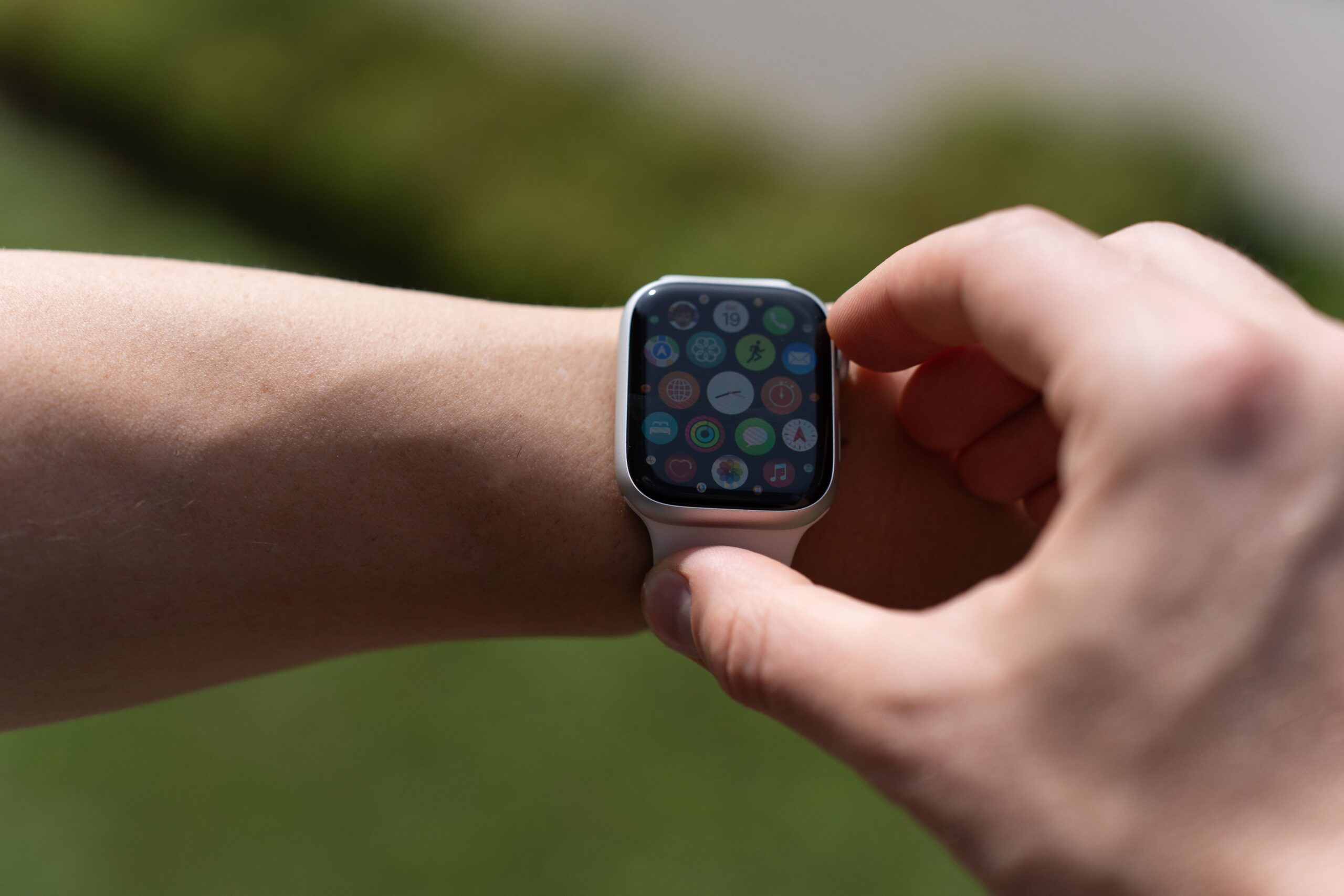
Biological age from a finger-prick. Cardio capacity from a watch. Gut health from a sample nobody wants described over breakfast. The products sit together online, but the evidence behind them does not. Humanic Blue is sorting the measurements from the marketing.
The best at-home longevity tests answer different questions; whether a result could change care depends on the measure and the person. Grip strength, walking speed and chair stands have clinical or research context, but they are not diagnoses. Some home-collected blood tests measure markers used in clinical care: Lp(a) and ApoB help assess cardiovascular risk, while A1C reflects average blood sugar. Their use depends on a qualified laboratory performing the analysis and a clinician interpreting it under the relevant guidance. Wearables estimate fitness. Epigenetic-age and microbiome kits can supply interesting data, but they do not tell an individual how long they will live. For living longer and better, the limits of a result and its clinical context matter as much as the number.
Key Takeaways
- Grip strength and gait speed are associated with mortality in large human cohorts, but neither proves how long one person will live. Supported.
- The 2026 ACC/AHA guideline recommends Lp(a) at least once and selective ApoB testing; the ADA requires standardized A1C methods and confirmation of abnormal results. Established (guidance).
- A wearable VO2 max is an estimate. One small independent Apple Watch study found meaningful error against laboratory testing. Preliminary (device accuracy).
- Epigenetic clocks can have technical noise, and performance can vary across populations. Consumer results are not lifespan forecasts. Contested.
- Consumer microbiome scores reflect associations with health markers and diet, not a validated estimate of mortality or lifespan. Preliminary.
What can function tests tell you at home?
Functional tests measure what your body can do today. They are cheap or free, which is slightly awkward for a marketplace built around recurring subscriptions.
Grip strength and usual walking speed have the largest survival datasets in this group. A 30-second chair stand is a CDC fall-risk tool for older adults, while the sitting-rising test has more limited evidence from one Brazilian clinic. All four measure function. None is a home prophecy with a stopwatch attached. The study-by-study comparison
In the PURE study, Darryl Leong and colleagues followed nearly 140,000 adults ages 35 to 70 for a median of four years. Each five-kilogram lower grip strength was associated with 16% higher mortality during follow-up. The investigators explicitly said research was still needed to learn whether improving strength reduces mortality.
Stephanie Studenski and colleagues pooled nine cohorts containing about 34,000 community-dwelling adults age 65 or older. Faster usual walking speed was associated with better survival over six to 21 years. That is useful geriatric evidence, not a conversion table for a healthy 40-year-old.
The CDC’s 30-second chair stand uses a 17-inch chair and a stopwatch to assess leg strength and endurance in its fall-prevention program. Its scoring table begins at age 60. If standing without using your arms is unsafe, this is a clinician- or therapist-supervised question, not a home challenge.
The sitting-rising test has mortality data from about 2,000 adults followed for about six years and a later cohort of about 4,300 adults followed for about 12 years. Both came from the same Brazilian exercise clinic, and about two-thirds of participants were men. The results link performance with survival in those clinic patients; they may not apply equally to people outside that setting.
Blood tests: the laboratory and the next step matter
A finger-prick is a collection method. It does not turn every marker in a commercial panel into a recommended screening test.
The 2026 ACC/AHA dyslipidemia guideline recommends measuring Lp(a) at least once and using ApoB selectively to refine cardiovascular risk. It does not recommend buying the longest possible list of biomarkers.
For A1C, the American Diabetes Association’s 2026 standards require a standardized laboratory method. In someone without unmistakably high blood sugar, diagnosis requires confirmation with two abnormal results. The ADA also says point-of-care A1C testing for diagnosis should be limited to approved devices in appropriately certified laboratories with trained personnel.
That makes Lp(a), selectively ordered ApoB and properly performed A1C clinically interpretable measurements—not home lifespan tests. Fasting insulin, meanwhile, is not one of the ADA’s diagnostic criteria for prediabetes or diabetes.
Wearable fitness: an estimate of an important measure
Cardiorespiratory fitness describes how well the heart, lungs and circulation support exercise. VO2 max measures the maximum oxygen the body can use during intense exercise. Fitness is associated with mortality, but the large studies discussed here assessed people on treadmills. A watch or ring estimates the same concept from signals such as heart rate and pace.
Kyle Mandsager and Cleveland Clinic colleagues studied about 122,000 patients referred for treadmill testing and followed them for a median of 8.4 years. Lower measured performance was associated with higher mortality. Because this was a clinical referral population and an observational study, it does not validate a consumer device or prove that a particular watch score changes lifespan.
Rory Lambe and University College Dublin colleagues compared Apple Watch Series 9 and Ultra 2 estimates with laboratory testing in about 30 adults. The watches underestimated VO2 max by about six millilitres per kilogram per minute on average, with substantial person-to-person variation. One small validation study is enough to justify caution, not a universal correction formula.
Oura describes its own cardio-capacity result as an estimate and says its walking test is less accurate than a laboratory test. For practical use, record the device, software version and testing conditions; a changing algorithm can change the number without changing your lungs.
What would help establish whether a watch estimate carries the same meaning as a treadmill measurement?
What do biological-age kits actually measure?
DNA-methylation tests examine chemical marks attached to DNA and use an algorithm to estimate age-related patterns or pace of aging. GlycanAge measures sugar structures attached to IgG antibodies instead. These products share a shelf more easily than they share a measurement.
A 2022 Nature Aging reliability study found technical differences of up to nine years between replicate results from six prominent epigenetic clocks. Redesigned versions, using a statistical method called principal components to reduce noise, brought most repeat results within 1.5 years. The authors’ metrics were licensed to Elysium through Yale; Elysium supplied replicate datasets, and several authors disclosed past employment or consulting relationships.
Reliability is not the only concern. A 2026 eLife study found that methylation clocks did not perform consistently across groups of people with mixed genetic ancestry. A technically repeatable result can still be less accurate in a population unlike the one used to train the model.
Current vendor prices show what the consumer decision costs. As checked September 29, 2026, TruDiagnostic TruAge and GlycanAge each listed a one-time test at $499, while Elysium Index listed $299 per kit. Those are vendor prices, not evidence that one product predicts health or lifespan better than another.
Microbiome tests: a detailed snapshot without a lifespan scale
Consumer microbiome tests sequence organisms in a stool sample and compare the pattern with a company database. ZOE currently reports a score from 0 to 1,000 and food suggestions based on microbes it classifies as more or less favorable.
A 2026 Nature study analyzed microbiome, diet and health data from more than 34,000 US and UK participants and created rankings of species associated with diet and health markers. Association is the important word. The study did not validate a consumer score as a predictor of an individual’s lifespan.
As checked September 29, 2026, ZOE’s UK product page listed the test at £199, required an active app membership and estimated results within four weeks. Its membership page separately advertised a £149 test when paired with membership. That price structure can change; neither price resolves what a microbiome score means clinically.
When can more testing create less clarity?
Screening is not automatically helpful because it is available. The USPSTF thyroid-cancer recommendation is a clear example: the panel concluded that screening asymptomatic adults produces harms that outweigh benefits, largely through overdiagnosis and treatment of cancers that would not have caused problems.
That recommendation is not about longevity kits. It illustrates the general problem with testing without a validated purpose: false alarms, false reassurance and follow-up that may not help. For a consumer result, ask whether the method is validated, whether the result is reproducible, whether it applies to people like you and what a clinician would do differently.
How would a testing comparison account for unclear results and the follow-up they generate?
What’s Interesting
The products with the most elaborate dashboards often answer the least settled questions. Meanwhile, grip, gait and chair-stand research uses equipment with the technological sophistication of a stopwatch and a chair. The contrast is real; it does not make the simple tests diagnostic or the expensive tests useless. A test’s price, what it measures and the evidence for interpreting its result answer three different questions.
What This Means in Practice
- What question would the result answer? Fall risk, cardiovascular risk, diabetes screening, fitness tracking and curiosity about biological age are different jobs; a clinician can help determine which, if any, applies to an individual.
- Is a function test relevant and safe here? The CDC chair-stand scoring table begins at 60; gait-speed survival data here come from adults 65 and older. Neither makes a do-it-yourself test appropriate for everyone.
- Would a blood result need confirmation? The ordering clinician or laboratory can explain the method used and whether an abnormal home-collected result needs a repeat venous sample.
- How stable is a device estimate? Device, software version, date and conditions can affect the interpretation of a trend; a wearable reading is not a laboratory measurement.
- What has the clock been validated to measure? Repeatability and the populations represented in development matter when interpreting a single age score; the vendor may be able to supply those details.
- What happens to a mailed sample and its results? Questions for the service include who can access them, whether data may be shared or sold, how long the sample and results are kept, and whether deletion can be requested.
- Who can interpret a concerning result? A primary-care clinician can review laboratory findings; a physical therapist or exercise physiologist can assess function in a clinical context.
If the choice has narrowed to two common testing families, Blood-Based vs. Epigenetic Age Tests explains what each one actually measures.
Bottom Line
The best at-home longevity tests are not interchangeable. Functional measures have large observational datasets and clinical context, but they do not predict one person’s future. Lp(a), selectively used ApoB and standardized A1C connect to current guidance, while home collection still requires laboratory quality and clinical interpretation. Wearables estimate fitness. Epigenetic-age and microbiome products measure emerging biomarkers. How reliably their scores repeat, how well they apply across populations and how they should guide care remain unsettled.
For living longer and better, whether a result could change care depends on the measure, the person and the clinical context. Without an applicable guideline, validated protocol or clinician to interpret what comes next, a test may provide information without providing direction.
A NOTE FROM LONGEVITY365
We read research, consult expert perspectives and work to make complicated health information easier to understand. What you’re reading here reflects how we’ve interpreted and organized that information. It is educational content—not personal medical advice, diagnosis or treatment guidance.
We’re not perfect, and neither is the available research. Evidence changes, new studies emerge and what’s appropriate for one person may not be appropriate for another.
Use this article as a starting point for your own research and conversations with qualified professionals. Always talk with your doctor or another trusted healthcare professional before making decisions that could affect your health, particularly if you take medications, are receiving treatment, have existing health conditions, are pregnant or have other circumstances that could affect what’s appropriate for you.
Reader Questions
A few questions to carry into the comments or your next conversation. Please leave out identifying or personal medical details.
- 01After reading this, what would you want a test result to actually help you decide?
- 02Which distinction changed how you read the evidence: "What can function tests tell you at home" or "When can more testing create less clarity"?
- 03What would you ask a clinician, lab, or qualified professional before letting a number change a health decision?
Extra Insights & Sources
For readers who want the study details and limitations behind each claim above.
What We Know
- Grip strength, gait speed, sitting-rising performance and treadmill fitness are associated with mortality in human observational cohorts. Supported.
- Current US cardiovascular guidance recommends Lp(a) at least once and selective ApoB measurement; ADA guidance defines standardized A1C testing and confirmation. Established (guidance).
- Consumer wearable VO2 max can differ materially from laboratory measurement. Preliminary (small device-validation studies).
- Technical changes can improve epigenetic-clock repeatability. Supported, with relevant commercial conflicts disclosed.
- Gut microbial species are associated with diet and health markers in large human datasets. Supported as association, not as individual prognosis.
What We Don’t Know
- Whether improving grip, gait speed or a sitting-rising score itself causes longer life. Unknown.
- Whether a consumer biological-age score reliably measures intervention response or predicts additional disease-free years for an individual. Uncertain.
- Whether a consumer microbiome score predicts lifespan or improves clinical outcomes. Unknown.
- How accurately every current wearable and software version estimates VO2 max for every user. Unknown.
Functional-study details
| Test | What it measures | Evidence context | Main limit |
|---|---|---|---|
| Grip strength | Hand and forearm force | Mortality association across 139,691 adults in 17 countries | A marker, not proof that grip training changes mortality |
| Usual gait speed | Comfortable walking pace | Survival association in 34,485 adults age 65 or older | The pooled evidence does not establish meaning for younger adults |
| 30-second chair stand | Leg strength and endurance | CDC fall-risk assessment with age- and sex-based scores from age 60 | Not validated by CDC as a lifespan test |
| Sitting-rising test | Getting to and from the floor with minimal support | Mortality associations in two Brazilian clinic cohorts | One clinic population; self-scoring and safety are concerns |
Leong et al., 2015 (PURE). The multinational prospective cohort enrolled adults ages 35–70 from 17 countries. The analysis included 139,691 participants with known vital status and a median follow-up of 4.0 years; 3,379 died. Each five-kilogram lower grip strength was associated with 16% higher all-cause mortality after adjustment. The observational design cannot establish that deliberately raising grip strength reduces mortality.
Studenski et al., 2011. This pooled analysis combined individual data from nine cohorts: 34,485 community-dwelling adults age 65 or older, 59.6% women and 79.8% White. Follow-up ranged from six to 21 years, with 17,528 deaths. Each 0.1-metre-per-second faster gait speed was associated with about 12% lower mortality. The study does not provide validated interpretation for younger adults.
Brito et al., 2014, and Araújo et al., 2025. The first retrospective cohort included 2,002 adults ages 51–80 followed for a median of 6.3 years. The later cohort included 4,282 adults ages 46–75 followed for a median of 12.3 years. In the later analysis, the lowest scoring group had 3.84 times the natural-cause mortality and 6.05 times the cardiovascular mortality of people scoring 10. Both cohorts came from the same Brazilian exercise clinic and were about 68% male.
Blood-test details
The 2026 ACC/AHA dyslipidemia guideline replaced the 2018 cholesterol guideline. Its official summary supports Lp(a) measurement at least once and selective ApoB measurement to improve cardiovascular risk assessment. A marker’s inclusion in a guideline does not make it a direct lifespan measure.
The ADA’s 2026 Standards define prediabetes as A1C 5.7%–6.4% and diabetes at A1C 6.5% or higher, while requiring confirmation when hyperglycemia is not unequivocal. They specify an NGSP-certified method traceable to the DCCT reference assay and restrict diagnostic point-of-care A1C to approved devices in appropriately certified laboratories.
Fitness and wearable details
Mandsager et al., 2018. The retrospective Cleveland Clinic cohort included 122,007 adults referred for symptom-limited treadmill testing from 1991 through 2014 (mean age 53.4; 59.2% men). During a median 8.4 years, 13,637 participants died. The low-fitness group had about five times the adjusted mortality of the elite group. Referral bias and observational design limit causal interpretation.
Lambe et al., 2025. Twenty-eight adults completed laboratory calorimetry and obtained an Apple Watch Series 9 or Ultra 2 estimate. The watch underestimated VO2 max by 6.07 mL/kg/min on average; mean absolute percentage error was 13.3%, with wide individual limits of agreement. The sample was small and evaluated specific hardware and software rather than every wearable.
Biological-age and microbiome details
Higgins-Chen et al., 2022. Six established epigenetic clocks differed by as much as nine years between technical replicates. Retrained principal-component versions brought most replicate pairs within 1.5 years. Metrics built by Morgan Levine and Albert Higgins-Chen were licensed to Elysium through Yale; Elysium supplied paired replicate datasets, Levine had been an Elysium adviser and other authors disclosed Elysium employment or outside consulting.
Cruz-Gonzalez et al., 2026. The eLife analysis tested methylation-clock generalizability in genetically admixed individuals and found inconsistent performance across groups, including for principal-component versions. It addresses population transportability, not the accuracy of every commercial product.
Asnicar et al., 2026. The Nature analysis used metagenomic, diet, body-measure and health data from more than 34,000 US and UK participants to rank gut species by associations with diet and health markers. It also examined changes during dietary interventions. The ranking is association-based and is not a mortality or lifespan score.
Current product snapshot
Prices and product descriptions were checked on September 29, 2026. They can change.
- TruDiagnostic TruAge: $499 one-time; finger-prick methylation test; vendor reports OMICmAge, organ-system ages and DunedinPACE.
- Elysium Index: $299 per kit; saliva methylation test; vendor reports biological age, pace and system-age scores.
- GlycanAge: $499 one-time on the US-facing product page; finger-prick glycan test; vendor reports results in three to four weeks.
- ZOE Gut Health Test: £199 on the UK test page with active membership required; a separate membership page advertised the test at £149 with membership. Vendor reports a 0–1,000 score and food guidance.
These are vendor descriptions and prices, not independent comparative evidence.
Sources
- Leong DP, et al., The Lancet (2015), PMID 25982160. Prospective PURE cohort of 139,691 adults ages 35–70 in 17 countries, median follow-up four years. Supports the grip-strength mortality association and the explicit limitation that intervention research is needed. PubMed
- Studenski S, et al., JAMA (2011), PMID 21205966. Pooled analysis of nine cohorts with 34,485 community-dwelling adults age 65 or older followed six to 21 years. Supports gait speed as a survival marker in older adults; predominantly White population and no younger-adult interpretation. Open full text
- CDC STEADI, 30-Second Chair Stand. Institutional fall-risk assessment specifying a 17-inch chair, no arm use, and age- and sex-based below-average scores beginning at 60. It tests leg strength and endurance, not lifespan. Assessment PDF
- Brito LBB, et al. (2014), PMID 23242910; Araújo CGS, et al. (2025). Brazilian clinic cohorts supporting associations between sitting-rising scores and mortality. The first included 2,002 adults over 6.3 years; the second 4,282 adults over 12.3 years. Single-center population and observational design limit generalizability and causality. 2014 PubMed; 2025 paper
- American Heart Association/American College of Cardiology, 2026 Dyslipidemia Guideline. Current official summary supporting at-least-once Lp(a) testing and selective ApoB measurement. Guidance concerns cardiovascular risk assessment, not individual lifespan prediction. Guideline hub
- American Diabetes Association, Standards of Care in Diabetes—2026, Section 2. Current diagnostic and screening standard supporting A1C thresholds, standardized testing methods and confirmatory testing. Fasting insulin is not among its diagnostic criteria. Guideline section
- Mandsager K, et al., JAMA Network Open (2018), PMID 30646252. Retrospective cohort of 122,007 clinically referred adults, median follow-up 8.4 years. Supports the association between treadmill-measured fitness and mortality; does not validate consumer wearable estimates. PubMed
- Lambe R, et al., PLOS ONE (2025). Cross-sectional validation in 28 adults comparing Apple Watch Series 9/Ultra 2 estimates with laboratory calorimetry. Supports meaningful average and individual error; small sample and device-version specificity limit generalization. Open paper
- Oura, Cardio Capacity/VO2 Max support page. Vendor documentation used only for how Oura describes and performs its estimate; not independent validation. Vendor documentation
- Higgins-Chen AT, et al., Nature Aging (2022). Technical-reliability study showing up to nine-year replicate deviations in six clocks and improved repeatability with principal-component versions. Commercial licensing, supplied datasets and author relationships are disclosed above. Paper
- Cruz-Gonzalez S, et al., eLife (2026). Primary study of methylation-clock generalizability across genetically admixed groups. Supports the population-transportability limitation; does not evaluate every consumer kit. Paper
- Asnicar F, et al., Nature (2026). Human microbiome analysis of more than 34,000 US and UK participants linking microbial species with diet and health markers and examining dietary interventions. Supports association-based rankings, not lifespan prediction. Paper
- USPSTF, Thyroid Cancer: Screening (2017, current final recommendation). Used as an example of screening harm and overdiagnosis in asymptomatic adults, not as evidence about longevity tests. Recommendation
- Current vendor pages, accessed September 29, 2026. Used only for current price, sample type, turnaround and product-description facts. TruDiagnostic; Elysium; GlycanAge; ZOE
Related product and service comparisons
These companion pages distinguish age-style testing reports from microbiome scores, with collection and availability details for named examples.
Leave a Reply