
Brain
Best Exercise for Brain Health
No exercise type is clearly best for brain health. Strength, aerobic, mind-body and mixed programs show cognitive signals, with important trial limits.
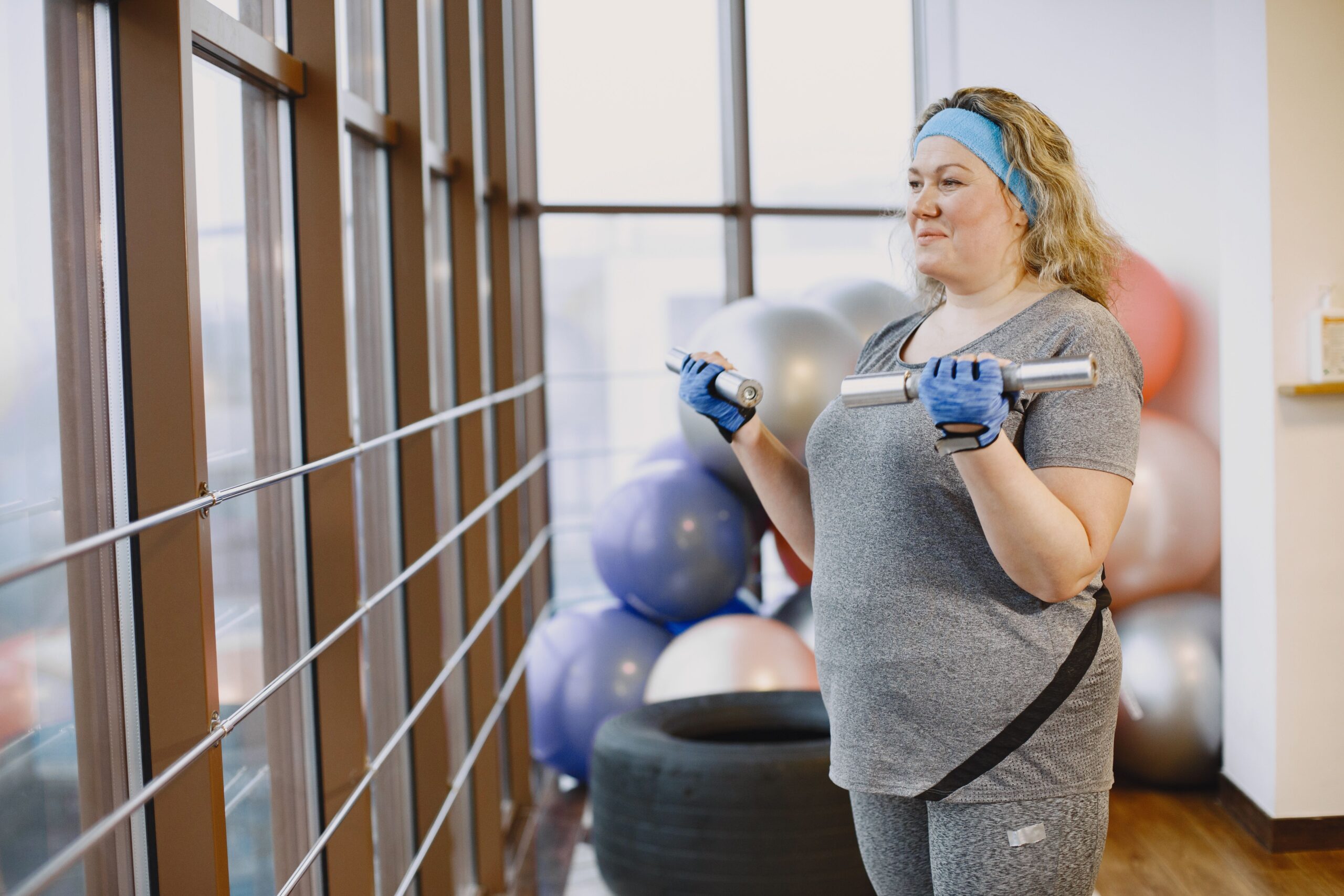
“Exercise is good for your brain” leaves a fairly obvious follow-up: which exercise? Walking, weights, tai chi—the shortlist gets crowded quickly. Humanic Blue is putting the options side by side before handing out a winner’s trophy.
Reviews find small thinking-test benefits from several kinds of exercise, but the rankings change with the people and skills studied. No universal winner or dementia-prevention routine has been established. If the aim is living longer and better, federal guidance supports a mix of aerobic and strength activity for broader health. A brain-specific promise needs more evidence than that.
Key Takeaways
- Research hasn’t identified one best exercise for every thinking skill or person.
- Strength, coordinated movement and aerobic exercise have different evidence and physical benefits.
- A higher test score doesn’t establish dementia prevention or longer life.
- General exercise guidance covers broader health; individual safety still matters.
What are we comparing?
Strength training asks muscles to work against resistance, such as weights or bands. Aerobic activity, such as walking or cycling, challenges the heart and lungs. Mind-body activities, including tai chi, combine controlled movement and attention. Dual-task exercise adds a mental challenge to movement.
Those categories overlap. Real-life movement isn’t always as neatly separated as a research table. The studies below compare thinking skills, not every benefit a workout might offer.
What have strength studies found?
A review of strength-training trials found modest improvements in overall thinking and working memory—the ability to hold information in mind while using it. Other skills didn’t show a clear improvement.
The SMART trial reported thinking-test gains in older adults with mild cognitive impairment—thinking difficulties beyond expected aging, with everyday independence largely preserved. It was a small, selected group, and the trial didn’t establish fewer dementia cases or better independence.
That’s the boundary we need to keep visible. “Helped on this test” is useful information; it doesn’t automatically become “protects every brain.” Strength’s separate role in mobility and function is covered in Why Muscle Matters for Longevity.
What would make an exercise result useful to you: a better score, a more manageable daily task, or a physical benefit you can feel?
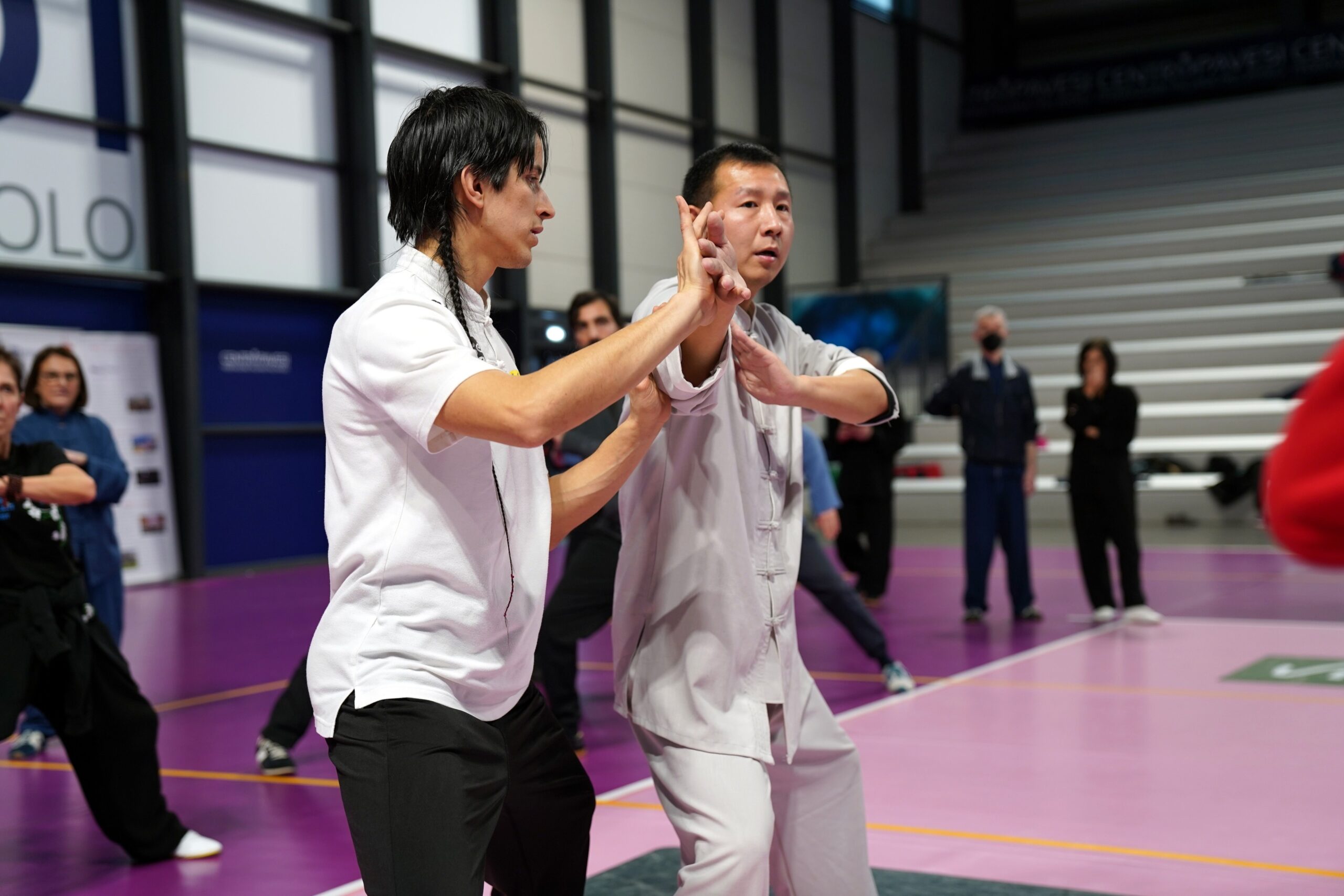
When movement also asks you to think
Reviews have found thinking-test gains from mind-body and dual-task programs in people with early cognitive difficulties. Walking while naming words is one example of a dual task: the body moves while attention has another job.
We can see why researchers are interested. The activity asks for coordination and thought together. But small studies and uncertain comparisons limit what we can infer, especially about dementia prevention. Challenging balance and attention also needs appropriate supervision when falls are a concern.
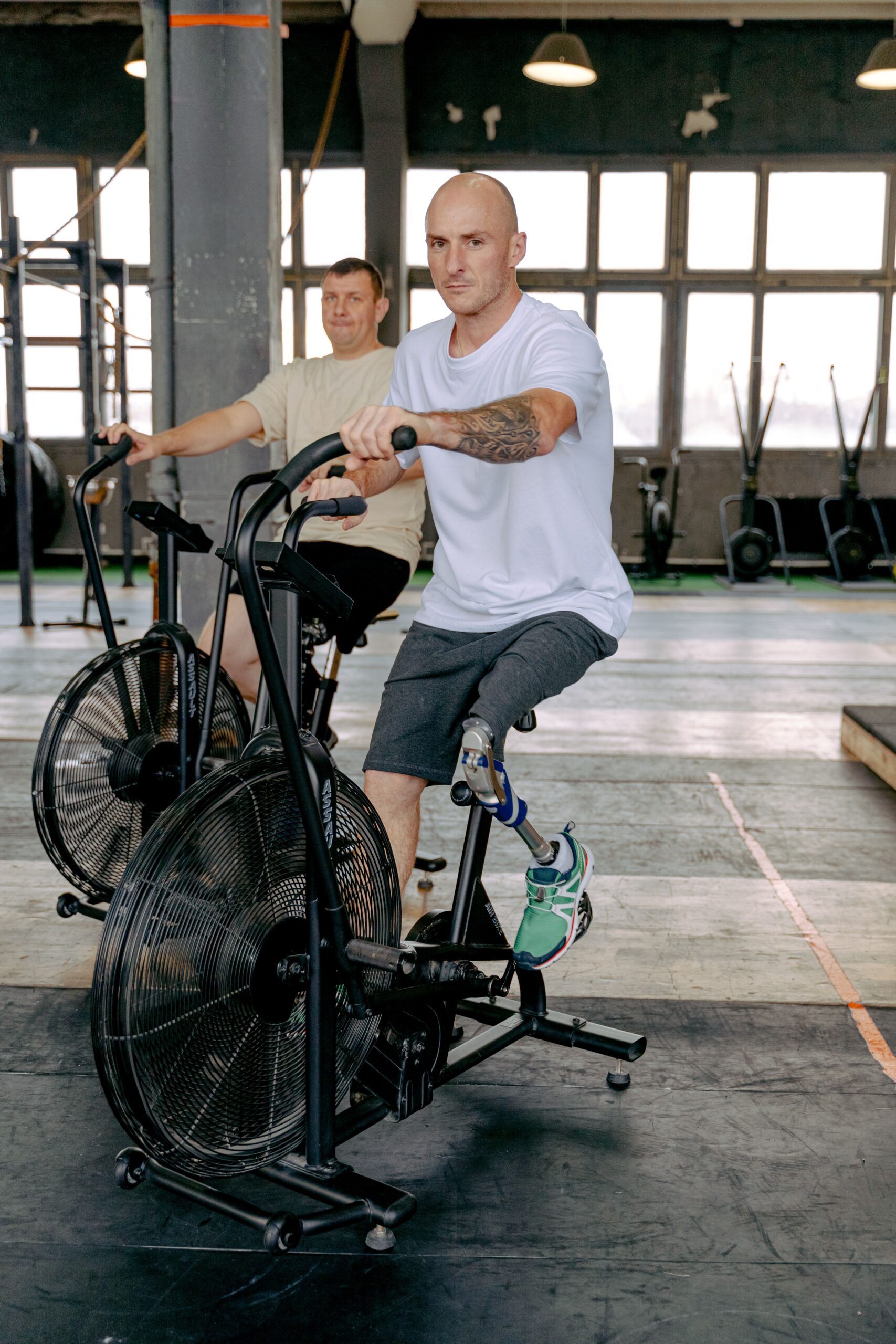
Why aren’t cardio’s brain results clearer?
Some reviews find small cognitive gains from aerobic exercise. Other trials find no clear advantage over stretching, balance work or usual care. The EXERT trial and rrAD trial illustrate those less conclusive findings.
The heart-and-lung benefits and the thinking-test question aren’t interchangeable. A workout can improve fitness without the trial detecting better memory. Exercise and Cognitive Decline explains why the results differ.
Is there a special brain-health dose?
The research hasn’t established one. Some analyses estimate favorable exercise amounts, but those are comparisons across studies, not tested personal thresholds.
The US Physical Activity Guidelines recommend regular aerobic activity and muscle strengthening for broad health. The weekly ranges are given below; a clinician or physical therapist can help adapt them to individual health and abilities.
How would your comparison change if an activity supported strength or balance without promising a sharper memory?
What’s Interesting
Different thinking tests keep producing different leaders. One activity may look favorable for memory, another for attention. “Brain health” sounds like one thing on the label, but researchers are measuring several abilities underneath it. That helps explain why the evidence won’t sit still for a single ranking.
What This Means in Practice
For living longer and better, the broader health guidance addresses several needs at once: fitness, strength and physical function. These brain studies don’t tell us how to add those benefits into extra years of life, or identify a universal winner.
Useful questions for a clinician or physical therapist include which activities suit your abilities, what needs adapting, and how to account for dizziness, pain or fall risk. New memory problems need their own clinical evaluation; choosing a workout isn’t an assessment of their cause.
Bottom Line
Several activities show small thinking-test benefits, with limits that prevent a confident “best” label. Federal guidance supports exercise for broader health. The choice can be discussed in terms of safety, physical goals and feasibility while the brain-specific evidence continues to develop.
A NOTE FROM LONGEVITY365
We read research, consult expert perspectives and work to make complicated health information easier to understand. What you’re reading here reflects how we’ve interpreted and organized that information. It is educational content—not personal medical advice, diagnosis or treatment guidance.
We’re not perfect, and neither is the available research. Evidence changes, new studies emerge and what’s appropriate for one person may not be appropriate for another.
Use this article as a starting point for your own research and conversations with qualified professionals. Always talk with your doctor or another trusted healthcare professional before making decisions that could affect your health, particularly if you take medications, are receiving treatment, have existing health conditions, are pregnant or have other circumstances that could affect what’s appropriate for you.
Reader Questions
A few questions to carry into the comments or your next conversation. Please leave out identifying or personal medical details.
- 01What would make an exercise comparison useful beyond a claim that one type is best?
- 02How would physical goals and practical limitations change the questions you ask about an activity?
Extra Insights & Sources
The evidence summaries and linked sources behind this article.
What We Know
- Resistance training ranked highest for global cognition in one network meta-analysis and improved overall cognition and working memory in a later focused review. Supported (ranking uncertain).
- The SMART investigators reported improvement on a global thinking test in adults with mild cognitive impairment. Supported (one small RCT; the standardized effect estimate was imprecise).
- Mind-body and dual-task exercise show benefits in people with mild impairment. Preliminary.
What We Don’t Know
- Whether any exercise type prevents dementia. Unknown.
- Whether the cognitive benefits last years or change daily function. Uncertain.
- Whether combining types beats any single type across meaningful daily outcomes. Uncertain.
Cognitive exercise comparison details
The 2023 network meta-analysis compared 18 non-drug intervention types across 28 trials in older adults with mild cognitive impairment. Standardized effects were 0.24 for mind-body exercise, 0.61 for dual-task exercise and 0.58 for physical exercise. Standardization puts different test scales on a common scale; these values are not percentages of cognitive improvement. Small trials and imprecise estimates limit comparisons between programs.
Additional trial details
The federal guidance specifies 150–300 minutes of moderate aerobic activity or 75–150 minutes of vigorous activity weekly, plus muscle strengthening on at least two days. These are general-health targets, not a brain-specific dose.
MET-minutes combine activity intensity with time: MET stands for metabolic equivalent, a measure of energy use relative to rest. A confidence interval shows uncertainty around an estimate. A standardized mean difference puts results from different tests on a common scale; it is not a percentage improvement.
- The 2022 network model estimated 724 MET-minutes per week as the minimum dose associated with a clinically relevant modeled change; estimates above 1,200 MET-minutes were less clear. These are not personal cutoffs.
- In the 2025 resistance review, overall cognition improved across nine trials and 517 participants (standardized mean difference 0.40, 95% confidence interval 0.03–0.76), with substantial differences among study results. Working memory improved, while speed of handling information, planning and managing tasks, and attention did not show statistically clear effects.
- SMART’s primary thinking test was the Alzheimer’s Disease Assessment Scale–Cognitive subscale (ADAS-Cog), on which lower scores mean better performance. Its relative effect size at six months was −0.33 (95% confidence interval −0.73 to 0.06) with the reported p-value below .05. The original paper’s Table 2 explains that these numbers come from different calculations: the p-value tests the training effect in a statistical model that accounts for age, sex and education, while the confidence interval describes a separately calculated standardized effect size. The latter expresses the change relative to variation in test scores, rather than in ADAS-Cog points or percentages. Its interval includes no difference, so the size of the benefit remains uncertain despite the model’s statistically significant test. The trial team’s follow-up paper, Figure 1, also confirms that lower ADAS-Cog scores mean better performance. A later erratum is linked to the original report; its accessible record provides no correction details. The normal-range-score comparison produced an odds ratio of 3.50 (comparing the odds of a normal-range score between groups, not the probability) with a wide 95% confidence interval of 1.18–10.48.
Source Materials
- Gallardo-Gómez et al., 2022 — exercise type and modeled dose. Bayesian network meta-analysis of 44 randomized trials, 4,793 adults age 50 or older and 102 effect sizes; resistance training ranked highest for global cognition, and the authors modeled a nonlinear dose relationship. Comparisons made through shared control groups rather than direct head-to-head trials, varied tests and estimates of dose across whole studies prevent a definitive individual ranking or threshold.
- Xie et al., 2025 — resistance exercise and cognition. Systematic review of 17 randomized trials and 739 older adults found moderate-certainty benefits for overall cognition and working memory, but null estimates for several other domains. Trials lasted 6–24 weeks, results varied substantially across studies, harms were not reported and findings do not establish dementia prevention.
- Fiatarone Singh et al., 2014 — SMART. A trial of 100 adults with mild cognitive impairment, average age 70, tested strength and cognitive training separately. Participants received six months of progressive resistance or seated calisthenics alongside cognitive training or a control activity intended to resemble it, with 18-month follow-up. The investigators reported improvement on the primary test and some longer-term domains; wide intervals, multiple outcomes and a selected small sample limit certainty and generalizability.
- Liu et al., 2023 — non-drug interventions in mild cognitive impairment. Network meta-analysis of 28 trials and 18 intervention categories found positive estimates for mind-body, dual-task and general physical exercise. Wide intervals, many small comparisons and the unexpected overall ranking underline uncertainty; authors requested larger, higher-quality trials.
- Wilke et al., 2023 — coordinative exercise in younger and middle-aged adults. Network meta-analysis found coordinatively demanding exercise comparable with working-memory training for executive function, while endurance exercise did not beat active controls. This population was not older adults and the finding does not establish dementia prevention.
- Baker et al., 2025 — EXERT. Randomized 296 sedentary older adults with mild cognitive impairment mainly affecting memory to 18 months of aerobic or stretching/balance/range-of-motion exercise; changes in thinking-test scores did not differ clearly. Both groups were active and supervised for 12 months, so this tests intensity/type rather than exercise versus no exercise.
- Zhang et al., 2026 — rrAD. Twenty-four-month factorial trial randomized 513 adults ages 60–85 at elevated dementia risk to aerobic exercise, intensive vascular-risk treatment, both or usual care; cognitive improvement did not differ significantly by exercise assignment. Participants selected for elevated risk and pandemic-era adaptations may limit generalization.
- US Department of Health and Human Services — Physical Activity Guidelines for Americans. Current federal targets for broad adult health; they do not designate a best exercise for cognition or promise dementia prevention.
Photo credits
Images from Pexels.
- featured: Photo by Gustavo Fring — original Pexels photo.
- inline-1: Photo by taichi Wubin wu — original Pexels photo.
- inline-2: Photo by Antoni Shkraba — original Pexels photo.
Leave a Reply