
Exercise
Build Muscle After 50
Older adults can gain strength and muscle. Reviews found larger effects on strength, but did not establish one optimal training routine or longer life.

Walking back into a weight room after 50, maybe for the first time in decades, can raise a quiet question: is there an age cutoff for adding muscle? Nobody posts one by the dumbbell rack. Humanic Blue looked at trials in people in their 60s and 70s: they show that older adults can gain muscle and strength, although they do not establish how every age group compares.
For anyone setting out to build muscle after 50, the trials point one way: strength can improve substantially even when muscle growth is modest. Researchers at Germany’s University of Potsdam reviewed trials in healthy older adults and found that resistance training—exercise against a load, such as weights—raised strength substantially and muscle size more modestly. They found patterns linking training schedules and loads with larger gains, but did not test those settings together as one routine. A separate review found that lighter weights may also build substantial strength when enough repetitions are performed. Strength is what keeps people getting up, carrying and climbing on their own, which is where this connects to living longer and better.
In This Article
Key Takeaways
- Borde and colleagues’ review found larger improvements in strength than in muscle size among healthy older adults.
- Their analysis linked several training settings with larger strength gains, but the trials were mostly low quality and did not establish a single best routine.
- Csapo and Alegre’s review found that lighter loads may also build substantial strength when enough repetitions are performed.
- The National Strength and Conditioning Association describes individualized training for older adults, with instruction, progression and adaptation to health and ability.
- No trial has established that building muscle after 50 helps people live longer.
How do strength gains compare with muscle growth after 50?
The study this article leans on hardest is a 2015 meta-analysis in Sports Medicine by Ron Borde and Urs Granacher of the University of Potsdam, with Tibor Hortobágyi of the University of Groningen. They pooled randomized trials in healthy people whose average age was about 70.
Resistance training had a large effect on strength. Its effect on muscle size was small, and only nine of the trials measured size at all. The researchers used a common statistical scale to compare changes in different measurements. Strength had a larger effect on that scale; it is not a direct comparison of percentage strength gain with percentage muscle growth. How the analysis worked
A University of Michigan meta-analysis of 49 studies in adults 50 and older lands in a similar place: training added about 1.1 kg of lean mass—tissue other than fat—on average, with more from higher-volume programs and less in older participants. That study is covered in Prevent Muscle Loss After 50.
Strength may also be the part that tracks with survival. In the Health ABC study of adults in their 70s, University of Pittsburgh epidemiologist Anne Newman’s team found that lower leg and grip strength were more clearly linked to dying during the study than muscle size was. They concluded that strength, as a sign of muscle quality, mattered more than the amount of muscle for estimating mortality risk. It’s an observational link, covered in Why Muscle Matters for Longevity.
Which training settings produced the most strength?
Borde’s team also sorted the trials by how they were run, to see which settings went with larger strength gains. A repetition is one complete movement; a set is a group of repetitions. Each variable was analyzed separately, so the list below is not a tested routine or a starting plan for an individual:
- Two sessions a week
- Two to three sets per exercise
- Seven to nine repetitions per set
- A load around 70% to 79% of your one-rep max (the most you can lift once)
- About a year of training
For muscle size, the top performers looked similar, except for three sessions a week and lighter loads, around 51% to 69% of max. Those size findings rest on nine trials, and the authors called them “preliminary.”
The authors wrote that their results “must be interpreted with caution.” Only a small minority of the trials met their bar for high quality, and results varied widely from trial to trial. They also analyzed each setting on its own, so nobody knows which combination works together. The full table and statistics
The year-long finding stands out. These studies measured changes over months, not a single workout.
What separates a pattern across training studies from a tested prescription for every reader?
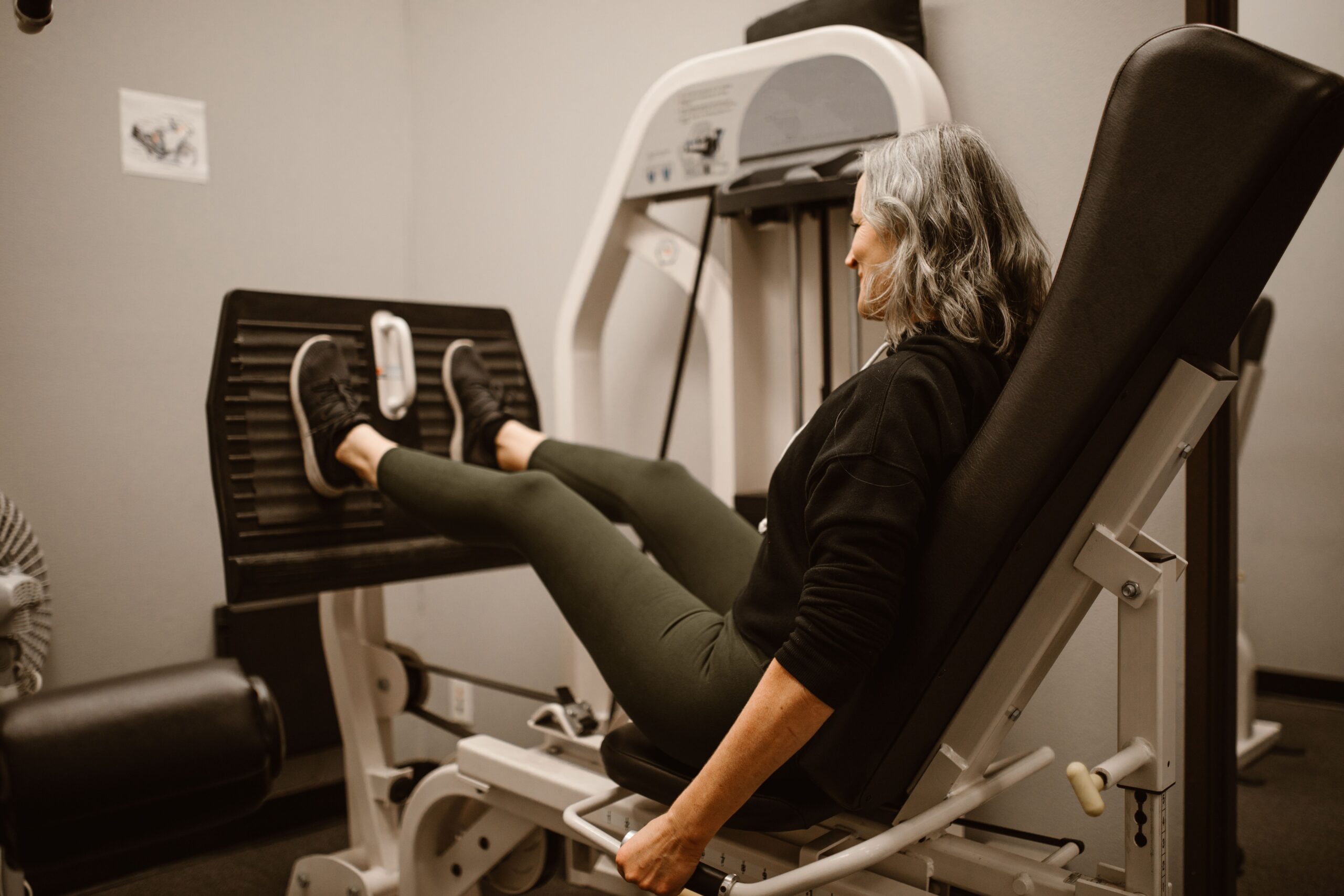
Heavy or light?
Heavy lifting can feel intimidating, and it isn’t the only studied route. A 2016 review in the Scandinavian Journal of Medicine & Science in Sports, by R. Csapo of the University of Innsbruck and Luis Alegre of the University of Castilla-La Mancha, compared heavy loads (about 80% of max) with light-to-moderate loads (about 45%). It covered studies of older adults averaging about 68.
- Heavy loads tended to build more strength, but across all studies the evidence did not clearly establish an advantage.
- When both groups did the same total work, heavy loads kept a smaller edge, and the evidence for that smaller difference was clearer.
- Muscle growth was generally small either way, a little larger with heavy loads.
The authors concluded that lighter loads may be enough to produce substantial strength gains in older people, provided they do enough repetitions. The study details
What the strength and conditioning association recommends
The National Strength and Conditioning Association (NSCA) published a 2019 position statement on resistance training for older adults, written by seven exercise researchers from the US, Brazil and Spain. It describes countering muscle disuse through resistance training as “a powerful intervention to combat the loss of muscle strength and muscle mass.”
Its program advice is to work toward two to three sets of one or two multijoint exercises (moves such as squats or presses that work several joints at once) per major muscle group, at 70% to 85% of one-rep max, two to three times a week. It also recommends power exercises: moderate loads, around 40% to 60% of max, lifted quickly.
The statement calls a properly designed program, with instruction in technique and proper spotting (assistance during a lift), “safe for healthy, older adults.” It says programs should be tailored to the person, vary in planned phases and become more challenging as ability improves, and that they can be adapted for people with frailty, mobility limits or chronic conditions. More on the statement

What helps it work
Protein. In a lab-data analysis by researchers at the University of Toronto and McMaster University, muscle protein synthesis—the process of making muscle protein—reached its highest measured rate at a larger protein amount per meal in older men than in younger men. That short-term response does not establish a personal meal target or show how much muscle someone will build over time. The amounts are in the supporting studies below. More in Protein Needs After 50.
Creatine. A 2026 review of trials in adults 60 and older, by researchers at three Chinese universities, found creatine added a small extra strength gain on top of resistance training. The review did not clearly establish an extra muscle-mass gain. Its authors cautioned against applying the findings to frail adults or those with sarcopenia (low strength and reduced muscle quantity or quality) or functional limitations. In a two-year trial without resistance training in postmenopausal women with osteopenia (low bone density) in São Paulo, creatine did not show an additional lean-mass gain over placebo. More in Creatine After 50.
Progression. “Progressive” means increasing the load or repetitions over time as you get stronger. The NSCA lists progression among its core principles.
Who was included in these trials?
The people behind these numbers were mostly healthy adults in their mid-60s to 70s. Borde’s review left out anyone frail, ill or mobility-limited, and it included only machine-based training. Someone in their early 50s is younger than most participants, and someone managing a health condition differs from them in other ways.
These are averages across many people. Your own response can land above or below them.
How do the review's exclusions limit the reach of its training findings?
What’s Interesting
In Borde’s review, strength changed more than muscle size. The mirror is a slow reporter. Strength is the part that gets you up from a chair or carries the groceries in one trip, even while the reflection barely changes.
The timeline is worth noticing too. The largest strength effects in Borde’s analysis appeared in programs lasting about a year. That is a finding about sustained training, not a promise of results by a deadline.
What This Means in Practice
For living longer and better, strength matters to everyday function, but these trials did not measure extra years of life. In Borde’s analysis, year-long programs had the largest strength effects. The studies and the NSCA statement describe several approaches, but they did not test the following points as one routine for every person:
- Frequency and scope: Borde’s analysis found the largest strength gains in programs with two sessions a week. The NSCA describes training the major muscle groups two to three times weekly.
- Sets and load: In Borde’s analysis, two to three sets of seven to nine repetitions and loads around 70% to 79% of one-rep max were each associated with larger gains. The authors cautioned that they did not establish the best combination.
- Lighter loads: Csapo and Alegre’s review found that lighter loads may also produce substantial strength gains in older adults when repetitions are sufficient.
- Progression: The NSCA lists individualized progression among its program principles; it does not specify one starting load for everyone.
- Protein: The meal-level protein finding above came from older men and does not establish an individual target for every older adult.
- Instruction and adaptation: The NSCA’s safety statement assumes instruction in technique and proper spotting. Its position statement says programs can be adapted for frailty, mobility limits and chronic conditions.
A physical therapist can adapt exercises for injuries or osteoporosis. A clinician can advise if you have heart disease or other conditions.
Bottom Line
Trials in older adults show both muscle and strength respond to training, with larger effects on strength than on muscle size in Borde’s review. Borde’s analysis associated several settings with larger strength gains, but examined them separately; it did not establish an optimal routine. Lighter loads with enough repetitions may also work. The trials were mostly of low quality, nobody knows which combination of settings works best, and no trial has tested whether any of this adds years of life. A trainer or physical therapist can help you pick a starting load, and a clinician can advise if you have a health condition.
A NOTE FROM LONGEVITY365
We read research, consult expert perspectives and work to make complicated health information easier to understand. What you’re reading here reflects how we’ve interpreted and organized that information. It is educational content—not personal medical advice, diagnosis or treatment guidance.
We’re not perfect, and neither is the available research. Evidence changes, new studies emerge and what’s appropriate for one person may not be appropriate for another.
Use this article as a starting point for your own research and conversations with qualified professionals. Always talk with your doctor or another trusted healthcare professional before making decisions that could affect your health, particularly if you take medications, are receiving treatment, have existing health conditions, are pregnant or have other circumstances that could affect what’s appropriate for you.
Reader Questions
A few questions to carry into the comments or your next conversation. Please leave out identifying or personal medical details.
- 01Which measurement or milestone would feel useful to track without letting it take over the whole point of moving?
- 02Which real-world barrier did the article address most usefully: time, confidence, access, recovery, or knowing where to start?
- 03What question would you bring to a clinician, physical therapist, trainer, or exercise professional after reading about Build Muscle After 50?
Extra Insights & Sources
For readers who want the details behind each claim above.
What We Know
- Resistance training substantially increases strength in adults 65 and older. Established.
- Muscle size increases more modestly. Supported.
- Lighter loads with enough repetitions can build strength. Supported.
- Adding creatine to training gives a small extra strength gain in adults 60 and older. Supported (rated moderate certainty by the review’s authors).
What We Don’t Know
- The single best combination of sets, reps and load. Unknown. Variables were analyzed separately.
- How much training in your 50s protects against disability decades later. Uncertain.
- Whether building muscle after 50 extends lifespan. Unknown. Observational data link strength training to lower mortality, but trials measure strength and function.
- How closely results from healthy adults averaging about 70 apply to people in their early 50s, or to people with frailty or chronic disease. Uncertain.
The Potsdam dose-response analysis in detail
Borde, Hortobágyi and Granacher searched PubMed, Web of Science and the Cochrane Library from January 1984 to June 2015. Of 506 studies identified, 25 randomized controlled trials qualified. Participants had to be healthy and aged 60 or older, with a study mean age of 65 or older, doing machine-based resistance training; trials in frail, mobility-limited, cognitively limited or ill participants were excluded. The 25 trials included 819 participants (mean sample size 33), with a mean age of 70.4 and a range of 60 to 90.
Overall effects. Resistance training improved muscle strength (mean between-subject standardized mean difference, SMD, 1.57; 25 studies) and had small effects on muscle morphology (SMD 0.42; nine studies). One-repetition-maximum strength rose with large effects in the upper (SMD 1.61; 11 studies) and lower (SMD 1.76; 19 studies) extremities. SMD expresses a group difference relative to variation in the measurements, allowing unlike tests to be summarized on a common scale. The ratio of 1.57 to 0.42 is about 3.7, but it is not a ratio of percentage strength gain to percentage muscle growth.
Meta-regression for strength. Training period (p = 0.04), intensity (p < 0.01) and total time under tension (p < 0.01) had significant effects. The largest effects came with 50–53-week programs (SMD 2.34), intensities of 70–79% of one-rep max (SMD 1.89) and 6.0 seconds of time under tension per repetition (SMD 3.61). Rest between sets showed only a tendency (p = 0.06), with 60 seconds largest (SMD 4.68, from two studies).
Independently computed variables for strength. Two sessions a week (SMD 2.13; three sessions, 1.49), two to three sets per exercise (SMD 2.99), seven to nine repetitions per set (SMD 1.98) and 4.0 seconds of rest between repetitions (SMD 3.72). Across the trials, sets per exercise averaged 2.9 and repetitions per set averaged 10.0.
| Setting | Top performer for strength | Top performer for muscle size |
|---|---|---|
| Sessions per week | 2 | 3 |
| Sets per exercise | 2–3 | 2–3 |
| Reps per set | 7–9 | 7–9 |
| Load (% of one-rep max) | 70–79% | 51–69% |
| Rest between sets | 60 seconds (two studies; a tendency, not significant) | 120 seconds |
| Program length | 50–53 weeks | 50–53 weeks |
| Time under tension per rep | 6.0 seconds | 6.0 seconds |
| Rest between reps | 4.0 seconds | 2.5 seconds |
Limitations, in the authors’ words. “The current results must be interpreted with caution because of the poor overall methodological study quality (mean PEDro score 4.6 points) and the considerable large heterogeneity (I2) = 80%, χ2 = 163.1, df = 32, p < 0.01) for muscle strength. In terms of muscle morphology, our search identified nine studies only, which is why we consider our findings preliminary.” PEDro scores ranged from 2 to 7, and only three of the 25 trials reached the cut-off of 6 points for high quality. The authors also noted that “it was not possible to ascertain any potential interactions between these variables.” (Note 1)
Heavy versus light loads in detail
Csapo and Alegre’s meta-analysis compared heavy (about 80% of one-rep max) with light-moderate (about 45%) resistance training in 15 studies (448 subjects, mean age 67.8). Strength gains tended to be larger with heavy loads (total population effect μ = 0.430, P = 0.060). Effect sizes were substantially smaller in studies matched for mechanical work (μ = 0.297, P = 0.003). Heavy loads produced marginally larger gains in muscle size, but hypertrophy was generally small (0.056 < μ < 0.136). The authors concluded that, as long as enough repetitions are done, resistance training at loads lighter than traditionally recommended may be enough to produce substantial strength gains in older people. (Note 2)
The NSCA position statement in detail
The statement, by Maren Fragala, Eduardo Cadore, Sandor Dorgo, Mikel Izquierdo, William Kraemer, Mark Peterson and Eric Ryan, appeared in the Journal of Strength and Conditioning Research in August 2019. It lists 11 summary statements in four parts: program design variables, physiological adaptations, functional benefits, and considerations for frailty, sarcopenia and other chronic conditions. Its second statement reads: “A properly designed resistance training program for older adults should include an individualized, periodized approach working toward 2–3 sets of 1–2 multijoint exercises per major muscle group, achieving intensities of 70–85% of 1 repetition maximum (1RM), 2–3 times per week, including power exercises performed at higher velocities in concentric movements with moderate intensities (i.e., 40–60% of 1RM).”
The abstract’s fuller wording: “current research has demonstrated that countering muscle disuse through resistance training is a powerful intervention to combat the loss of muscle strength and muscle mass, physiological vulnerability, and their debilitating consequences on physical functioning, mobility, independence, chronic disease management, psychological well-being, quality of life, and healthy life expectancy.” One stated goal is to “prevent or minimize fears and other barriers to implementation of resistance training programs for older adults.” The statement notes that older adults are often defined as 65 and older. (Note 3)
Supporting studies covered in related articles
- Lean mass. Mark Peterson, Ananda Sen and Paul Gordon of the University of Michigan pooled 49 studies (randomized and nonrandomized) with 1,328 participants aged 50 and older in Medicine & Science in Sports & Exercise (2011). The weighted mean lean-mass gain was 1.1 kg (95% CI 0.9–1.2), with high heterogeneity (I² 84%). Higher-volume programs were associated with larger gains, and older participants gained less. The record lists US National Institutes of Health (NICHD) grants.
- Strength versus size and survival. In the Health ABC study (Journals of Gerontology: Series A, 2006), Anne Newman and colleagues followed 2,292 adults aged 70 to 79 for an average of 4.9 years; there were 286 deaths. Quadriceps and grip strength were more clearly related to mortality than muscle size measured by CT or DXA scans. The authors concluded that low muscle mass didn’t account for the link between strength and mortality, and that strength, as a marker of muscle quality, matters more than quantity when estimating mortality risk. Supported by US National Institute on Aging grants.
- Strength activity and mortality. A 2022 meta-analysis of 16 prospective cohort studies in the British Journal of Sports Medicine, by Haruki Momma of Tohoku University and colleagues, associated muscle-strengthening activities with a 10% to 17% lower risk of all-cause mortality, cardiovascular disease, total cancer, diabetes and lung cancer, with the largest associated risk reductions at about 30 to 60 minutes a week on the J-shaped curves. This is the observational link referred to under What We Don’t Know.
- Protein per meal. Daniel Moore (University of Toronto) and colleagues, with senior author Stuart Phillips (McMaster University), retrospectively analyzed lab data in the Journals of Gerontology: Series A (2015). Muscle protein synthesis plateaued at about 0.40 g/kg of body mass in older men (about 71) and 0.24 g/kg in younger men (about 22).
- Creatine with training. Yao, Yang and Gao’s three-level meta-analysis in Frontiers in Nutrition (2026) included 11 randomized trials in adults 60 and older. Creatine plus resistance training improved strength more than training alone (g = 0.31, 95% CI 0.18–0.45; moderate certainty). Effects on muscle mass (g = 0.35, 95% CI −0.09 to 0.78; low certainty) and physical function (very low certainty) were not statistically significant. The authors declared no conflicts and cautioned against applying the results to frail, sarcopenic or functionally limited older adults.
- Creatine without training. In a two-year trial in São Paulo (Journals of Gerontology: Series A, 2020), 200 postmenopausal women with osteopenia took 3 g of creatine a day or placebo. Lean mass rose over time in both groups, with no additive effect of creatine.
Sources
- Borde R, Hortobágyi T, Granacher U. Dose-response relationships of resistance training in healthy old adults, Sports Medicine, 2015: PubMed 26420238 (full text: PMC4656698)
- Csapo R, Alegre LM. Effects of resistance training with moderate vs heavy loads on muscle mass and strength in the elderly, Scandinavian Journal of Medicine & Science in Sports, 2016: PubMed 26302881
- Fragala MS, et al. Resistance training for older adults: position statement from the National Strength and Conditioning Association, Journal of Strength and Conditioning Research, 2019: PubMed 31343601
- Peterson MD, Sen A, Gordon PM. Influence of resistance exercise on lean body mass in aging adults, Medicine & Science in Sports & Exercise, 2011: PubMed 20543750
- Newman AB, et al. Strength, but not muscle mass, is associated with mortality in the Health ABC study cohort, Journals of Gerontology: Series A, 2006: PubMed 16456196
- Momma H, et al. Muscle-strengthening activities and non-communicable diseases, British Journal of Sports Medicine, 2022: PubMed 35228201
- Moore DR, et al. Protein ingestion in healthy older versus younger men, Journals of Gerontology: Series A, 2015: PubMed 25056502
- Yao L, Yang D, Gao J. Resistance training combined with creatine supplementation in older adults, Frontiers in Nutrition, 2026: PubMed 42712402
- Sales LP, et al. Creatine supplementation (3 g/d) and bone health in older women, Journals of Gerontology: Series A, 2020: PubMed 31257405
Notes
Note 1: Funded by a grant from the German Research Foundation (MU 3327/2-1). The authors declared no conflicts of interest.
Note 2: The paper’s Europe PMC record lists a grant from Spain’s Instituto de Salud Carlos III (RD12/043/0002). A full funding and conflict-of-interest statement isn’t listed publicly.
Note 3: The statement lists no funding source publicly. First author Maren Fragala’s listed affiliation is Quest Diagnostics; the other six authors are at universities.
Photo credits
Images from Pexels.
- featured: Photo by Julia Larson — original Pexels photo.
- inline-1: Photo by RDNE Stock project — original Pexels photo.
- inline-2: Photo by RDNE Stock project — original Pexels photo.
Leave a Reply