
Biological Age Tests
How Accurate Are Biological Age Tests?
Depends which accuracy. Standard clocks can drift years on one sample; newer ones are tighter and predict mortality in groups. None is a medical test for you.
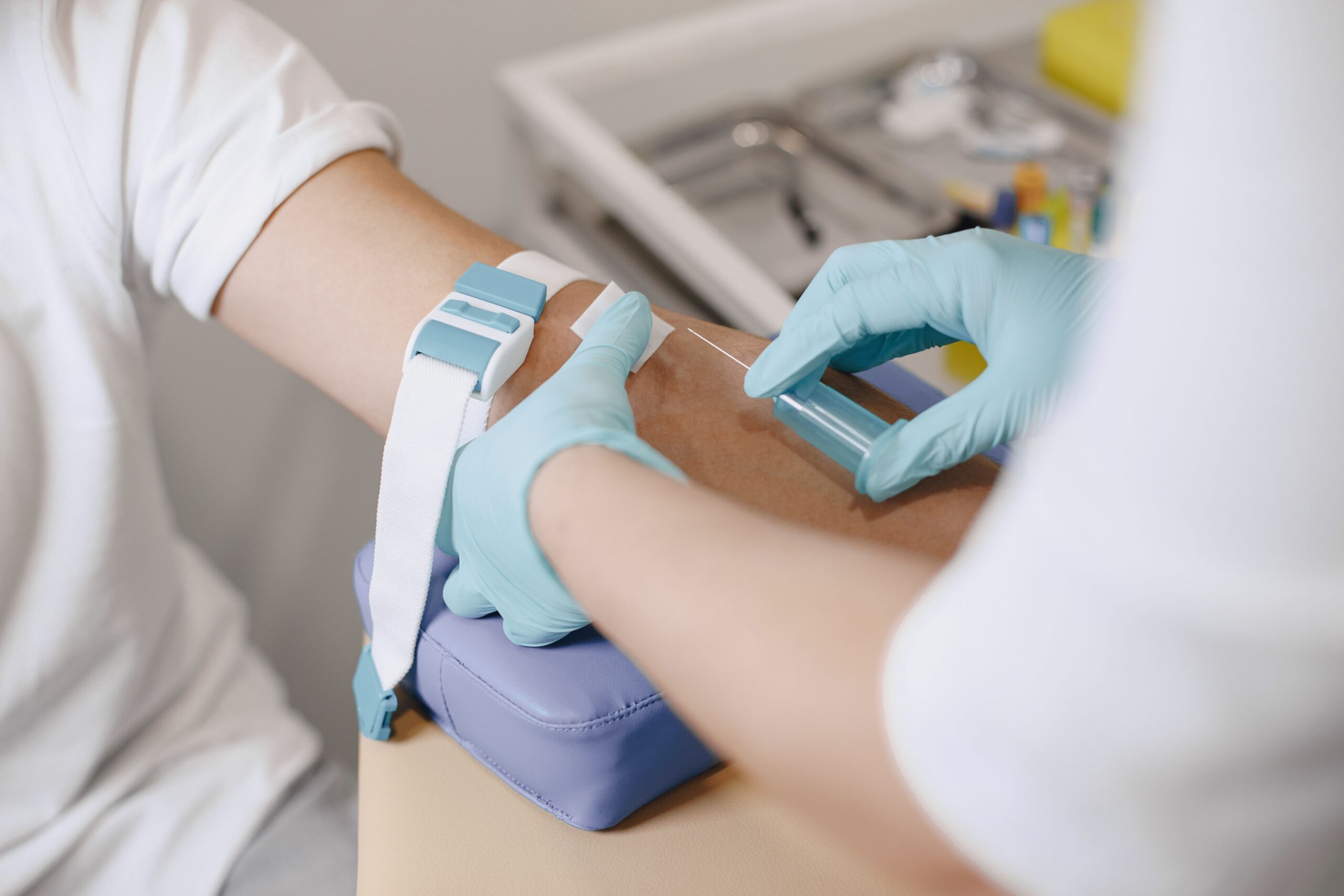
You’ve either got a number back and you’re wondering how much to believe it, or you’re deciding whether to spend $299 to $499 to get one. Either way, “how accurate are biological age tests” is really three questions wearing one coat. Humanic Blue is pulling those questions apart, one sleeve at a time.
It depends, a little inconveniently, on which accuracy you mean. A Yale-led team found that the same blood sample, run twice through standard epigenetic clocks, which estimate age from chemical patterns on DNA, can come back up to 9 years apart. Newer designs such as DunedinPACE repeat far more tightly. Across thousands of people, higher readings on newer clocks are associated with earlier death. For one person, the researchers who build and study these clocks describe the result as a research tool rather than a medical test, and neither consumer test priced here says it has been reviewed by the FDA.
So a test that tells you how old you really are can’t always agree with itself about it. The world is a little weird that way. If the goal is living longer and better, it helps to know which kind of accuracy a test actually has, so this piece takes them one at a time: the reliability papers, the mortality papers, the regulators and the vendors’ own fine print.
In This Article
- The same blood, run twice, can give different ages
- A lab-steady clock can still move with a meal or a stressful morning
- Across big groups, newer clocks track differences in death risk
- What one person’s number can and can’t tell you
- No FDA review, and what “CLIA-certified” covers
- Who says it’s too early for consumer tests
- The studies and numbers behind all of this
Key Takeaways
- The standard clocks can drift by years when one sample is measured twice; GrimAge, DunedinPACE and specially rebuilt clocks repeat much more tightly. Established for the clocks tested.
- Even clocks that are steady in the lab moved with a meal, a stress test or a trip to altitude in small studies. Preliminary.
- In large, long-running studies, higher readings on clocks built around health and mortality were associated with earlier death during follow-up. Supported.
- Nobody has shown that lowering a clock reading helps anyone live longer. Unknown.
- The two consumer tests priced here don’t claim FDA review, and a lab’s CLIA certification doesn’t cover what a result means. Established.
If I sent the same blood in twice, would I get the same number?
This is technical reliability: whether the lab and the math give the same answer twice. It’s the kind of accuracy most people picture when they ask the question.
In 2022, a Yale-led team ran split samples of the same blood through six widely used clocks. Laboratory noise moved some answers by as much as nine years. Their redesigned versions spread the calculation across many DNA sites and brought most repeat readings within about 1.5 years. GrimAge and DunedinPACE also repeated tightly in laboratory tests.
That is encouraging, with two asterisks. First, a 2026 analysis still found that slide position and DNA-extraction method could disturb some clocks. Second, researchers behind these methods have commercial connections: Yale licenses rebuilt metrics to Elysium, which supplied some repeat data; Levine formerly advised Elysium; and DunedinPACE inventor Daniel Belsky occasionally advises its exclusive licensee, TruDiagnostic. Those relationships do not negate the measurements. They belong on the same page as the measurements. The repeatability numbers and disclosures
Can a meal or a stressful morning move the number?
Yes. A 2026 study separated technical reliability—the same tube measured twice—from biological reliability—the same person sampled again. Some clocks that behaved beautifully with one tube, including GrimAgeV2 and DunedinPACE, moved after a meal, laboratory stress, altitude or air pollution.
The datasets were small: 16 to 34 people sampled three or four times. That is enough to show that ordinary life can move a reading, not enough to predict how far yours will travel after breakfast. Two authors disclosed TruDiagnostic consulting fees. How the study worked
How would you distinguish a repeatable laboratory measurement from a stable measure of aging?
Do these clocks actually predict anything?
This is where the newer clocks are on firmer ground. PhenoAge was developed from about 10,000 US adults and checked in about 6,200 more; across later cohorts, an older reading tracked with higher mortality. GrimAge was trained in the Framingham Heart Study and predicted death, heart disease and cancer. DunedinPACE also tracked mortality in roughly 2,500 Framingham participants and about 770 older men.
That makes prediction Supported for groups. It does not show that lowering a clock prevents a death. Predicting rain and stopping rain are different jobs, and the umbrella industry should not be allowed to blur them. No trial here showed that changing a score helps anyone live longer. Patents and licensing relationships behind GrimAge and DunedinPACE are detailed below. The mortality results and conflicts
What separates predicting mortality from showing that lowering a clock changes it?
What does my number mean for me, specifically?
This is individual-level meaning, and here the people who built the tools are among the most cautious voices in the room.
Belsky’s group compared 11 aging measures in nearly 1,000 38-year-olds and found that the measures disagreed about who was aging quickly. He called consumer marketing premature. Clock developer Steve Horvath told NPR that a lifespan estimate should also include familiar clinical variables such as blood pressure, glucose and lipids.
Researchers Idan Shalev and Abner Apsley add that different clocks and sample types can disagree for the same person. A five-year gap between saliva and blood may reflect the samples rather than a five-year biological event. Population risk percentages also cannot locate you precisely inside the crowd, especially when the training groups came mainly from the US and New Zealand.
Is a biological age test FDA-approved?
Not the ones priced here. As of September 25, 2026, Elysium says outright that its test isn’t FDA-reviewed, TruDiagnostic describes its test as not diagnostic, and neither company’s product page claims FDA review.
Many consumer clocks are laboratory-developed tests. The FDA attempted to bring those tests under medical-device rules in 2024, but a federal court vacated the rule in March 2025 and the agency formally reverted it that September.
“CLIA-certified” is real, but narrower than it sounds. It means the laboratory meets quality standards; CMS says CLIA does not establish a test’s clinical validity. Elysium says Index is not FDA-reviewed, and TruDiagnostic says TruAge is not diagnostic. The lab may be certified to produce the number without the number being certified to guide your care. The regulatory history and vendor wording
Who says it’s too early for consumer tests?
The field’s own Biomarkers of Aging Consortium says the lack of agreed standards is holding back clinical validation. Matt Kaeberlein, a researcher and Optispan executive, told NPR that the tests are part of the picture but are not yet particularly actionable. He also warned about companies pairing an uncertain test with a supplement pitch; Elysium sells both its Index test and supplements.
Shalev and Apsley raise a different concern: if insurers ever used these numbers, people could be charged for biological differences shaped partly by trauma, discrimination or early adversity. The risk is not just a wrong number. It is someone powerful treating that number as right.
A 2024 preprint also reanalyzed intervention studies and found that some apparent clock improvements disappeared when steadier clock versions were used. It had not been peer reviewed as of September 25, 2026, so the finding is preliminary. But it gives a useful consumer translation: a program cannot confidently claim to remove three biological years when three years may fit inside the instrument’s noise. The critic arguments and study details
What makes repeat results easier to compare?
A result can be consistent without being useful for a medical decision. The studies above identify several reasons repeated results differ; they do not establish a way to turn consumer testing into a reliable personal forecast.
The specific clock matters. In Belsky’s replicate tests and Sehgal’s technical analysis, DunedinPACE and GrimAge generally repeated more consistently than first-generation clocks on the same sample. That comparison concerns laboratory repeatability, not which consumer product can guide care.
Blood and saliva are different samples. Shalev and Apsley’s saliva-versus-blood warning means a $299 saliva kit (Elysium Index, about six weeks for results) and a $499 finger-stick blood kit (TruDiagnostic TruAge, two to four weeks after the lab receives it) aren’t interchangeable. That’s $200 between two products whose numbers, by their account, don’t belong on the same chart. Prices as of September 25, 2026 (Elysium; TruDiagnostic).
Sampling conditions can change the reading. Sehgal’s group saw results move within a single day around a meal and a stress test. That complicates comparisons between samples taken under different conditions, even when the lab and clock are the same.
A trend needs reliable measurements. Higgins-Chen’s case for the rebuilt clocks was “reliable longitudinal trajectories.” Repeated readings can reveal a pattern only if the change can be distinguished from measurement error and short-term variation. These papers do not establish a consumer retesting schedule.
Weigh it against the everyday numbers. Horvath’s own advice was to include blood pressure, glucose and lipids. PhenoAge was literally built from nine routine labs. Those are cheaper, and your physician already knows how to read them.
What’s Interesting
Two things stand out. First, by Sehgal’s measures, some of the clocks that repeat best in the lab were among the twitchiest in real life. GrimAge V2 and DunedinPACE reproduce beautifully from one tube, then move with a meal or a stress test. A clock that’s sensitive enough to detect real aging may be sensitive enough to detect Tuesday.
Second, look at who’s urging care. Many of the cautions here come from the people who invented, license, consult on or sell services around these clocks: Belsky, Horvath, Kaeberlein and the Yale reliability group. That’s a different situation from critics on the outside, and a useful one to notice.
What This Means in Practice
- If you already have a number, its uncertainty depends on the named clock, sample type and testing method. Age estimates use years; pace estimates use rate units. Note the clock and the sample type on the report, and don’t change anything on the strength of it alone.
- If it’s a DunedinPACE or GrimAge-family figure, it repeats better than a first-generation “biological age,” but it’s still a population tool read by one person. Belsky flags a single-country training group, and Sehgal’s small datasets captured readings shifting within a day.
- In the research comparisons, Belsky’s and Sehgal’s rankings favored DunedinPACE or GrimAge V2 on some repeatability measures; both were measured in blood in those papers. That evidence does not establish clinical utility or an individual retesting schedule.
- Apply Kaeberlein’s screen. Check whether the company selling the test also sells the fix. It takes about a minute on any vendor page.
- Take it to a professional. Bring the report, with the clock name, to a primary care physician or a geriatrician. Ask which of your standard markers (blood pressure, glucose, lipids, the PhenoAge inputs) it agrees or disagrees with, and what they’d want repeated before changing anything.
Accuracy also changes the answer to two practical questions: How Often Should You Test Biological Age? and Can Biological Age Tests Track an Intervention?.
Bottom Line
Biological-age test accuracy involves three separate questions: does the measurement repeat, does it track outcomes in groups, and what does it mean for one person? Some clocks drift by years on the same sample, while GrimAge, DunedinPACE and rebuilt clocks repeat tightly in the lab, yet even steady clocks move with ordinary daily events. In large groups, higher scores on newer clocks are associated with earlier death. For one person, the researchers who build them describe a research signal, not a medical test.
The part everyone wants is still missing: evidence that a lower number buys a longer life. Until that exists, a physician can put the score next to the routine labs it was built from and treat it as what its developers built it for: gerontology and geroscience research.
A NOTE FROM LONGEVITY365
We read research, consult expert perspectives and work to make complicated health information easier to understand. What you’re reading here reflects how we’ve interpreted and organized that information. It is educational content—not personal medical advice, diagnosis or treatment guidance.
We’re not perfect, and neither is the available research. Evidence changes, new studies emerge and what’s appropriate for one person may not be appropriate for another.
Use this article as a starting point for your own research and conversations with qualified professionals. Always talk with your doctor or another trusted healthcare professional before making decisions that could affect your health, particularly if you take medications, are receiving treatment, have existing health conditions, are pregnant or have other circumstances that could affect what’s appropriate for you.
Reader Questions
A few questions to carry into the comments or your next conversation. Please leave out identifying or personal medical details.
- 01After reading this, what would you want a test result to actually help you decide?
- 02Which distinction changed how you read the evidence: "If I sent the same blood in twice, would I get the same number" or "What makes repeat results easier to compare"?
- 03What would you ask a clinician, lab, or qualified professional before letting a number change a health decision?
Extra Insights & Sources
For readers who want the details behind each claim above.
What We Know
- The standard epigenetic clocks carry technical noise of up to 9 years between replicate runs of one sample; principal-component retraining brings most replicates within 1.5 years. Established for the clocks tested.
- DunedinPACE reports a technical ICC of 0.96; Belsky rates GrimAge as similarly reliable, and Higgins-Chen’s group reported GrimAge’s ICC as 0.989. Supported.
- At population scale, PhenoAge, GrimAge and DunedinPACE predict all-cause mortality in multiple prospective cohorts (4.5% per year; about 1.10 per year of acceleration; 1.65 per SD). Higher reading, higher risk of dying during follow-up. Supported.
- The consumer tests checked here don’t claim FDA review, and CLIA certification does not address clinical validity. Established.
What We Don’t Know
- Whether lowering a clock reading lowers actual risk or lengthens life. No trial in the sources here tested that endpoint; the Borrus preprint suggests some published clock decreases are noise. Unknown.
- The test-retest error of TruDiagnostic’s SYMPHONYAge and Elysium’s APEX in an independent lab. We could not find a published figure. OMICmAge was included in Sehgal’s 2026 analysis, whose authors consult for TruDiagnostic. Unknown.
- How much a single person’s reading moves with ordinary life. Sehgal’s biological-reliability datasets were 16 to 34 people; the direction is clear, the magnitude isn’t. Preliminary.
- Whether the mortality associations hold equally across populations. Belsky flags DunedinPACE’s single-country training cohort. Contested.
Technical noise: the replicate studies
Higgins-Chen et al., Nature Aging, 2022. First author Albert T. Higgins-Chen (Department of Psychiatry, Yale University School of Medicine, and VA Connecticut Healthcare System); senior author Morgan E. Levine. The abstract reads: “Epigenetic clocks are widely used aging biomarkers calculated from DNA methylation data, but this data can be surprisingly unreliable. Here we show technical noise produces deviations up to 9 years between replicates for six prominent epigenetic clocks, limiting their utility.” The six clocks were Horvath’s multi-tissue clock (Horvath1), Horvath’s skin-and-blood clock (Horvath2), Hannum, PhenoAge, GrimAge and the DNAmTL telomere-length predictor. The main replicate dataset was 36 whole-blood samples measured in duplicate, in separate batches. In the full text, the Horvath1 clock showed a median deviation of 1.8 years between replicates and a maximum of 4.8 years; across the other clocks, median deviations ranged from 0.9 to 2.4 years and maxima from 4.5 to 8.6 years. Horvath1, Horvath2, Hannum and PhenoAge maximum deviations exceeded one standard deviation of age acceleration, while GrimAge and DNAmTL maxima were 0.57 and 0.69 SD; the authors attribute “The high reliability of GrimAge (ICC = 0.989)” to its two-step calculation. The retrained principal-component (PC) versions (patterns pooled across many methylation sites) “show agreement between most replicates within 1.5 years” and “reliable longitudinal trajectories in vivo and in vitro.”
Competing interests, from the paper: “MEL and AHC have built epigenetic aging metrics involving the technology described in the present manuscript, and these metrics are licensed by Elysium Health through Yale University. Elysium provided paired blood and saliva replicate datasets reported in this study, but otherwise did not fund the study.” Levine “previously acted as a Scientific Advisor for, and received consulting fees from, Elysium Health, Inc.”; one co-author was previously an Elysium employee; Higgins-Chen received consulting fees from FOXO Technologies for unrelated work. (Note 1)
Belsky et al., eLife, 2022 (DunedinPACE). Test-retest reliability was estimated as an intraclass correlation (ICC: a 0-to-1 score of how closely repeat measurements agree; the 95% confidence interval is the range the true figure most likely sits in). In a public database of 36 replicate adult blood samples, DunedinPACE’s ICC was 0.96 (95% CI 0.93–0.98), against 0.89 for the original DunedinPoAm. In two further replicate databases it was 0.97 (0.94–0.98) in 28 EPIC-array pairs and 0.87 (0.82–0.90) in 350 pairs measured on two different array types. The repeat measurements agreed closely in that dataset. This is a measure of consistency, not proof that a reported biological age is correct. The paper states: “DunedinPACE is as reliable as the GrimAge clock and more reliable in comparison to the other clocks,” and continues, “although methods have been proposed that may improve reliabilities for the other clocks,” citing Higgins-Chen’s work. Competing interests: Belsky and five co-authors are listed as inventors on “a Duke University and University of Otago invention that was licensed to a commercial entity”; the 2023 Cell consortium paper names that licensee as TruDiagnostic. (Note 2)
Vendor clocks. TruDiagnostic’s OMICmAge and SYMPHONYAge and Elysium’s APEX are proprietary. Elysium’s page says it “partnered with Morgan Levine, Ph.D., of Yale University” and calls APEX “the most precise and reliable among published epigenetic age measures”, “demonstrated in Nature Aging,” without naming the paper; the Higgins-Chen paper’s disclosure says its metrics are licensed to Elysium through Yale.
At a glance: the four named clocks.
| Clock | Trained to predict | Reported test-retest reliability | What it predicts at population level |
|---|---|---|---|
| Horvath / Hannum (first generation) | Chronological age; Levine’s group describes chronological age as the proxy used for biological age | Among the standard clocks Higgins-Chen found deviating up to 9 years between replicates; Belsky rates them less reliable than GrimAge or DunedinPACE | Weaker mortality association than PhenoAge in Levine’s 2018 comparison |
| PhenoAge (Levine 2018) | A 9-biomarker phenotypic-age measure built from NHANES III (n=9,926), then mapped to methylation in InCHIANTI (n=456) | Not reported as an ICC in the original paper; a standard clock in the Higgins-Chen noise analysis | Each additional year of DNAm PhenoAge was associated with a 4.5% higher risk of death from any cause across WHI, Framingham (n=2,553), Normative Aging Study and Jackson Heart Study |
| GrimAge (Lu 2019) | Time to death, via seven methylation surrogates for plasma proteins plus a surrogate for smoking pack-years, trained in Framingham Offspring | Belsky’s replicates rank it level with DunedinPACE; ICC 0.989 in Higgins-Chen 2022; Sehgal’s group calls GrimAge V2 technically robust but biologically fragile | Per year of age acceleration, mortality hazard about 1.10; someone at the 95th percentile (+8.3 years) faces roughly twice the average hazard of death, someone at the 5th (−7.5 years) about half |
| DunedinPACE (Belsky 2022) | 20-year pace of aging from 19 organ-system indicators measured four times in the Dunedin cohort of 1,037 New Zealanders born 1972–73 | ICC 0.96 (0.93–0.98) on technical replicates | Mortality hazard ratio 1.65 per SD in Framingham Offspring (n=2,471, mean age 66); 1.26 per SD in the Normative Aging Study (n=771, mean age 77) |
Biological reliability: the 2026 Yale study
Sehgal, Borrus, Gonzalez, Markov and Higgins-Chen, Aging Cell, 2026 (published online July 29, 2026; Yale School of Medicine departments of Psychiatry and Pathology). Using the group’s TranslAGE platform, the authors evaluated 18 DNA methylation aging biomarkers. They define technical reliability as how well a clock reproduces on repeat measurements of the same blood sample and biological reliability as how stable it stays across repeat samples from the same person over hours or days. Their abstract reports that most clocks showed excellent technical reproducibility, that several were sensitive to slide position and DNA extraction protocol, and that PC-based clocks, particularly PCGrimAge and SystemsAge, stayed robust across conditions. Biological reliability was substantially lower, they reported, and most clocks showed only low to moderate stability, which fell further after adjusting for immune-cell composition.
The biological datasets: a standardized meal (34 people, four samples in one day), an acute psychosocial stress test (34 people, four samples in one day), altitude acclimatization in Bolivia (21 people, four samples over seven days) and short-term air-pollution exposure (16 people, three samples over two days). GrimAge (versions I and II), DNAmEMRAge and DunedinPACE clustered near the low end of biological reliability; PC-based and later clocks such as PCGrimAge, SystemsAge and OMICmAge did somewhat better but, the authors reported, still fell short of how well they reproduced on technical replicates.
Conflicts of interest, from the paper: Sehgal and Higgins-Chen are co-inventors of the Systems Age framework, which is the subject of a patent application; Higgins-Chen has received consulting fees from TruDiagnostic and FOXO Biosciences; Sehgal has received consulting fees from TruDiagnostic, LongevityTech.fund and Cambrian BioPharma. (Note 3)
Shalev and Apsley make a related point in plain language: epigenetic changes are dynamic, “making age predictions sensitive to short-term fluctuations in diet, environmental exposures, illness, time of day and other transient factors.”
The mortality studies
PhenoAge (Levine et al., Aging, 2018). Built at UCLA. Phenotypic age was trained in NHANES III (9,926 adults with complete biomarker data and more than 23 years of mortality follow-up), where penalized Cox regression narrowed 42 clinical markers to nine plus chronological age. It was validated in NHANES IV (n=6,209) with up to 12 years of mortality follow-up. The DNA methylation version was trained in 456 InCHIANTI participants and tested in five independent samples: two from the Women’s Health Initiative (2,016 and 2,191), the Framingham Heart Study (2,553), the Normative Aging Study (657) and the Jackson Heart Study (1,747). The pooled result: “a one-year increase in DNAm PhenoAge is associated with a 4.5% increase in the risk of all-cause mortality.” Disclosure: the Regents of the University of California own a provisional patent application on which Levine and Horvath are named inventors. (Note 4)
GrimAge (Lu et al., Aging, 2019). First author Ake T. Lu, senior author Steve Horvath, both at UCLA’s Department of Human Genetics at the time. The abstract: “DNAm GrimAge stands out among existing epigenetic clocks in terms of its predictive ability for time-to-death (Cox regression P=2.0E-75), time-to-coronary heart disease (Cox P=6.2E-24), time-to-cancer (P= 1.3E-12)”. Cox regression examines how a marker relates to the rate of an event during follow-up. The very small P value supports a statistical association under the model’s assumptions; it does not establish a precise personal lifespan forecast. In the full text, the meta-analysis hazard ratio for time to death was 1.10 per year of GrimAge acceleration; the 95th percentile of acceleration (+8.3 years) corresponds to a hazard ratio of 2.2 and the 5th percentile (−7.5 years) to 0.49. Disclosures: the University of California holds a patent application with Lu and Horvath as inventors; in the 2023 Cell paper, Horvath also disclosed being a founder and paid consultant of the nonprofit Epigenetic Clock Development Foundation, which licenses patents surrounding epigenetic clocks. (Note 5)
DunedinPACE (Belsky et al., eLife, 2022). A hazard ratio is how much the risk of an outcome rises with each step up a scale; here a step is one standard deviation (SD), a typical step of spread within the group. In 2,471 Framingham Offspring participants (54% women, average age 66 at blood draw in 2005–2008, followed through 2018), mortality HR was 1.65 (95% CI 1.51–1.79) per SD of DunedinPACE. In 771 older men in the VA Normative Aging Study (average age 77), mortality HR was 1.26 (1.14–1.40). The abstract summarizes: “DunedinPACE showed high test-retest reliability, was associated with morbidity, disability, and mortality, and indicated faster aging in young adults with childhood adversity. DunedinPACE effect-sizes were similar to GrimAge Clock effect-sizes.” On limitations: “Foremost, the Dunedin Study sample we analyzed to develop DunedinPACE is a relatively modestly sized cohort and is drawn from a single country.” (Note 2)
Regulation in the agencies’ words
The FDA defines a laboratory-developed test (LDT) as an in vitro diagnostic “designed, manufactured, and used within a single clinical laboratory that is certified under the Clinical Laboratory Improvement Amendments of 1988 (CLIA).” On its LDT page (content current as of September 19, 2025): the May 6, 2024 final rule was vacated, “On March 31, 2025, a federal district court vacated that final rule,” and “On September 19, 2025, the FDA issued a final rule reverting to the text of the regulation as it existed prior to the effective date of the May 2024 final rule.”
On CLIA, the FDA’s FAQ: “Although CLIA inspections occur for laboratories, such inspections do not verify that the tests themselves comply with the requirements of the FD&C Act that are designed to ensure that tests have appropriate assurance of safety and effectiveness for their intended purpose.” The CMS FAQ (PDF) says CLIA does not address clinical validity, which it defines as “the accuracy with which the test identifies, measures, or predicts the presence or absence of a clinical condition or predisposition in a patient.” TruDiagnostic’s shop lists a “CLIA-Certified Lab”; its TruAge page says results arrive “within 2–4 weeks from the date the lab receives the sample” and that “TruAge is not a diagnostic test.” Elysium says results arrive about six weeks after it receives the saliva sample.
The critics in their own words
Biomarkers of Aging Consortium (Moqri et al., Cell, 2023). Lead author Mahdi Moqri (Brigham and Women’s Hospital, Harvard Medical School, and Stanford); senior author Vadim N. Gladyshev (Brigham and Women’s Hospital, Harvard Medical School). The abstract says the current lack of standards and consensus on what makes an aging biomarker reliable is holding back their further development and validation for clinical applications. Its declaration lists Belsky as an inventor of DunedinPACE licensed to TruDiagnostic, Kaeberlein as an employee and shareholder of Optispan Inc., and Horvath’s GrimAge patent application and foundation role. (Note 6)
Kaeberlein on NPR (Allison Aubrey, February 5, 2024). In full: “I’m really worried about the idea of a test of uncertain validity or precision, and then you take the test, and then they tell you to buy their supplement, right? I mean, it really seems problematic to me.” NPR reported that he’d be leery of ordering a test from a company also marketing anti-aging supplements.
Shalev and Apsley (The Conversation, May 4, 2026; republished by Live Science May 29, 2026). “These different clocks do not always agree with one another, even when used on the same person”, and “testing epigenetic age in saliva versus blood samples can yield substantially different results for the same person.” Noting that scientists don’t universally agree on what aging means, they write: “Reducing that complexity to a single number, such as an epigenetic age, can be misleading.” On insurers: “If insurance companies began using epigenetic age estimates to set premiums, many people could face higher costs for biological differences shaped by circumstances beyond their control, potentially deepening existing health disparities.” (Note 7)
eBioMedicine editorial (February 11, 2026). Clocks “often diverge in their estimates, reflecting differences in population demographics, environmental exposures, lifestyles, disease stages, and tissue-specific methylation patterns,” and “important questions remain about the reliability of these measures in commercial wellness settings and how they should be used in clinical practice.”
Borrus et al., bioRxiv preprint, 2024 (“When to Trust Epigenetic Clocks”). Authors Daniel Borrus, Raghav Sehgal, Jenel Fraij Armstrong, Jessica Kasamoto, John Gonzalez and Albert Higgins-Chen. The abstract: “changes in some clocks may simply be the result of technical noise causing a false positive result.” Clocks trained on chronological age “frequently show sporadic changes that are not replicable when using high-reliability versions of those same clocks,” and “These are likely false positive results, and we note that some of these clock changes were previously published, suggesting the literature should be re-examined.” Conflicts: Higgins-Chen and Sehgal disclose consulting fees from TruDiagnostic (and others) and a co-invented biomarker not used in the study. No journal version was listed in PubMed or Europe PMC as of September 25, 2026. (Note 8)
Sources
- Higgins-Chen AT, et al. A computational solution for bolstering reliability of epigenetic clocks, Nature Aging, 2022: PubMed 36277076
- Belsky DW, et al. DunedinPACE, a DNA methylation biomarker of the pace of aging, eLife, 2022: eLife 73420
- Sehgal R, et al. Biological versus technical reliability of epigenetic clocks, Aging Cell, 2026: PMC13418614
- Levine ME, et al. An epigenetic biomarker of aging for lifespan and healthspan (PhenoAge), Aging, 2018: PubMed 29676998
- Lu AT, et al. DNA methylation GrimAge strongly predicts lifespan and healthspan, Aging, 2019: PubMed 30669119
- Moqri M, et al. Biomarkers of aging for the identification and evaluation of longevity interventions, Cell, 2023: PubMed 37657418
- Borrus D, et al. When to Trust Epigenetic Clocks, bioRxiv preprint, 2024: bioRxiv
- Editorial. Epigenetic clocks: advancing biological age measures towards meaningful clinical use, eBioMedicine, 2026: PMC12905613
- Duke Today, Aging Tests Yield Varying Results, November 16, 2017: today.duke.edu
- NPR, Allison Aubrey, You can order a test to find out your biological age. Is it worth it?, February 5, 2024: transcript
- Shalev I and Apsley A, The Conversation, May 4, 2026: article; Live Science republication, May 29, 2026: article
- NBC News, on Belsky and TruDiagnostic, April 5, 2026: article
- The Niche (Paul Knoepfler), on Horvath’s Altos Labs departure, May 27, 2026: ipscell.com
- CNBC, on Kaeberlein and Optispan, February 6, 2026: article; Optispan, July 16, 2025: news page
- US Food and Drug Administration: Laboratory Developed Tests and LDT definitions FAQ
- Centers for Medicare & Medicaid Services: LDTs and CLIA FAQs (PDF)
- NHS: Calculate your heart age
- Elysium Health: Index
- TruDiagnostic: TruAge, TruAge Test, TruAge + TruHealth
Notes
Note 1: Funded by the US National Institutes of Health (National Institute on Aging grants 1R01AG068285, 1R01AG065403 and 1R01AG057912, and National Institute of Mental Health grant 2T32MH019961), Yale’s Thomas P. Detre Fellowship Award and the West Haven VA Medical Informatics Fellowship Program. Elysium Health supplied replicate data but, per the authors, did not fund the study.
Note 2: Funded by US National Institute on Aging grants AG032282, AG061378 and AG066887 and UK Medical Research Council grant MR/P005918/1.
Note 3: Funded by the US National Institute on Aging (1R01AG065403), the Impetus Grant, Yale’s Gruber Science Fellowship and Yale’s Thomas P. Detre Fellowship Award.
Note 4: Funded by US National Institute on Aging grants U34AG051425 and K99AG052604, with the Women’s Health Initiative epigenetic studies supported by the National Heart, Lung, and Blood Institute and the National Institute of Environmental Health Sciences.
Note 5: Mainly funded by US National Institute on Aging grant 1U01AG060908, with further National Institutes of Health support for individual authors and cohorts.
Note 6: The PubMed record lists US National Institutes of Health grants (National Institute on Aging and National Institute of Allergy and Infectious Diseases).
Note 7: Per The Conversation‘s disclosure statement, Shalev receives funding from the National Institutes of Health; Apsley receives funding from the National Institutes of Health and the National Science Foundation.
Note 8: Funded by the US National Institute on Aging (R01AG060110 and 5R01AG065403), the Impetus Grant, Yale’s Gruber Science Fellowship and Yale’s Thomas P. Detre Fellowship Award.
Leave a Reply