
Balance & Fall Prevention
Improve Balance After 60
Balance and daily-movement programs reduce falls in older adults. The CDC balance test is a clinical screen, not a home exercise plan.
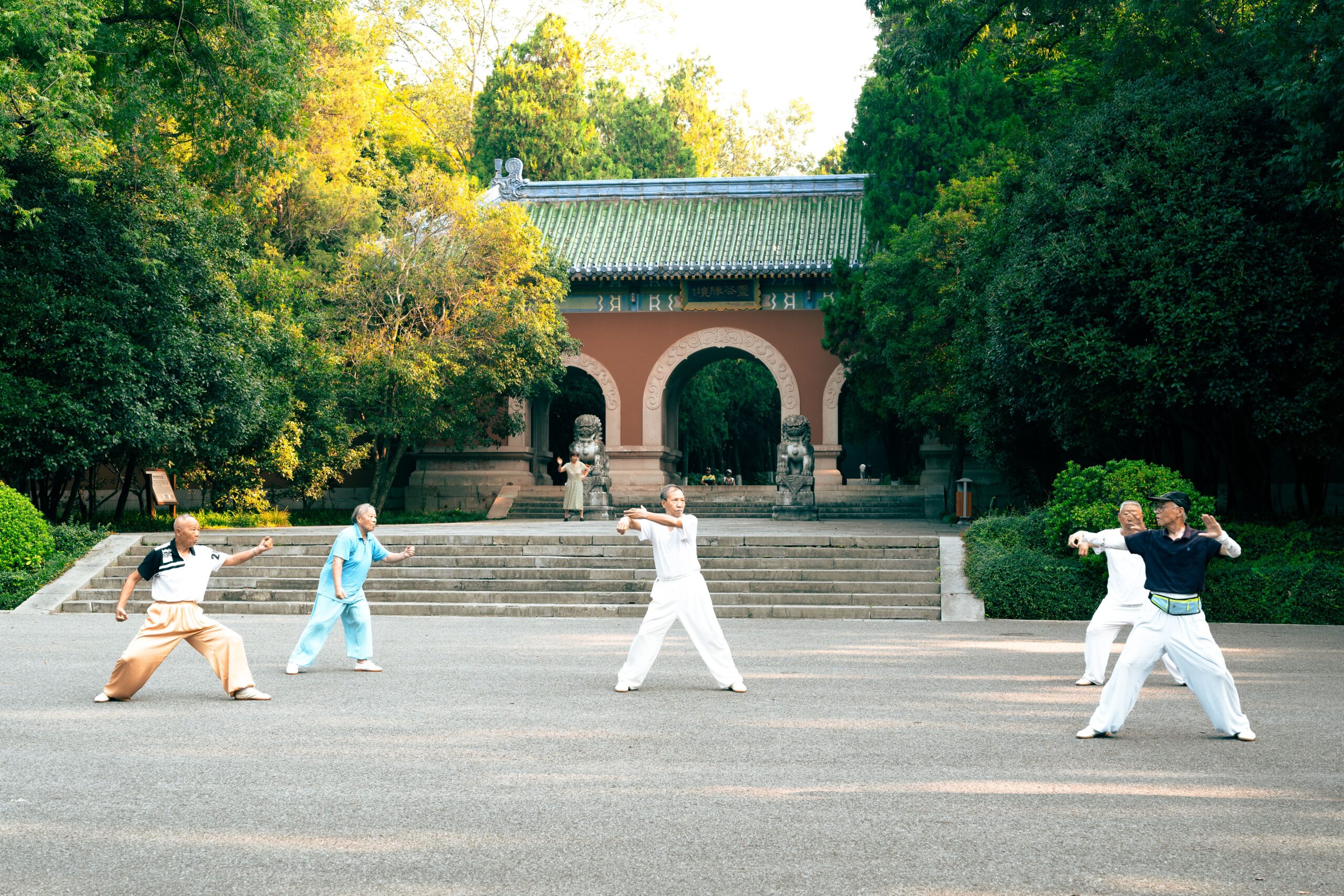
Balance tends to slip quietly. A wobble on the stairs, a hand reaching for the wall while putting on socks, a new hesitation on uneven ground. For Humanic Blue, the question is how balance responds to training and what a simple test can—and cannot—tell you about fall risk.
Balance is trainable, and the useful evidence measures fewer falls—not a prettier test score. A Cochrane review found high-certainty evidence that balance and functional programs—practice with movements used in daily life—reduced falls in older adults living at home. An Oregon trial found fewer falls with one tailored tai ji quan program, a form of tai chi, than with stretching in adults 70 or older at high fall risk. The Centers for Disease Control and Prevention (CDC) four-stage balance test can screen function: inability to hold a heel-to-toe stance for 10 seconds signals increased fall risk. It is not a diagnosis or a stand-alone exercise prescription. For living longer and better, structured training can help protect mobility and independence.
Key Takeaways
- Cochrane found high-certainty evidence that balance and daily-movement programs reduce falls in older adults living at home.
- One randomized trial in selected high-risk adults 70 or older found fewer falls with a tailored tai ji quan program than with stretching or a program combining several exercise types.
- A review found fewer falls with the Otago home strength-and-balance program in adults averaging about 82.
- One clinic study linked difficulty with a specified one-leg test to a higher death rate; it cannot show that balance practice changes survival.
- Training balance has not been shown to extend lifespan.
What can a balance test tell you?
The CDC’s four-stage balance test is a clinical assessment in its STEADI fall-prevention toolkit. An assessor demonstrates each position, helps the person get steady and stays ready to catch a loss of balance. The person is asked to hold progressively harder positions for 10 seconds each without moving their feet:
- Feet side by side.
- The instep of one foot touching the big toe of the other.
- Tandem stand: one foot directly in front of the other, heel touching toe.
- Standing on one foot.
CDC STEADI classifies an older adult who cannot hold the tandem stance for 10 seconds as being at increased fall risk. The CDC instructs the assessor to stop when the person cannot hold a position for 10 seconds without moving their feet or needing support. A nearby wall alone does not reproduce that supervised assessment. The CDC suggests considering physical therapy or a tested fall-prevention program after a concerning result; the test is not a home training plan.
The one-leg test and mortality. In a Brazilian clinic study following adults ages 51–75, about one in five could not complete a specified 10-second one-leg stance. Deaths during follow-up were more common in that group, even after researchers accounted statistically for age, sex, body size and existing illnesses. Most participants were men. The study did not control for recent falls or physical activity and cannot show that balance caused survival differences or that practicing this test adds years.
Where does a balance screening result stop short of explaining overall fall risk?
What did balance-training trials actually test?
Balance and functional exercise. The Cochrane review found that balance and functional programs lowered fall rates by 24%. Programs combining several exercise types—usually balance and functional work plus resistance—probably lowered rates by 34%, based on moderate-certainty evidence. Fall rate counts all falls over time, including repeated falls by the same person; a lower rate does not mean that many fewer people fell. Across the review, effects were larger in studies delivered by a health professional, usually a physiotherapist; that comparison was not itself a randomized test of professional delivery. Functional exercise practices movements used in daily life, such as standing from a chair, stepping and turning.
Tai ji quan. In the Oregon trial, adults living at home who had fallen in the previous year or had difficulty moving took twice-weekly, hour-long classes for 24 weeks. They averaged about 78 years old; most were women and nearly all were white.
- Tai Ji Quan: Moving for Better Balance: the fall rate was 58% lower than with stretching.
- A combined program of balance, aerobic, strength and flexibility work: falls were 40% lower than with stretching.
- In the direct comparison, the tai chi program had 31% fewer falls than the combined program.
The study tested a therapeutically tailored program, not every style or class labeled tai chi. Lead author Fuzhong Li disclosed that he founded and owns a consulting company that receives licensing fees for the program.
The Otago program. This home-based strength-and-balance program was evaluated in a 2010 review of seven trials in adults living at home, averaging about 82 years old. It found fewer falls and also reported fewer deaths over a year. The death finding was secondary to the main exercise question and came from a small set of trials in which participants knew their treatment. It does not establish that balance training extends life. Among participants still being followed at a year, fewer than four in ten were exercising three or more times a week.
Perturbation training. This approach creates controlled losses of balance so people can practice recovery, often using specialized equipment and safety systems. A 2026 review of randomized trials in community-dwelling adults 65 or older estimated 23% fewer falls and 24% fewer injurious falls; certainty for the fall-rate result was low. Programs totaling at least six hours appeared more effective in a comparison of groups of trials, but that was not a direct test establishing the minimum training time needed. The review called for more accessible, high-quality trials.
Which tested program features matter beyond an exercise simply being called balance training?
What else does balance depend on?
Fall risk is not a balance score alone. The 2024 US Preventive Services Task Force (USPSTF) recommendation lists walking, balance, vision, blood-pressure changes with standing, medications, surroundings, thinking and memory, and psychological health among factors that may be addressed in an assessment of several fall risks. It recommends exercise interventions for community-dwelling adults 65 or older who are at increased fall risk and individualized decisions about broader programs addressing several risks. More detail appears in How Can Older Adults Prevent Falls?, while strength is covered in Build Muscle After 60.
What’s Interesting
Balance and functional exercise pair high-certainty falls evidence with several delivery options, including supervised group and home programs. Implementation remains difficult: in the older Otago synthesis, fewer than four in 10 participants still under follow-up were exercising at the requested frequency after a year. That figure describes adherence; it does not prove that adherence differences caused the pooled outcome.
What This Means in Practice
For living longer and better after 60, the demonstrated benefit is fewer falls and support for daily function; longer life remains unestablished. The USPSTF recommends exercise for adults 65 and older living at home who are at increased fall risk. The CDC’s clinical balance assessment helps identify risk and possible referrals. Neither supplies a universal routine.
A program discussion can cover the person’s fall history, mobility, health, available supervision and ability to continue attending or practicing. The trials studied specific programs, so a class name alone does not establish that it provides the tested instruction, progression or support. The Otago follow-up also shows why continuing participation is a separate question from whether a program can work.
A physical therapist can assess balance and design a program. A primary care clinician can review medications, vision and blood pressure.
Bottom Line
Balance and functional exercise can lower fall rates after 60. A high-certainty Cochrane review estimated 24% fewer falls, one tailored tai ji quan program produced a 58% lower rate than stretching in selected high-risk adults 70 or older, and the Otago synthesis estimated 32% fewer falls in adults averaging 81. The CDC’s four-stage test is a screening tool: trouble holding a heel-to-toe stance for 10 seconds signals higher fall risk, not a diagnosis. The current USPSTF recommends exercise interventions for community-dwelling adults 65 or older at increased risk. Whether balance training extends life remains unknown.
A NOTE FROM LONGEVITY365
We read research, consult expert perspectives and work to make complicated health information easier to understand. What you’re reading here reflects how we’ve interpreted and organized that information. It is educational content—not personal medical advice, diagnosis or treatment guidance.
We’re not perfect, and neither is the available research. Evidence changes, new studies emerge and what’s appropriate for one person may not be appropriate for another.
Use this article as a starting point for your own research and conversations with qualified professionals. Always talk with your doctor or another trusted healthcare professional before making decisions that could affect your health, particularly if you take medications, are receiving treatment, have existing health conditions, are pregnant or have other circumstances that could affect what’s appropriate for you.
Reader Questions
A few questions to carry into the comments or your next conversation. Please leave out identifying or personal medical details.
- 01Which part of bone, joint, or fall prevention feels most actionable without becoming overwhelming?
- 02What would you want clarified before changing exercise, testing, or supplements around this topic?
- 03What question would help a clinician or physical therapist connect the evidence to day-to-day function?
Extra Insights & Sources
The evidence summaries and linked sources behind this article.
What We Know
- Balance and functional exercise reduce fall rates, with high-certainty evidence. Established.
- Programs delivered by health professionals had larger effects across studies, but delivery was not randomized. Supported association within the review.
- One therapeutic tai ji quan program reduced fall rates more than stretching or multimodal exercise in selected high-risk adults age 70 or older. Supported; one protocol and population.
- Inability to hold a one-leg stance for 10 seconds predicts higher mortality. Supported (association).
What We Don’t Know
- Whether balance training extends lifespan. Unknown.
- How long benefits last once people stop training. Uncertain.
- Whether perturbation training can be delivered safely and cheaply outside specialized settings. Uncertain.
Reading the study numbers
The fall percentages below are relative reductions compared with each study’s control group. They are not percentage-point reductions in an individual’s chance of falling. An incidence rate ratio (IRR) of 0.42 means the fall rate was 42% of the comparison rate, or 58% lower. A meta-analysis combines results from several studies; differences between groups of studies can suggest explanations but cannot establish which program feature caused a difference.
Source Materials
- Sherrington et al. — Exercise for preventing falls in community-dwelling older people — 2020 abridged Cochrane review of randomized trials in adults age 60 or older. Supports the high-certainty 24% balance/functional estimate, moderate-certainty 34% multicomponent estimate and professional-delivery subgroup. The balance-and-functional estimate came from 39 studies (7,920 participants), and the combined-exercise estimate from 11 studies (1,374 participants). The professional-delivery finding is an across-study comparison, and several review authors had authored included fall-prevention trials but did not select or process their own studies.
- Li et al. — Tai Ji Quan: Moving for Better Balance — 24-week randomized trial of 670 community-dwelling Oregon adults age 70 or older with a prior fall or impaired mobility. The 670 participants averaged 77.7 years; 65% were women and 92% white. Tai ji quan had a 58% lower fall rate than stretching (IRR 0.42), the combined program a 40% lower rate than stretching, and tai ji quan a 31% lower rate than the combined program. Supports the class schedule, sample, fall-rate comparisons and demographic limits. It tested one tailored program; the lead author disclosed ownership of the company receiving its licensing fee.
- CDC STEADI — Four-Stage Balance Test — Federal clinical screening tool supporting the four positions, ten-second timing and tandem-stance risk flag. It is an assessment aid, not a diagnosis or a complete exercise prescription.
- USPSTF — Falls prevention in community-dwelling older adults — 2024 final recommendation supporting exercise for adults 65 or older at increased risk and individualized multifactorial intervention decisions. It applies to community-dwelling adults and does not prescribe one specific balance protocol.
- Araújo et al. — Ten-second one-leg stance and mortality — Observational clinic cohort of 1,702 adults ages 51–75 followed for a median seven years. Of these participants, 20.4% could not complete the test. During follow-up, 17.5% of that group died versus 4.6% of those completing it. After statistical adjustment for age, sex, body mass index and existing illnesses, the rate of death from any cause was 84% higher in those unable to complete it. This adjusted relative estimate differs from the raw percentages and is not an individual prognosis. It was 68% male, did not control for physical activity or recent falls and cannot establish that balance practice changes survival.
- Thomas et al. — Otago Exercise Programme — 2010 review of seven trials and 1,503 community-dwelling adults averaging 81.6. Fall rates were 32% lower and the 12-month risk of death 55% lower relative to comparison groups. Of 747 people still followed at 12 months, 274 (36.7%) were exercising at least three times weekly. Supports the fall-rate, 12-month mortality and continuing-participation estimates. The mortality finding is a secondary pooled result from a small older evidence base and does not establish lifespan extension.
- Sharma et al. — Perturbation-based balance training — 2026 systematic review of randomized trials in community-dwelling adults age 65 or older, searched through June 2024. Supports the fall, injurious-fall and six-hour subgroup estimates. The fall-rate certainty was low, the dose result was a subgroup, and scalable delivery needs further study.
Leave a Reply