
Exercise
Prevent Muscle Loss After 40
US activity guidelines recommend strength work at least twice weekly for adults. Direct exercise evidence alongside GLP-1 weight-loss drugs remains limited.
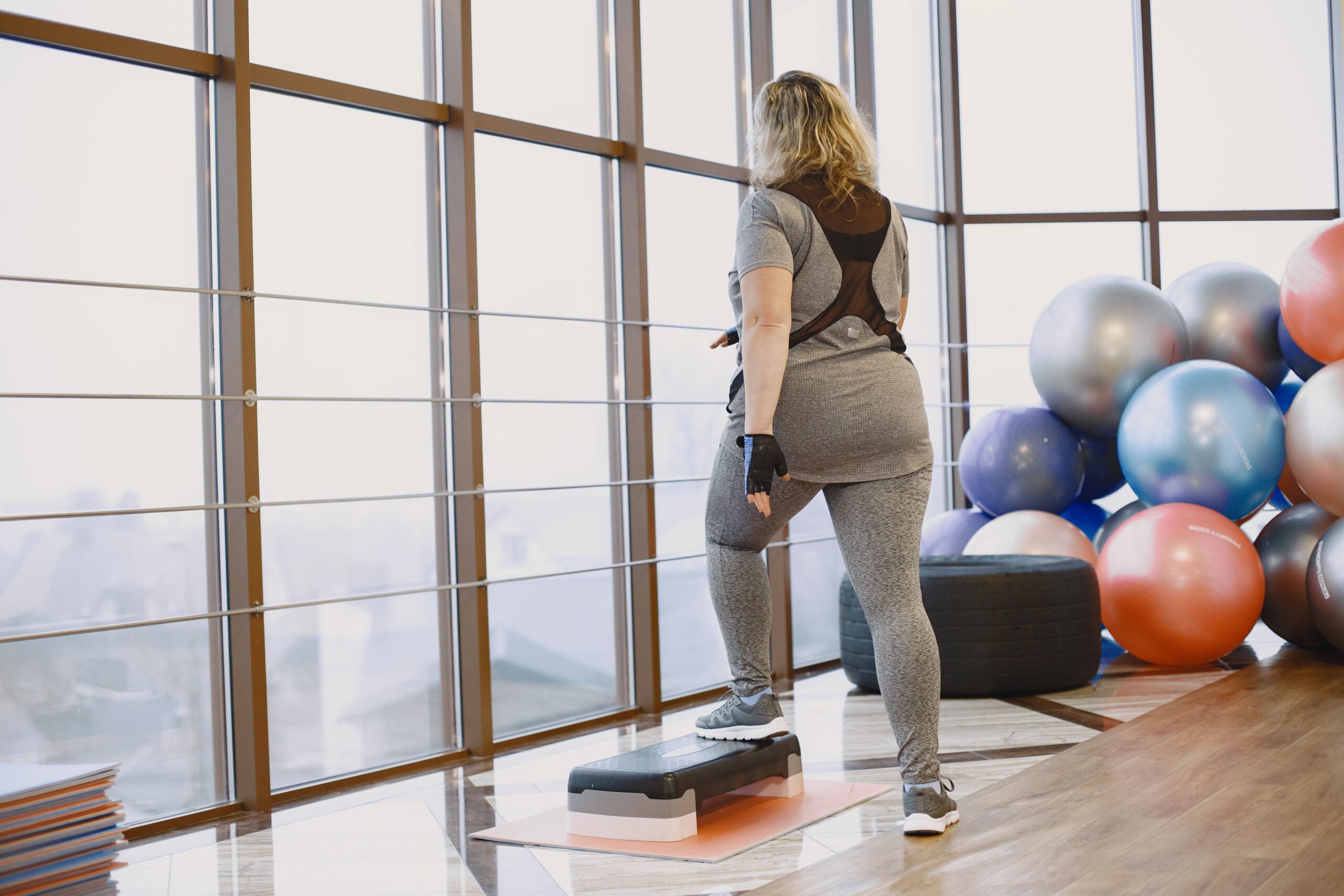
In your 40s, muscle loss rarely announces itself. The weights feel about the same, the stairs are fine, and the scale may even be creeping up. That’s why Humanic Blue is taking a closer look at this decade and what the evidence says about living longer and better.
What does the evidence say about preventing muscle loss after 40? No study identifies a biological switch in the late 40s. One whole-body MRI study compared adults of different ages and found less muscle near the end of the 40s, mainly in the lower body. It did not follow the same people over time. The current US activity guideline recommends muscle-strengthening activity at least two days a week plus 150–300 minutes of moderate aerobic activity. Resistance training means working muscles against a load; progressive training increases that load over time. Reviews report gains in strength and muscle across adulthood. Intentional weight loss—including treatment with drugs based on glucagon-like peptide-1 (GLP-1)—usually reduces some lean tissue along with fat. Lean tissue includes organs and water as well as muscle, so a scan’s lean-mass result does not measure muscle alone. No trial shows that preserving muscle in your 40s extends lifespan; the evidence supports strength, function and body-composition goals.
Below: what’s happening in this decade, what speeds it up, what slows it down and what different measures can show.
Key Takeaways
- An MRI study comparing different age groups found less muscle near the end of the 40s, mainly in the legs. It could not establish when one person’s decline begins.
- US Physical Activity Guidelines recommend muscle-strengthening activity at least twice a week for adults.
- A pooled analysis estimated that lean tissue accounted for roughly one-quarter of weight lost with GLP-1-based treatment. Methods and populations varied, and lean tissue is not the same as muscle.
Is there a muscle-loss switch in your 40s?
No study pinpoints a start date for any one person. One frequently cited picture comes from a 2000 study in the Journal of Applied Physiology. Researchers used whole-body magnetic resonance imaging (MRI) to measure skeletal muscle in several hundred men and women aged 18 to 88 at one point in time.
Relative skeletal muscle—muscle as a share of body weight—was lower beginning in younger adult decades, while the total amount of muscle was noticeably lower only near the end of the 40s. The lower-body measurements accounted for most of that age-group difference.
That is an age-group comparison, not a timeline for one person. Differences between generations, body size and who survived to be studied can influence this snapshot comparison, so the study cannot prove that muscle holds steady and then begins declining in the late 40s or that every person’s legs go first.
The lower-body finding concerns muscles used for stairs, chair rises and responding to a stumble. It does not show that leg training alone prevents age-related muscle loss.
Strength matters even more than size. As covered in Why Muscle Matters for Longevity, strength declines faster than muscle mass with age and tracks more closely with survival in older adults.
What separates an average age pattern from a timetable for one person's muscle loss?

What speeds it up
Inactivity. A desk job and a long commute can mean years of very little loading. The CDC’s adult guideline exists because muscle adapts to use.
Weight loss. Weight loss usually takes some lean mass along with fat. That’s become a larger question with GLP-1 medications. In the STEP 1 trial, adults with overweight or obesity lost an average of 14.9% of body weight over 68 weeks on semaglutide, compared with 2.4% on placebo.
The body-composition substudy of STEP 1 included about 140 participants and used dual-energy X-ray absorptiometry (DXA), a scan that estimates fat and lean tissue. With semaglutide, body weight fell 15.0%, fat mass 19.3% and total lean mass 9.7%; because fat fell more, lean mass became a larger share of total body weight. This was an exploratory subgroup, and STEP 1 was sponsored by semaglutide’s manufacturer, Novo Nordisk.
A 2025 pooled analysis of randomized trials estimated that lean mass accounted for about 25% of weight lost with GLP-1 or GLP-1/GIP treatment. Results varied substantially between studies. DXA and bioimpedance, which estimates body composition using a small electrical current, measure lean mass that includes water, organs and other nonfat tissue, so this estimate is not a direct measurement of skeletal-muscle loss or strength.
Hormonal shifts. Menopause and, in some men, falling testosterone can affect body composition. Those topics are covered in Menopause and Longevity and What Are the Symptoms of Low Testosterone?
What can slow muscle loss after 40?
The federal activity guideline. The current Physical Activity Guidelines for Americans recommend muscle-strengthening activity involving the major muscle groups on at least two days each week, alongside 150–300 minutes of moderate-intensity aerobic activity. A systematic review of adults aged 40–65 found a moderate strength benefit from physical activity, with larger effects in programs that specifically used resistance exercise.
The observational dose associated with the lowest mortality is covered in Why Muscle Matters for Longevity. Exercises such as squats, step-ups and leg presses load large lower-body muscle groups, but the cross-sectional MRI study does not establish a special leg-first prescription.
Enough protein. Guidance is in flux. The 2025–2030 Dietary Guidelines for Americans use a target of 1.2–1.6 grams of protein per kilogram of body weight per day. The long-standing adult Recommended Dietary Allowance (RDA) remains 0.8 grams per kilogram per day. The evidence and source-quality tradeoffs are covered in Protein Needs After 40 and What Should I Eat to Live Longer?.
Training during weight loss. The resistance-training reviews report gains in strength and muscle, but trials directly testing exercise programs alongside modern GLP-1-based obesity drugs remain limited. The general training evidence does not identify a program that prevents muscle loss for every person using these medicines. The medicine’s indication, benefits and adverse effects should be discussed separately from body-composition goals.
How can you measure your starting strength?
A simple baseline can make future change easier to interpret.
| Measure | What it shows | Where to learn more |
|---|---|---|
| Grip strength | Grip force; a marker linked to later health | Grip Strength and Longevity |
| Chair rises | Leg strength and function | Ask a clinician or physical therapist about a timed sit-to-stand test |
| Body composition scan (DXA) | Lean and fat mass | Ask a clinician whether it’s useful for you |
| A simple log | Weights and reps you can do | Your own records |
The point is not a diagnostic cutoff. It is a repeatable measure taken under similar conditions; a clinician or physical therapist can help interpret meaningful change.
Which differences between strength and body-composition measures matter when describing a baseline?
What’s Interesting
The MRI study found a lower-body pattern across age groups. But comparing different people cannot show when one person’s decline starts. A birthday and a change in someone’s ability to lift or rise from a chair are different kinds of information; the study cannot turn 40 or 49 into a personal deadline.
What This Means in Practice
- Activity guidance has a defined scope. US Physical Activity Guidelines call for major-muscle-group strengthening at least twice a week for adults; they do not prescribe the same exercises or loads for everyone.
- Progressive training is a method, not a fixed program. The load increases over time in the resistance-training research; an individual’s progression depends on their starting ability and health.
- Protein targets differ. The federal dietary guideline and the adult RDA use different amounts. A dietitian can explain how those figures apply alongside kidney health, appetite and total food intake.
- Drug and exercise evidence answer different questions. GLP-1 trials document weight and lean-tissue changes, while direct evidence on accompanying exercise programs remains limited. A treating clinician can discuss the medicine’s benefits and harms separately from muscle-preservation goals.
- Measurements capture different things. Grip and chair-rise tests describe strength or function; DXA describes body composition. None alone establishes a personal rate of age-related muscle loss.
A physical therapist or certified strength coach can build a starting program, especially after an injury. A primary care clinician can discuss weight-loss medications, hormone questions and whether a body composition scan is useful.
Bottom Line
No study pinpoints a muscle-loss switch in your 40s. A cross-sectional MRI study found lower absolute muscle near the late 40s, mainly in the legs, but could not establish an individual’s timeline. Federal activity guidance calls for muscle-strengthening at least twice a week for adults, while reviews report strength gains from resistance-focused programs. Protein targets differ between authorities, and strength tests and body-composition scans answer different questions. GLP-1-based weight loss reduces some lean tissue as well as fat; recent pooled estimates put the lean share near one-quarter, but lean mass is not the same as skeletal muscle. Preserving muscle supports function, but no trial shows that doing so in your 40s extends lifespan.
A NOTE FROM LONGEVITY365
We read research, consult expert perspectives and work to make complicated health information easier to understand. What you’re reading here reflects how we’ve interpreted and organized that information. It is educational content—not personal medical advice, diagnosis or treatment guidance.
We’re not perfect, and neither is the available research. Evidence changes, new studies emerge and what’s appropriate for one person may not be appropriate for another.
Use this article as a starting point for your own research and conversations with qualified professionals. Always talk with your doctor or another trusted healthcare professional before making decisions that could affect your health, particularly if you take medications, are receiving treatment, have existing health conditions, are pregnant or have other circumstances that could affect what’s appropriate for you.
Reader Questions
A few questions to carry into the comments or your next conversation. Please leave out identifying or personal medical details.
- 01Which measurement or milestone would feel useful to track without letting it take over the whole point of moving?
- 02Which real-world barrier did the article address most usefully: time, confidence, access, recovery, or knowing where to start?
- 03What question would you bring to a clinician, physical therapist, trainer, or exercise professional after reading about Prevent Muscle Loss After 40?
Extra Insights & Sources
The evidence summaries and linked sources behind this article.
What We Know
- Cross-sectional MRI data show lower absolute muscle near the late 40s, mainly in the lower body, but do not establish an individual onset age. Limited.
- US guidelines call for muscle-strengthening activity at least twice a week for adults. Established.
- GLP-1-based treatments reduce fat and some lean tissue; recent pooled estimates place lean tissue near one-quarter of weight lost. Supported, with heterogeneous methods and no direct equivalence to muscle.
What We Don’t Know
- Whether preventing muscle loss in your 40s extends lifespan. Unknown.
- The best protein intake for adults in their 40s. Guidelines and researchers disagree. Contested.
- Whether lean-mass loss on GLP-1 drugs affects long-term strength and function. Uncertain.
Sources
- Janssen et al., Journal of Applied Physiology (2000): whole-body MRI study of 468 adults aged 18–88. Cross-sectional age-group differences suggested lower absolute muscle near the end of the fifth decade, largely in the lower body; the design cannot establish an individual’s onset or rate of loss. https://pubmed.ncbi.nlm.nih.gov/10904038/
- Physical Activity Guidelines for Americans, current guidance: recommends 150–300 minutes of moderate aerobic activity and muscle-strengthening work for all major muscle groups on at least two days per week. https://odphp.health.gov/our-work/nutrition-physical-activity/physical-activity-guidelines/current-guidelines/top-10-things-know
- O’Neill et al., Journal of Physiotherapy (2012): systematic review in adults aged 40–65; physical activity improved strength, balance and endurance, with larger strength effects in resistance-focused programs. https://pubmed.ncbi.nlm.nih.gov/22613238/
- Wilding et al., STEP 1, New England Journal of Medicine (2021): 68-week randomized trial in 1,961 adults with overweight or obesity without diabetes; semaglutide produced 14.9% mean weight loss versus 2.4% with placebo. Novo Nordisk sponsored the trial. https://pubmed.ncbi.nlm.nih.gov/33567185/
- STEP 1 body-composition substudy (2021): exploratory DXA analysis of approximately 140 participants; semaglutide reduced fat mass more than lean mass, so relative body composition improved despite a 9.7% lean-mass decline. DXA lean mass is not skeletal muscle. https://pmc.ncbi.nlm.nih.gov/articles/PMC8089287/
- Karakasis et al., Metabolism (2025): network meta-analysis of 22 randomized trials and 2,258 participants; estimated lean mass at about 25% of GLP-1/GLP-1–GIP treatment-associated weight loss, with drug, population and measurement heterogeneity. https://pubmed.ncbi.nlm.nih.gov/39719170/
- Dietary Guidelines for Americans, 2025–2030: current federal policy document using a 1.2–1.6 g/kg/day general protein target; it differs from the National Academies’ 0.8 g/kg/day RDA. https://cdn.realfood.gov/DGA_508.pdf
Photo credits
Images from Pexels.
- featured: Photo by Gustavo Fring — original Pexels photo.
- inline-1: Photo by Alesia Kozik — original Pexels photo.
- inline-2: Photo by Andrea Piacquadio — original Pexels photo.
Leave a Reply