
Food
Protein Needs After 40
Adult guidelines give different daily protein amounts. None establishes a special target for people in their 40s or an intake that extends life.

Somewhere in your 40s, protein starts coming up in conversations about aging: keep your muscle, eat more protein, add a shake. Often from someone who also happens to sell the shake. Humanic Blue is looking at the numbers behind that advice, which vary more than most people realize. The evidence doesn’t all point the same way for this decade.
Two official figures now appear in this discussion. The long-standing Recommended Dietary Allowance (RDA) is 0.8 grams of protein per kilogram of body weight a day for healthy adults, about 58 grams for a 160-pound person. The 2025–2030 Dietary Guidelines for Americans introduced a higher target of 1.2 to 1.6 grams per kilogram, about 87 to 116 grams at the same weight. Neither is specific to people in their 40s. In resistance-training trials, protein supplements added modestly to average strength and fat-free-mass gains. A statistical model estimated a plateau near 1.6 grams per kilogram, but its confidence range was wide. A separate observational analysis associated high protein with higher mortality among adults 50 to 65; it did not include people in their 40s and relied on a single day’s diet report. For living longer, no intake has been established specifically for this decade.
We did the arithmetic in grams first, then laid out what the evidence shows on each side.
Key Takeaways
- The adult RDA is 0.8 g/kg a day; current federal dietary guidance targets 1.2–1.6 g/kg. Neither was created specifically for the 40s. The figures are official, but they serve different purposes.
- With resistance training, protein supplements modestly increased average muscle and strength gains. A statistical analysis across trials estimated that gains in nonfat tissue leveled off near 1.6 g/kg. The estimate was too imprecise to define a personal ceiling.
- High protein intake at ages 50–65 was linked to higher mortality in one analysis, mainly when protein came from animal sources. This is preliminary and indirect evidence for this article: people in their 40s were not studied.
What do the protein targets mean in grams?
The National Academies’ Dietary Reference Intakes set the adult RDA at 0.8 grams per kilogram per day. An RDA is the intake designed to meet the needs of nearly all healthy people in a life-stage group; it is not a muscle-maximization target or an individualized prescription.
The current 2025–2030 Dietary Guidelines for Americans give a protein target of 1.2–1.6 grams per kilogram per day, adjusted for individual calorie needs. That is a newer federal dietary-policy target, while the 0.8 RDA remains part of the Dietary Reference Intakes.
| Body weight | RDA daily protein (0.8 g/kg) | Federal guideline daily protein, low end (1.2 g/kg) | Federal guideline daily protein, high end (1.6 g/kg) |
|---|---|---|---|
| 130 lb (59 kg) | 47 g | 71 g | 94 g |
| 160 lb (73 kg) | 58 g | 87 g | 116 g |
| 190 lb (86 kg) | 69 g | 103 g | 138 g |
| 220 lb (100 kg) | 80 g | 120 g | 160 g |
The table converts pounds to kilograms by dividing by 2.2, then multiplies by each published figure. It illustrates the arithmetic, not a personal intake prescription.
The gap is real rather than a calculator error. The final federal guidance prioritizes both animal and plant protein sources, while its scientific advisory committee had emphasized plant replacements for foods high in saturated fat. Protein source evidence is covered in What Should I Eat to Live Longer? and Best Protein Sources for Healthy Aging.
What supports the case for more protein and muscle?
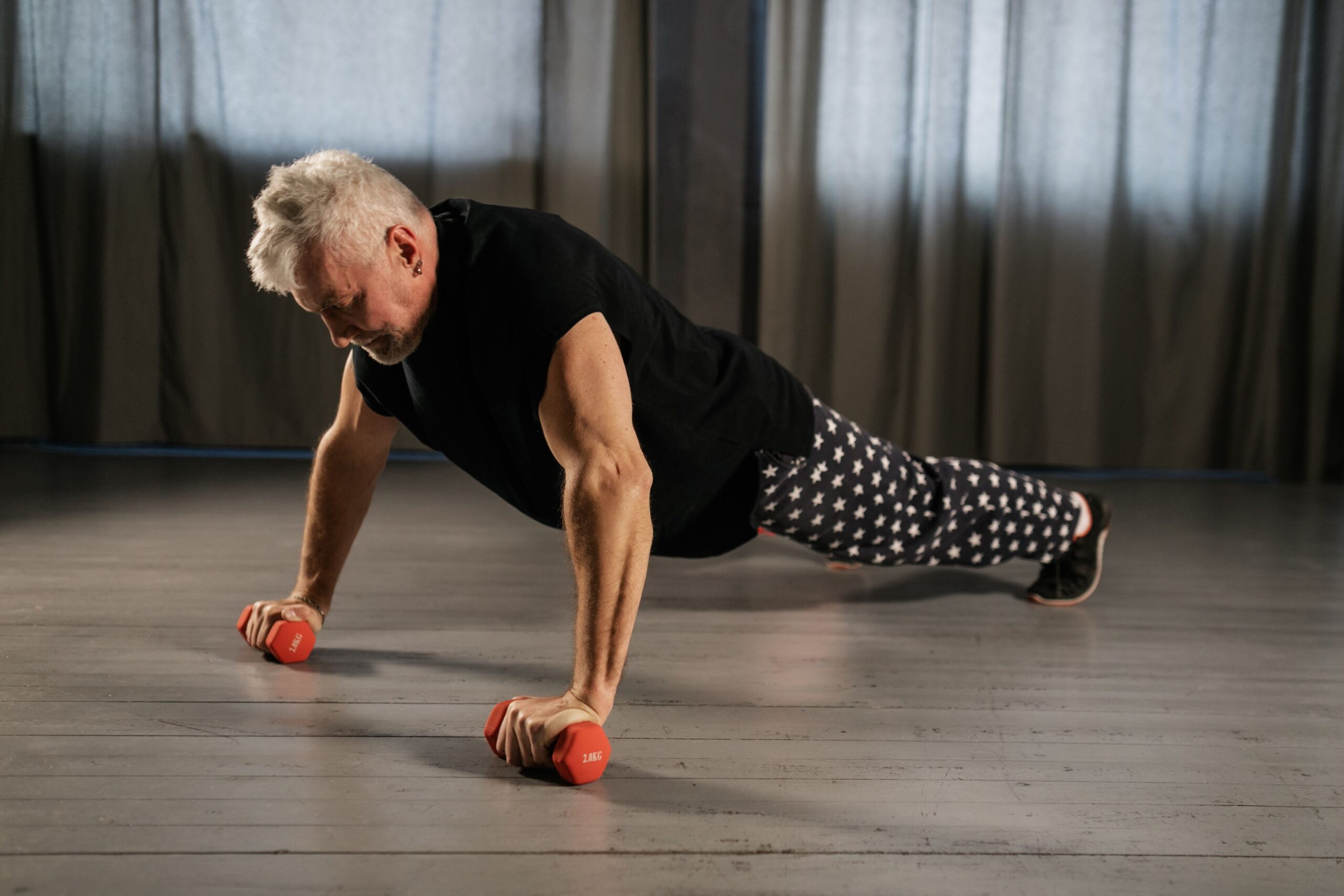
Preserving muscle is a common midlife goal, as covered in Prevent Muscle Loss After 40. The trials discussed here tested protein supplements alongside strength training.
A 2018 meta-analysis in the British Journal of Sports Medicine led by McMaster University kinesiology researchers combined 49 trials in healthy adults assigned to comparison groups while doing resistance training for at least six weeks. Adding protein supplements increased average gains in:
- Strength: about 2.5 kg more in the heaviest weight lifted once
- Fat-free mass: about 0.3 kg more nonfat tissue
Two findings bear on midlife. The supplement advantage for fat-free mass became smaller as study age increased. A statistical analysis across trials estimated that gains in nonfat tissue leveled off near 1.6 grams per kilogram per day. The estimate was imprecise, and the statistical test did not clearly establish a breakpoint. It therefore cannot define a ceiling for each person. Senior author Stuart Phillips disclosed National Dairy Council grants and honoraria; some included trials also had industry support.
Without training, the case is weaker. The trials tested protein alongside resistance exercise, not protein alone.
What do training trials tell us about protein that they cannot tell us about lifespan?
Why does midlife mortality evidence call for caution?
One argument for restraint comes from a 2014 study in Cell Metabolism by University of Southern California researchers. They analyzed a national survey of US adults aged 50 and older over 18 years. The analysis therefore provides no direct data for people aged 40–49.
Among people 50 to 65, those who got 20% or more of their calories from protein had a 74% higher risk of death from any cause and more than four times the risk of cancer death, compared with those getting less than 10%. The researchers found these associations weakened or disappeared when the protein came from plants. In people over 65, the direction was the opposite: higher protein was linked to lower mortality.
The study cannot show that protein caused the deaths. Diet category came from one 24-hour recall, exposure was not updated during follow-up, and subgroup estimates were unstable. The same paper combined the human cohort with mouse and yeast experiments, but those laboratory findings cannot validate the human mortality association. Senior author Valter Longo disclosed an equity interest in L-Nutra, which develops medical food.
The study’s population was 50 and older, so it doesn’t directly address people in their 40s. Where protein comes from, and why plant sources look different in cohort data, is covered in Best Protein Sources for Healthy Aging.
Does timing matter?
A popular piece of advice is to spread protein evenly across meals. It’s the kind of tip that sounds as if it must have a big study behind it. The evidence is mixed:
- In a seven-day crossover feeding study, a small group of healthy adults averaging age 37 had a 25% higher rate of building muscle protein over 24 hours with roughly 30 grams at each meal than with most protein at dinner. This was a short metabolic outcome, not a test of muscle gain. Two authors disclosed speaking fees from the National Cattlemen’s Beef Association.
- In an eight-week randomized trial, a small group of older adults eating 1.1 grams per kilogram daily showed no between-group difference in nonfat tissue, strength, function or measures of protein turnover when assigned to even or dinner-heavy patterns.
Both studies were very small. Whether timing matters over months or years is unknown.
What would distinguish a short-term muscle response from a lasting benefit of meal timing?
What’s Interesting
The protein debate for midlife is really two debates using the same word. The training trials found modest average benefits from supplements, without establishing a precise intake ceiling. The mortality analysis raised concerns about high animal protein at ages 50–65, but could not establish cause and effect. The two sides mostly measured different things, in different people, over different timescales. That’s why the 40s sit in the gap between them. It’s a bit like getting directions to the same town from two people standing on opposite sides of it.
Each side’s numbers also describe particular people. The supplement trials pooled adults doing resistance training for at least six weeks, and the mortality signal came from US adults 50 and older in one national survey. Someone in their 40s who does not strength train is outside the training setting and younger than the mortality-study population. Kidney disease or diabetes can also change clinical nutrition needs. These are reasons a dietitian’s individual target can differ from the table.
What This Means in Practice
For living longer and better, these studies leave several distinctions to discuss rather than one age-specific target:
- Published figures serve different purposes. The table illustrates the RDA and federal-policy range; neither is an individualized target for the 40s.
- The supplement trials included resistance training. They cannot establish the same gains from protein alone.
- The mortality finding depends on source and population. It weakened or disappeared for plant protein and did not include people in their 40s.
- The estimated plateau is uncertain. The pooled training data did not establish a precise intake ceiling.
- Kidney guidance differs. Kidney Disease: Improving Global Outcomes (KDIGO) suggests about 0.8 g/kg daily for adults with chronic kidney disease at stages G3–G5, which span moderate to advanced loss of kidney function, and advises avoiding more than 1.3 g/kg when progression risk is present. This disease-specific guidance requires clinical context.
A registered dietitian can set a protein target for your weight, training and health. A clinician should review needs if you have kidney disease or diabetes.
Bottom Line
Protein needs after 40 are not settled by an age-specific trial. The adult RDA remains 0.8 g/kg, while the 2025–2030 federal guideline targets 1.2–1.6 g/kg. Resistance-training trials show a modest average supplement benefit; their estimated 1.6 g/kg plateau is imprecise. The often-cited mortality warning begins at age 50, is observational and rests on one diet recall, so it should not be treated as an established limit for the 40s. No specific intake has been shown to extend lifespan in this age group, and chronic kidney disease can require a lower individualized target.
A NOTE FROM LONGEVITY365
We read research, consult expert perspectives and work to make complicated health information easier to understand. What you’re reading here reflects how we’ve interpreted and organized that information. It is educational content—not personal medical advice, diagnosis or treatment guidance.
We’re not perfect, and neither is the available research. Evidence changes, new studies emerge and what’s appropriate for one person may not be appropriate for another.
Use this article as a starting point for your own research and conversations with qualified professionals. Always talk with your doctor or another trusted healthcare professional before making decisions that could affect your health, particularly if you take medications, are receiving treatment, have existing health conditions, are pregnant or have other circumstances that could affect what’s appropriate for you.
Reader Questions
A few questions to carry into the comments or your next conversation. Please leave out identifying or personal medical details.
- 01Which part of this food question feels most practical in real life: what to eat, how much, timing, cost, or consistency?
- 02Where do you still see a gap between population evidence and the way one person actually eats?
- 03What would make "Protein Needs After 40" easier to discuss without turning food into another thing to optimize perfectly?
Extra Insights & Sources
The evidence summaries and linked sources behind this article.
What We Know
- The RDA is 0.8 g/kg; the 2025–2030 US guidelines set 1.2–1.6 g/kg. Established.
- Protein supplements modestly enhance average strength-training gains; a meta-regression estimated a plateau near 1.6 g/kg for fat-free mass. Supported for the modest benefit; the breakpoint is imprecise.
- In the Morton analysis, the average supplement advantage for nonfat-tissue gains was smaller in trials with older participants. This study-level association does not establish how one person’s response changes with age. Supported within this analysis.
What We Don’t Know
- The best protein intake for living longer in your 40s. Unknown.
- Whether high protein in midlife raises mortality. Uncertain. The main evidence is one observational study with a single diet measure.
- Whether meal timing matters over the long term. Uncertain.
Detailed trial results
The mortality analysis used a single 24-hour dietary recall to classify intake and did not update diet during 18 years of follow-up. Its age-specific subgroups and cancer deaths were limited, making the large estimates unstable. The human results were observational. Mouse and yeast experiments reported in the same paper are kept separate because they cannot establish what high protein does to human mortality. Senior author Valter Longo disclosed an equity interest in L-Nutra, a medical-food company.
Source Materials
- National Academies, Dietary Reference Intakes for protein and amino acids. Primary reference standard for the adult protein RDA of 0.8 g/kg/day. The RDA is designed to cover nearly all healthy adults’ nutrient requirements; it is not an athletic-performance target or medical prescription. DRI chapter
- Dietary Guidelines for Americans, 2025–2030. Current federal policy source for the 1.2–1.6 g/kg/day protein target. The document says to adjust for calorie needs and include both animal and plant sources; it does not provide a separate target for people in their 40s. Official PDF
- 2025 Dietary Guidelines Advisory Committee scientific report. Evidence-review source emphasizing plant replacements for foods high in saturated fat. It documents a material source-of-protein emphasis that differs from the final federal policy. Scientific report
- Morton et al., British Journal of Sports Medicine (PMID 28698222). Meta-analysis and meta-regression of 49 randomized trials, 1,863 healthy adults and at least six weeks of resistance training. Supports roughly 2.5 kg greater one-repetition-maximum gain and 0.30 kg greater fat-free-mass gain with supplements. The estimated 1.62 g/kg/day breakpoint had a wide 1.03–2.20 confidence interval and a nonsignificant breakpoint test. Supplement benefit declined with study age. Senior author Stuart Phillips disclosed National Dairy Council grants and honoraria. https://pubmed.ncbi.nlm.nih.gov/28698222/
- Levine et al., Cell Metabolism (PMID 24606898). Observational analysis of 6,381 NHANES III adults aged 50 or older followed for 18 years. Supports the age-50–65 high-protein mortality associations, attenuation with plant-derived protein and the opposite association after 65. One baseline 24-hour recall, small outcome subgroups, lack of diet updating and the observational design sharply limit inference; it contains no direct evidence for ages 40–49. Mouse and yeast experiments in the paper are not used as human evidence. Valter Longo disclosed an L-Nutra equity interest. https://pubmed.ncbi.nlm.nih.gov/24606898/
- Mamerow et al., Journal of Nutrition (PMID 24477298). Seven-day crossover feeding study with a 30-day washout in eight healthy adults averaging 36.9 years. Supports a 25% higher 24-hour muscle-protein-synthesis rate with roughly even distribution. It did not test long-term muscle mass, function or longevity. Two authors disclosed National Cattlemen’s Beef Association speaking fees. https://pubmed.ncbi.nlm.nih.gov/24477298/
- Kim et al., Clinical Nutrition (PMID 28318687). Eight-week randomized trial of 14 older adults consuming 1.1 g/kg/day, seven per distribution group. Supports no between-group difference in lean mass, strength, function or protein kinetics. The sample was too small and short to establish long-term equivalence. https://pubmed.ncbi.nlm.nih.gov/28318687/
- KDIGO 2024 Clinical Practice Guideline for Chronic Kidney Disease. Current guideline suggesting 0.8 g/kg/day for adults with CKD G3–G5 and advising those at risk of progression to avoid intake above 1.3 g/kg/day. These disease-specific targets explain why the general federal range should not be applied automatically in CKD. Guideline
Photo credits
Images from Pexels.
- featured: Photo by Annushka Ahuja — original Pexels photo.
- inline-1: Photo by Alena Darmel — original Pexels photo.
- inline-2: Photo by Ron Lach — original Pexels photo.
Leave a Reply