
Cardio & VO2 Max
VO2 Max and Longevity: Does a Higher VO2 Max Mean a Longer Life?
Fitter people die less often in large studies, but no trial shows raising VO2 max adds years. What the number measures, and what it can't predict.

Your watch now has opinions about your heart and lungs. It shows a VO2 max number, and the internet is ready to tell you what that number says about how long you’ll live. At Humanic Blue, that sounds like a big job for a reading taken on a Tuesday jog.
The plain answer to the VO2 max and longevity question: in large studies, people with higher cardiorespiratory fitness—the ability of the heart, lungs and muscles to supply and use oxygen during exercise—are much less likely to die during follow-up, and the American Heart Association has made the case for treating fitness as a clinical vital sign. But that research shows a link, not cause and effect. No trial has shown that raising your VO2 max adds a set number of years to your life. Exercise does raise it, even after 70. For living longer and better, heart researchers treat fitness as a strong marker of risk, not a lifespan forecast.
Key Takeaways
- People with higher cardiorespiratory fitness are consistently less likely to die during long studies. The evidence comes from studies that followed people, rather than assigning them to fitness levels.
- Aerobic and other structured exercise can raise VO2 max, including in people over 70. Trials that assigned people to exercise or comparison groups support this.
- No study has shown that raising VO2 max by a given amount makes people live a given amount longer. How a change in fitness affects lifespan remains unknown.
- A watch’s VO2 max is an estimate from a formula, not a lab measurement, and one score can’t forecast one person’s lifespan. The measurement method limits what it can tell you.
What does VO2 max actually measure?
VO2 max is the most oxygen your body can take in and use during all-out exercise. It’s usually reported as milliliters of oxygen used per kilogram of body weight each minute, written as mL/kg/min. “VO2 peak” is the highest value someone actually reached on a test. Researchers often use that term when a person stops before their body hits a true physiological ceiling.
The number is a relay race. The lungs bring oxygen in, the heart and blood vessels deliver it, the blood carries it, and working muscles pull it out and burn it for energy. A low value doesn’t tell you which runner is slow. It tells you how the whole team finished.
That’s why a panel of 16 exercise and heart researchers, with Robert Ross of Queen’s University in Canada as first author, wrote the American Heart Association’s 2016 scientific statement making “a case for fitness as a clinical vital sign.” They concluded that low fitness is tied to heart disease, earlier death and death from several cancers, and that adding fitness to the usual risk factors sorts people’s risk more accurately.
In 2024, Ross and several co-authors updated that case, saying fitness should be checked routinely in every health care setting. That’s about predicting risk in groups. It isn’t a diagnosis or an expiration date.
Fitter people die less often in the big studies
One widely cited study comes from the Cleveland Clinic. A team with Kyle Mandsager as first author and Wael Jaber as senior author looked back at about 122,000 adults referred for a treadmill stress test between 1991 and 2014, then followed them for a median of about eight years. People were graded against others of their own age and sex, and death rates fell step by step as fitness rose. The fittest group, roughly the top 2.3%, had about one-fifth the death rate of the least fit after the researchers accounted for measured differences between the groups. This is a relative comparison, not a claim that four out of five deaths would be prevented by training. Its edge over the next-fittest group showed up among people 70 and older, too.
The authors reported that low fitness carried as much risk as smoking, diabetes or coronary artery disease, or more. They saw “no observed upper limit of benefit,” and they reported no conflicts of interest. See the study numbers
A 2024 overview in the British Journal of Sports Medicine, led by Justin Lang and Stephanie Prince of the Public Health Agency of Canada, points the same way. It combined reviews of studies that followed people over time, covering more than 20 million observations. People with high fitness had roughly half the risk of dying during follow-up of people with low fitness. The authors rated the certainty of the evidence behind these links as very low to moderate.
Why isn’t the fitness link a lifespan forecast?
The study’s authors were direct about the limits. “The association between CRF and mortality does not prove causation,” they wrote in JAMA Network Open, CRF being cardiorespiratory fitness. They couldn’t tell whether high fitness lowers death rates or whether people headed for a longer life simply tend to be fitter.
Three details often go missing online:
- It wasn’t a mask test. The study estimated fitness from how far each person got on the treadmill, in units called metabolic equivalents (METs), which express exercise workload relative to energy use at rest. It didn’t measure oxygen directly.
- It wasn’t a random sample. Everyone had been referred for testing at one medical center, not drawn from the general public.
- Other differences can hide in the data. The authors named socioeconomic status and race and ethnicity among factors they couldn’t account for. Illness that hasn’t been diagnosed yet can also lower fitness before it causes a death, which makes cause and effect run backward.
So the evidence makes fitness a credible warning light. It doesn’t show that moving a test result from 30 to 35 mL/kg/min, by itself, buys extra years of life.
What would distinguish a fitness-related risk estimate from a forecast of one person's lifespan?
Lab test, treadmill, field test or watch
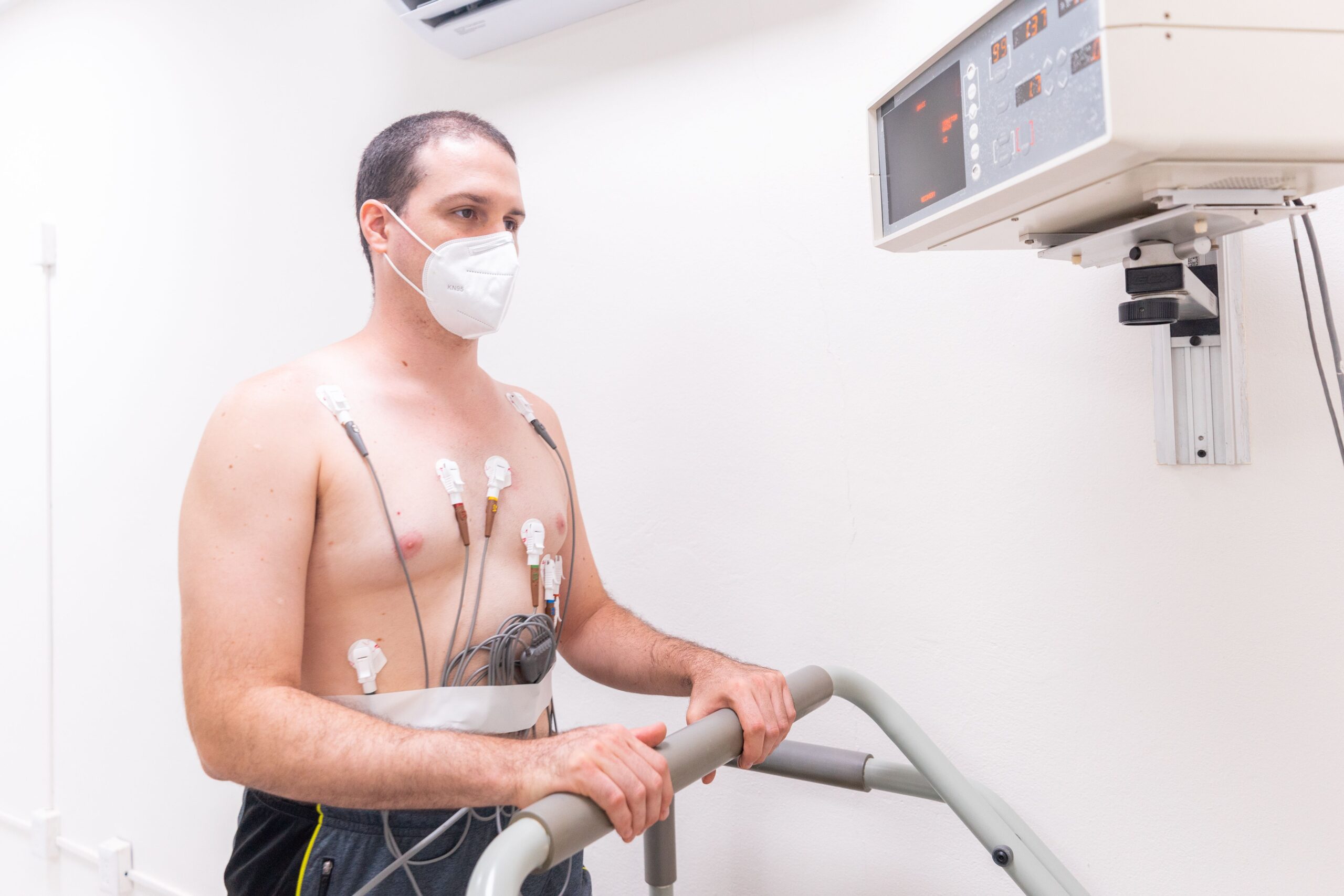
Only one kind of test measures VO2 max directly. In a cardiopulmonary exercise test (CPET), you exercise harder and harder while a mask measures the oxygen and carbon dioxide in your breath. The National Heart, Lung, and Blood Institute (NHLBI, part of the NIH) explains that during a stress test, “If your doctor also wants to see how well your body uses oxygen you may be asked to wear a mask or mouthpiece to measure the gases that you breathe out.”
Everything else is an estimate. A treadmill test without the mask, a timed walk or run, and a watch all feed your performance and heart rate into an equation. In an American Heart Association commentary on its 2016 CPET update, Barry Franklin of Beaumont Health notes that estimating oxygen use from the workload someone reaches can be inaccurate.
A watch reading is more informative as a trend than as a single number. If you use the same device for the same activity in similar conditions, the line over time can show whether you’re getting fitter. A jump after a software update, a switch from outdoor running to indoor cycling, loose heart-rate contact, heat, altitude or a new medication can move the number as much as your body does. How the methods compare
How does the measurement method change the meaning of a VO2 max number?

No single “longevity number”
Fitness tends to fall with age. The Strasbourg researchers behind one of the training reviews below describe a “progressive decline in cardiorespiratory fitness” in older adults. Expected values also differ by sex, body size, training history and whether the test was on a treadmill or a bike. Because the number is divided by body weight, it can change when your weight changes, even if your heart and lungs haven’t.
That’s why a universal internet cutoff doesn’t hold up. The Cleveland Clinic study graded people against others of their own age and sex, not against one number for everyone. A percentile tells you how you compare with people like you. It doesn’t tell you how many years you have.
A low or falling result can be a reason to look at activity, anemia, heart or lung disease, medications and other causes with a clinician. A high result doesn’t cancel out blood pressure, cholesterol, smoking or family history.
Can fitness still be built after 60 and 70?
Part of why researchers care about fitness is that it can change. A 2018 meta-analysis led by Walid Bouaziz at the University Hospitals of Strasbourg combined trials involving about 350 people aged 70 or older. Aerobic training raised VO2 peak by about 1.5 mL/kg/min compared with no training, in both healthy and less healthy older adults, though the trials varied a lot from one another. The training trials in detail
A 2025 review led by researchers at Imam Reza International University in Mashhad, Iran, combined trials involving about 3,200 healthy adults aged 60 and older. Aerobic, resistance and combined programs all improved fitness compared with control groups, and the authors reported no conflicts of interest. A VO2 max score doesn’t measure strength or muscle at all, so it can’t capture everything a strength program changes.
In its population guidance, the CDC says adults need 150 minutes of moderate activity or 75 minutes of vigorous activity a week, plus muscle-strengthening on at least two days. “Some physical activity is better than none,” the CDC says, and going beyond those amounts brings “even more health benefits.” These are population recommendations, not a personal VO2 max program. The CDC’s own example of moderate activity is brisk walking.
When to check with a clinician first
A CPET asks you to push close to your limit, which is why it’s done under supervision. The NHLBI says your doctor “will carefully monitor you throughout the test to lower the risk of complications,” and that “Intense exercise during the test can rarely cause some heart problems such as chest pain or irregular heartbeats.” A clinical review of CPET in the NIH’s StatPearls library lists conditions that rule the test out or put it on hold, among them an inadequate blood supply to the heart, uncontrolled heart rhythm problems, severe narrowing of the aortic heart valve and severe high blood pressure. Doctors also use it to work out why someone’s exercise is limited, for example by breathlessness.
The same logic applies to hard interval training. The American College of Sports Medicine’s screening advice, from a roundtable whose first author is Deborah Riebe of the University of Rhode Island, notes that exercise-related heart events “are often preceded by warning signs/symptoms.” It weighs three things: how active you are now, whether you have symptoms or known heart, metabolic or kidney disease, and how hard you plan to go. New chest discomfort, fainting, unusual breathlessness, palpitations with dizziness, or a sudden unexplained drop in fitness are reasons to see a clinician before a max test or a new hard program.
What’s Interesting
VO2 max squeezes the performance of several organ systems into one tidy number. That’s part of its appeal to researchers. It’s also what makes it vague for one person: it gives you the relay team’s finishing time, not the name of the runner who needs help.
There’s a small irony in the gadget era, too. The number behind the Cleveland Clinic headlines wasn’t measured with a mask at all. It came from how long people lasted on a treadmill. A lab CPET, a field test and a watch all get called “VO2 max,” and they aren’t equally precise.
What This Means in Practice
For living longer and better, the research treats aerobic fitness as one piece of a broader health picture. These questions can help frame a conversation with a clinician or qualified exercise professional:
- What would a test answer? The CDC’s adult activity guidance describes population activity targets without requiring a max test. A clinician may use supervised testing when symptoms, a clinical baseline or exercise limits need evaluation.
- How comparable are readings? Results from the same device, activity and conditions are easier to compare over time than a single watch estimate and a lab measurement.
- What else affects interpretation? Blood pressure, symptoms, strength, balance and function matter alongside the fitness number.
- What changes the decision for one person? Age, medical history, medications and health conditions can affect the usefulness and safety of testing or vigorous training; the large studies above cannot decide that for an individual.
A primary care doctor or cardiologist can assess whether clinical testing is appropriate. A clinical exercise physiologist can discuss how measured fitness relates to an individual’s starting point.
For readers who want the number rather than an estimate, How to Test VO2 Max compares laboratory measurement, field tests and wearable calculations.
Bottom Line
In large studies, people with higher VO2 max and cardiorespiratory fitness die less often during follow-up, and the American Heart Association’s 2016 statement argued for treating fitness as a vital sign. That evidence is observational: it shows a link, and the Cleveland Clinic researchers say it doesn’t prove cause and effect. Training trials show that fitness can rise even after 70, but no trial has shown how much longer life that buys. Repeated measurements using the same method can show a trend; no single score sets a universal target or predicts one person’s lifespan.
A NOTE FROM LONGEVITY365
We read research, consult expert perspectives and work to make complicated health information easier to understand. What you’re reading here reflects how we’ve interpreted and organized that information. It is educational content—not personal medical advice, diagnosis or treatment guidance.
We’re not perfect, and neither is the available research. Evidence changes, new studies emerge and what’s appropriate for one person may not be appropriate for another.
Use this article as a starting point for your own research and conversations with qualified professionals. Always talk with your doctor or another trusted healthcare professional before making decisions that could affect your health, particularly if you take medications, are receiving treatment, have existing health conditions, are pregnant or have other circumstances that could affect what’s appropriate for you.
Reader Questions
A few questions to carry into the comments or your next conversation. Please leave out identifying or personal medical details.
- 01Which measurement or milestone would feel useful to track without letting it take over the whole point of moving?
- 02Which real-world barrier did the article address most usefully: time, confidence, access, recovery, or knowing where to start?
- 03What question would you bring to a clinician, physical therapist, trainer, or exercise professional after reading about VO2 Max and Longevity: Does a Higher VO2 Max Mean a Longer Life?
Extra Insights & Sources
For readers who want to check the numbers behind each claim above.
What We Know
- Low cardiorespiratory fitness is associated with higher all-cause and cardiovascular mortality. Supported (observational; AHA 2016 statement, Lang et al. 2024).
- Very high age- and sex-adjusted treadmill performance was associated with the lowest mortality in a large clinical cohort. Supported, with referral-population and estimation limits (Mandsager et al. 2018).
- Structured exercise improves VO2 max or VO2 peak in many older adults. Supported (randomized trials and meta-analyses).
What We Don’t Know
- How much longer a specific person will live because their VO2 max went up. Unknown; the available evidence can’t calculate it.
- One ideal VO2 max target for every age, sex, body size and health status. Unsupported.
- Whether a wearable’s estimated change equals the same change on a lab CPET. Unknown; it depends on the device and conditions.
The fitness and mortality studies in detail
AHA scientific statement (Ross et al., Circulation, 2016). The abstract says “mounting evidence has firmly established that low levels of cardiorespiratory fitness (CRF) are associated with a high risk of cardiovascular disease, all-cause mortality, and mortality rates attributable to various cancers.” It adds that fitness is “a potentially stronger predictor of mortality than established risk factors such as smoking, hypertension, high cholesterol, and type 2 diabetes mellitus,” and that adding it to traditional risk factors “significantly improves the reclassification of risk for adverse outcomes.” (Note 1) The 2024 update by Ross, Arena, Myers, Kokkinos and Kaminsky in Progress in Cardiovascular Diseases summarizes the 2016 statement as concluding that CRF was a powerful marker of cardiovascular disease and cardiovascular-mortality risk, and concludes that the weight of evidence calls for CRF to be assessed routinely, as a vital sign, in every health care setting. The 2024 authors declared no competing interests.
Cleveland Clinic cohort (Mandsager et al., JAMA Network Open, 2018). A retrospective cohort of 122,007 consecutive adults referred for symptom-limited exercise treadmill testing at one tertiary academic center, 1991 to 2014; mean age 53.4, 59.2% male; median follow-up 8.4 years; 13,637 deaths over 1.1 million person-years. Fitness was measured as peak estimated METs and graded against age- and sex-matched percentiles: low (below the 25th), below average, above average, high (75th to 97.6th) and elite (97.7th and above).
A hazard ratio compares the rate of death over follow-up between groups. A value of 1 means equal rates; 0.20 means one-fifth the rate in the comparison group, after accounting for the measured factors included in the analysis. It does not give an individual’s chance of dying or the number of deaths training would prevent. The 95% confidence interval (CI) shows the statistical uncertainty around the estimate.
| Comparison | Adjusted hazard ratio (95% CI) |
|---|---|
| Elite vs low fitness | 0.20 (0.16–0.24) |
| Elite vs high fitness | 0.77 (0.63–0.95) |
| Low vs elite fitness | 5.04 (4.10–6.20) |
| Below average vs above average | 1.41 (1.34–1.49) |
| Smoking (for comparison) | 1.41 (1.36–1.46) |
| Diabetes (for comparison) | 1.40 (1.34–1.46) |
| Coronary artery disease (for comparison) | 1.29 (1.24–1.35) |
| Elite vs high, age 70 or older | 0.71 (0.52–0.98) |
| Elite vs high, with hypertension | 0.70 (0.50–0.99) |
The authors concluded: “Cardiorespiratory fitness is inversely associated with long-term mortality with no observed upper limit of benefit.” They also wrote that fitness “is a modifiable indicator of long-term mortality, and health care professionals should encourage patients to achieve and maintain high levels of fitness.” From their limitations section: “The primary limitation of the study reflects its retrospective nature, in that the association between CRF and mortality does not prove causation. The degree to which high CRF preselects patients with lower mortality vs causes a reduction in mortality is not discernible from our study.” They listed socioeconomic status and race/ethnicity among possible unaccounted-for confounders. Conflict of interest disclosures: none reported.
Overview of meta-analyses (Lang et al., British Journal of Sports Medicine, 2024). Twenty-six systematic reviews representing 199 unique cohort studies and more than 20.9 million observations. High versus low fitness: all-cause mortality HR 0.47 (95% CI 0.39–0.56). Each 1-MET higher fitness level: 11% to 17% lower all-cause mortality (HR 0.89 and 0.83). The certainty of the evidence ranged from very low to moderate under GRADE, a framework for judging how much confidence to place in a research finding. One MET is a unit of exercise workload relative to resting energy use; the percentages here compare groups, not the effect of prescribing an extra MET to an individual. Competing interests: none declared.
How the testing methods compare
| Method | What it does | Typical use | Main limitation |
|---|---|---|---|
| Cardiopulmonary exercise test (CPET) | Measures inhaled and exhaled gases during progressively harder treadmill or cycle exercise | Clinical evaluation and direct fitness measurement | Needs equipment, trained supervision and near-maximal effort |
| Exercise test without gas analysis | Estimates capacity from workload, speed, grade or time | Risk assessment when CPET isn’t available | Equations can misestimate an individual’s oxygen use |
| Field test | Uses a timed walk, run or step protocol to estimate fitness | Low-cost screening and repeat tracking | Depends on protocol, pacing, terrain and equation |
| Watch or fitness tracker | Uses heart rate, pace and personal data in a proprietary model | Watching trends under similar conditions | Not a direct oxygen measurement; device and algorithm matter |
CPET in clinical practice (Razvi and Ladie, StatPearls, NCBI Bookshelf; last updated April 24, 2023; checked September 26, 2026). The review, by Yousuf Razvi (Royal Free Hospital and University College London) and Danielle E. Ladie (UPMC Pinnacle), says the data collected include EKG (a tracing of the heart’s electrical activity), heart rate, oxygen uptake and carbon dioxide output, from which VO2 max can be calculated. It groups the test’s uses into five areas: finding the cause of exercise limitation, assessing functional status, stratifying surgical risk, predicting outcomes in specific diseases, and creating individualized exercise prescriptions for rehabilitation; cardiologists also use it in heart failure, valve disease and pulmonary hypertension. It lists reasons the test is ruled out (absolute contraindications): an active shortage of blood supply to the heart muscle, worsening heart failure that is not under control, exercise-induced fainting, uncontrolled or untreated abnormal heart rhythms, severe narrowing of the aortic heart valve, and untreated blood clots in the lungs or deep veins. Conditions requiring additional clinical judgment (relative contraindications) include moderately narrowed heart valves, severe high blood pressure and advanced or complicated pregnancy. Its blood-pressure thresholds are a top number above 200 or a bottom number above 120, measured in millimeters of mercury (mmHg), the standard blood-pressure unit. Common complications are fatigue and shortness of breath; less common ones are abnormal heart rhythms, chest pain from reduced blood supply to the heart, and tightening of the airways (bronchospasm).
NHLBI stress-test guidance (“Heart Tests,” last updated March 24, 2022; checked September 26, 2026): a stress test gradually increases treadmill speed or bicycle resistance; a mask or mouthpiece is added when the doctor “wants to see how well your body uses oxygen”; and intense exercise “can rarely cause some heart problems such as chest pain or irregular heartbeats; these usually go away after exercise.”
The training trials in detail
Bouaziz et al., Rejuvenation Research, 2018. Ten randomized controlled trials, 348 adults aged 70 or older. Aerobic training raised VO2 peak versus controls by a mean difference of 1.56 mL/kg/min (95% CI 0.90–2.23), with significant heterogeneity between trials. In healthy seniors the difference was 1.72 (0.34–3.10); in seniors with health conditions, 1.47 (0.60–2.34). Author disclosure statement: “No competing financial interests exist.”
Azimkhani et al., Biological Research for Nursing, published online 2025 (January 2026 issue). Fifty-one studies with 3,152 healthy participants aged 60 and over, searched through July 2024. Exercise improved VO2 max/peak (SMD 0.51; 95% CI 0.38–0.65; SMD, or standardized mean difference, expresses the difference between groups on a common statistical scale rather than in oxygen-use units) and six-minute walk distance (mean difference 36.18 m) compared with controls, with consistent benefits across aerobic, resistance and combined training, across medium- and long-term programs, and in both sexes. The authors declared no conflicts of interest.
CDC adult guidance (page last reviewed December 20, 2023; recommendations unchanged as of September 25, 2026): “Adults need 150 minutes of moderate-intensity physical activity a week. This can also be 75 minutes of vigorous-intensity or an equivalent combination,” plus “at least 2 days of muscle-strengthening activity each week.” The page gives “brisk walking” as its example of moderate-intensity activity.
ACSM preparticipation screening (Riebe et al., Medicine & Science in Sports & Exercise, 2015). The roundtable cited “considerable evidence that exercise is safe for most people,” noted that “exercise-related cardiovascular events are often preceded by warning signs/symptoms,” and that cardiovascular risks “lessen as individuals become more physically active/fit.” Its model screens on current physical activity; signs or symptoms and/or known cardiovascular, metabolic or renal disease; and desired exercise intensity.
Two separate questions
| Question | Key evidence | Answer |
|---|---|---|
| Do fitter adults tend to have lower mortality? | Large prospective and clinical cohorts | Yes, consistently |
| Can exercise improve VO2 max or VO2 peak? | Randomized exercise trials | Yes, on average |
| Does raising VO2 max itself cause longer life? | Long-term randomized mortality trials | Not established |
| Can one score predict an individual’s lifespan? | No validated individual forecasting evidence | No |
Sources
- Ross R, et al. AHA scientific statement on fitness as a clinical vital sign, Circulation, 2016: PubMed 27881567
- Ross R, et al. Update to the 2016 AHA cardiorespiratory fitness statement, Progress in Cardiovascular Diseases, 2024: PubMed 38387825
- Mandsager K, et al. Cardiorespiratory fitness and long-term mortality, JAMA Network Open, 2018: PubMed 30646252
- Lang JJ, et al. Cardiorespiratory fitness overview of meta-analyses, British Journal of Sports Medicine, 2024: PubMed 38599681
- Bouaziz W, et al. Aerobic training and VO2 peak in adults 70 and older, Rejuvenation Research, 2018: PubMed 29137544
- Azimkhani A, et al. Exercise training and fitness in adults 60 and over, Biological Research for Nursing, 2026 (online 2025): PubMed 40501026
- Riebe D, et al. ACSM exercise preparticipation health screening, Medicine & Science in Sports & Exercise, 2015: PubMed 26473759
- Guazzi M, et al. 2016 focused update on CPET data assessment, Circulation, 2016: PubMed 27143685; AHA commentary: professional.heart.org
- Razvi Y, Ladie DE. Cardiopulmonary Exercise Testing, StatPearls, NCBI Bookshelf, updated 2023: NBK557886
- National Heart, Lung, and Blood Institute: Heart Tests
- Centers for Disease Control and Prevention: Adult Activity: An Overview
Notes
Note 1: Funded in part by U.S. Department of Veterans Affairs research grants, according to the 2016 statement’s PubMed record.
Photo credits
Images from Pexels.
- featured: Photo by Usame Dzinovic — original Pexels photo.
- inline-1: Photo by Los Muertos Crew — original Pexels photo.
- inline-2: Photo by Ketut Subiyanto — original Pexels photo.
Leave a Reply