
Men
Muscle Loss in Men After 50
Muscle loss varies rather than beginning on one birthday. Resistance training helps preserve strength, including during prostate-cancer hormone therapy.
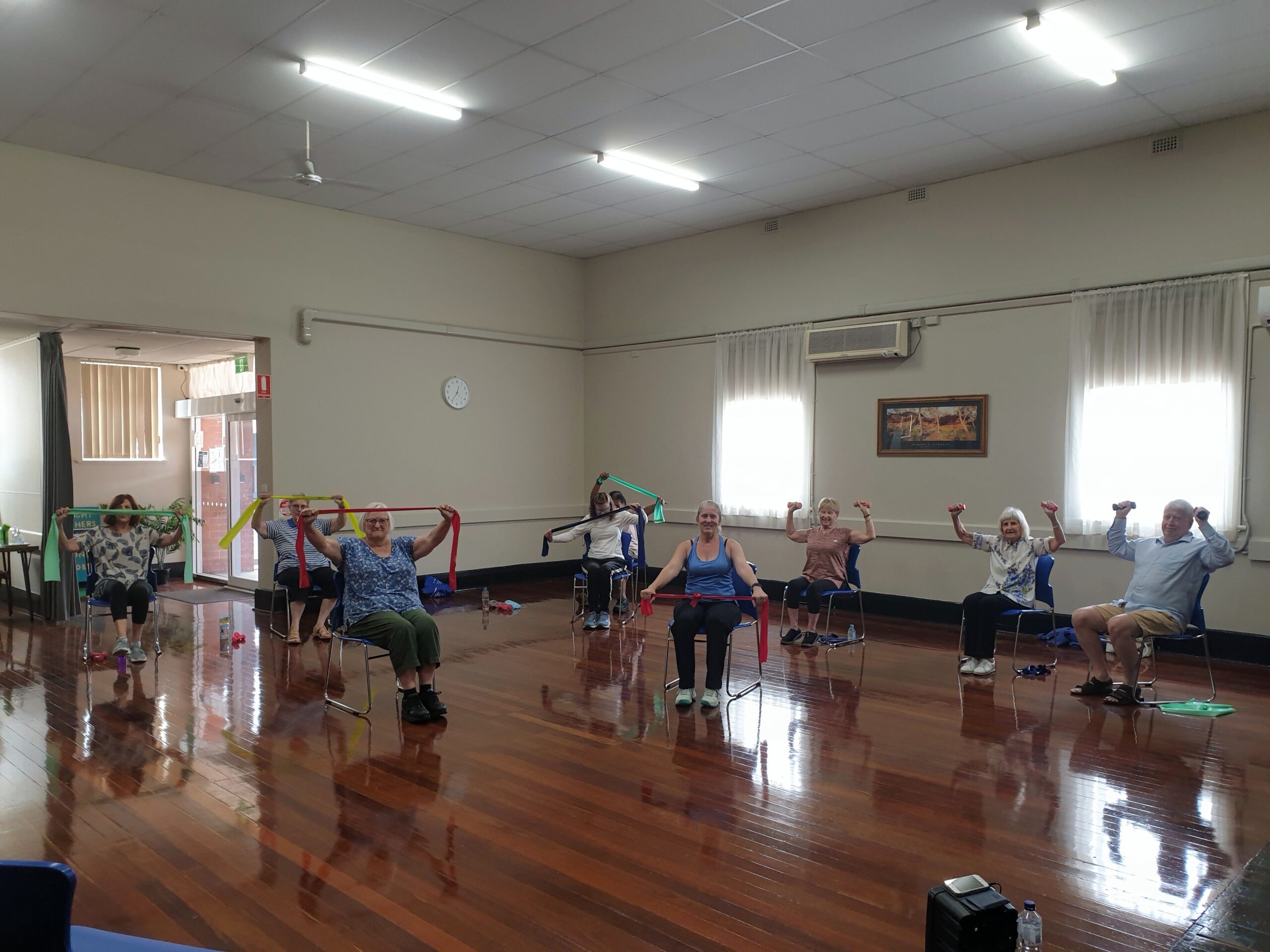
Men start with more muscle than women, which can make its loss easy to overlook until stairs feel steeper or a jar lid won’t budge. If you’re looking into muscle loss in men after 50, a few things are specific to men: where the loss happens, how testosterone fits in and how prostate cancer treatment can speed it up. Humanic Blue follows those threads separately rather than treating one hormone as the whole story.
Muscle loss does not begin on every man’s 50th birthday. A whole-body MRI study compared people of different ages and found lower muscle mass after midlife, largely in the legs. It could not establish when any individual began losing muscle. Prostate-cancer hormone treatment can also reduce lean tissue. Exercise trials in men receiving or previously treated with that therapy found improvements in strength and some everyday movement tests. The American College of Physicians advises against starting testosterone solely to improve physical function in men with age-related low testosterone. For living longer and better, strength and function matter—but these studies did not test whether preserving muscle extends life.
Key Takeaways
- A cross-sectional MRI study found lower absolute muscle mass after the fifth decade, driven largely by the lower body; it cannot establish when an individual’s decline begins. The study compared age groups, not changes within individuals.
- The American College of Physicians advises against starting testosterone to improve physical function in men with age-related low testosterone.
- Studies of prostate-cancer hormone treatment report lower lean mass and more body fat.
- Resistance-based exercise improves lean-mass measures, strength and some physical-function outcomes in men receiving or previously treated with androgen deprivation. These findings come from a small randomized trial and an analysis combining data from several trials.
- Whether preventing muscle loss extends men’s lifespan was not tested in these trials.
Where do men tend to lose muscle with age?
In the 2000 study from Queen’s University in Canada, researchers used whole-body MRI scans in men and women ages 18 to 88. Men had more skeletal muscle than women on average: 33.0 kg versus 21.0 kg. Muscle as a share of total body weight was lower in older age groups from earlier adulthood. The more marked difference in the total weight of muscle appeared after midlife and was largely explained by lower-body muscle. Because the design compared different people at one point in time, it describes an age pattern rather than proving when any participant began losing muscle.
That lower-body pattern matters because leg strength drives walking, stair climbing and getting up from a chair. The timeline and accelerators in your 50s, including inactive stretches and bed rest, are covered in Prevent Muscle Loss After 50.
How it’s measured. Sarcopenia is a muscle disorder involving low strength and low muscle quantity or quality. The European Working Group on Sarcopenia in Older People uses grip strength below 27 kg in men as one signal of probable sarcopenia. That is the force reading from a grip-testing device, not body weight. Confirmation requires evidence of low muscle quantity or quality, and poor physical performance indicates greater severity. The cutoff is a clinical case-finding tool—not a diagnosis or individual prognosis—and depends on standardized measurement, as covered in Grip Strength and Longevity.
The testosterone question
Testosterone falls slowly with age, and observational research links weight gain to further declines, as covered in Testosterone and Aging. It’s tempting to see low testosterone as the cause of muscle loss and testosterone therapy as the fix.
The trials do not support testosterone as a general treatment for age-related loss of function. In the Testosterone Trials, men age 65 or older with symptoms and an average of two testosterone readings below 275 ng/dL (nanograms per deciliter of blood) received gel or placebo for one year. The prespecified physical-function trial outcome was not significantly better, although a pooled analysis across trial participants favored testosterone. The American College of Physicians’ 2020 guideline advises against starting testosterone for physical function, energy, vitality or cognition in men with age-related low testosterone. The full trial results, current regulatory status and risks are covered in Testosterone Therapy and Healthy Aging.
What does a change in lean mass leave unanswered about strength and everyday function?
How can prostate cancer treatment change muscle?
Androgen deprivation therapy (ADT) reduces the production or action of hormones such as testosterone to treat prostate cancer. Lean mass, a measure used in these studies, includes muscle and other tissue that is not fat; a change in lean mass is not a pure measurement of muscle. In a 2002 study without an untreated comparison group at Massachusetts General Hospital, men with prostate cancer that had not spread to distant sites began leuprolide, a hormone-suppressing drug. After about a year, the men assessed had sharply lower testosterone, lower lean mass and muscle area beside the spine, and more body fat. Without an untreated control group, the study cannot assign every change solely to the drug, but the direction is consistent with the recognized musculoskeletal effects of ADT.
Exercise can counter some of those changes. In a 2010 Australian trial from Edith Cowan University, men who had already received androgen suppression for more than two months were randomized to 12 weeks of supervised resistance-plus-aerobic training or usual care. The exercise group improved whole-body and regional lean mass, strength and several physical-function measures; no adverse events were reported. The trial was small and short and did not test cancer outcomes or lifespan.
A 2023 individual-participant-data analysis combined trial data from men with prostate cancer who were receiving or had previously received ADT, averaging about 70 years old. Resistance-based programs improved whole-body and limb lean-mass measures, relative muscle strength and selected walking tests on average. Effects varied, and the analysis examined intermediate outcomes rather than fractures, independence, cancer control or survival. The authors declared no competing interests. How prostate cancer is detected and treated is covered in Prostate Health as You Age.
How does the treatment context change the interpretation of muscle-loss evidence?
What has helped counter muscle loss in studies?
Resistance training—working muscles against weights, bands or other resistance—was a common part of these exercise programs. A 2011 synthesis of studies in adults age 50 or older found that participants gained about 1.1 kg of lean body mass on average after roughly 20 weeks. That estimate compared participants with their own starting measurements, rather than consistently comparing exercise with no exercise. Results varied greatly across studies, and an apparent link between more training and greater gains came from comparisons between studies, not trials assigning different exercise amounts. Newer randomized evidence also supports improvements in strength and function with relatively low training volumes, as covered in Prevent Muscle Loss After 50. How to structure training is in Build Muscle After 50.
What’s Interesting
The testosterone results are not mirror images. ADT studies involve men receiving cancer treatment that sharply suppresses androgen signaling, while the Testosterone Trials involved older men with moderately low readings and symptoms. The studies test different populations and interventions and cannot establish a simple hormone threshold for muscle or mobility. What they do show is that resistance-based exercise can improve measured muscle and function even among men receiving or previously treated with ADT.
What This Means in Practice
For men interested in living longer and better after 50, the evidence separates measured strength and function from untested lifespan effects. Named guidelines also distinguish general activity from care during cancer treatment.
- General strength activity: the US Physical Activity Guidelines recommend muscle-strengthening activity at least two days a week for adults. That population target is not a tailored cancer-rehabilitation plan.
- Ask about a strength or mobility assessment if function is changing. A standardized grip reading below 27 kg is one clinical signal for further sarcopenia assessment in men, not a diagnosis by itself.
- Testosterone has a narrower role: the American College of Physicians advises against starting it to improve physical function or energy in men with age-related low testosterone. Diagnosis and treatment eligibility require a clinician’s assessment.
- If you’re starting ADT for prostate cancer, ask your oncology team about aerobic and resistance exercise and whether a cancer-exercise specialist or physical therapist should tailor it to your health, treatment and bone risk. The American Society of Clinical Oncology (ASCO) recommends regular aerobic and resistance exercise during active cancer treatment aimed at curing the cancer, while noting that evidence for recurrence or survival is insufficient.
- Protein is a separate part of the discussion: age-related protein guidance is covered in Protein Needs After 50.
A primary care clinician can check strength and hormone levels if warranted. An oncologist can refer men on ADT to an exercise program. A physical therapist or exercise physiologist can design training.
Bottom Line
Muscle loss varies across men and does not begin at one fixed age. Cross-sectional MRI data suggest that lower-body muscle accounts for much of the lower absolute mass seen after midlife, but the study cannot locate an individual’s start point. Guidelines advise against testosterone therapy solely to improve physical function in age-related low testosterone. ADT can accelerate loss of lean tissue, while resistance-based exercise improves lean-mass, strength and selected function measures in treated men. Whether preserving muscle extends men’s lives has not been tested. The US Physical Activity Guidelines recommend regular muscle-strengthening activity for adults. ASCO recommends aerobic and resistance exercise during active cancer treatment aimed at curing the cancer, with individual circumstances shaping the program.
A NOTE FROM LONGEVITY365
We read research, consult expert perspectives and work to make complicated health information easier to understand. What you’re reading here reflects how we’ve interpreted and organized that information. It is educational content—not personal medical advice, diagnosis or treatment guidance.
We’re not perfect, and neither is the available research. Evidence changes, new studies emerge and what’s appropriate for one person may not be appropriate for another.
Use this article as a starting point for your own research and conversations with qualified professionals. Always talk with your doctor or another trusted healthcare professional before making decisions that could affect your health, particularly if you take medications, are receiving treatment, have existing health conditions, are pregnant or have other circumstances that could affect what’s appropriate for you.
Reader Questions
A few questions to carry into the comments or your next conversation. Please leave out identifying or personal medical details.
- 01Which measurement or milestone would feel useful to track without letting it take over the whole point of moving?
- 02Which real-world barrier did the article address most usefully: time, confidence, access, recovery, or knowing where to start?
- 03What question would you bring to a clinician, physical therapist, trainer, or exercise professional after reading about Muscle Loss in Men After 50?
Extra Insights & Sources
The evidence summaries and linked sources behind this article.
What We Know
- Cross-sectional MRI data show lower absolute muscle mass after the fifth decade, driven largely by the lower body, but do not establish an individual onset age. Supported with design limits.
- Testosterone therapy isn’t recommended to improve physical function in men with age-related low testosterone. Established.
- Androgen deprivation therapy reduces lean mass and increases fat. Supported.
- Resistance training increases lean mass and strength in older men, including those on ADT. Supported.
What We Don’t Know
- Whether preventing muscle loss helps men live longer. Unknown. No trial has measured it.
- The best exercise dose for men on long-term ADT. Uncertain.
- Which men with clearly low testosterone and muscle loss might benefit from therapy. Uncertain.
Additional study details
The 2002 leuprolide study began with 40 men; 32 were evaluable after 48 weeks. Testosterone had fallen 96.3%, lean body mass 2.7% and muscle area beside the spine 3.2%, while fat mass rose 9.4%. The study lacked an untreated control.
The 2011 resistance-training synthesis included 49 randomized and nonrandomized studies in 1,328 adults. The POLARIS analysis pooled 560 men with an average age of 69.5. These details describe different populations and designs; they cannot be read as one uniform treatment effect.
Source Materials
- Janssen et al., whole-body muscle mass and distribution (PMID 10904038) — cross-sectional MRI study of 468 men and women ages 18–88; describes age-group differences, not within-person onset or change.
- Testosterone Trials, main outcomes (PMID 26886521) — one-year randomized trial of 790 symptomatic men age 65 or older with repeatedly low testosterone; the physical-function trial’s primary outcome was not met, while a pooled analysis differed.
- ACP guideline on age-related low testosterone — 2020 evidence-based treatment recommendations; addresses age-related low testosterone rather than all causes of hypogonadism.
- Smith et al., body composition during ADT (PMID 11836291) — 48-week single-arm leuprolide study in 40 men with nonmetastatic prostate cancer, with 32 evaluable; small size, attrition and no untreated control limit causal precision.
- Galvão et al., combined exercise during androgen suppression (PMID 19949016) — 12-week randomized trial of 57 men comparing supervised resistance-plus-aerobic exercise with usual care; small, short and not designed for cancer or survival outcomes.
- POLARIS individual-participant-data analysis (PMID 37229882) — pooled data from 560 men previously or currently treated with ADT; reports intermediate body-composition, strength and function outcomes, with no declared competing interests.
- Peterson et al., resistance exercise and lean body mass after 50 (PMID 20543750) — synthesis of 49 randomized and nonrandomized studies with 1,328 participants; very high heterogeneity, mixed designs and study-level meta-regression limit dose claims.
- EWGSOP2 sarcopenia consensus (PMID 30312372) — 2019 European clinical consensus defining probable, confirmed and severe sarcopenia and the 27-kg male grip threshold; a professional consensus with population and measurement limits.
- ASCO exercise, diet and weight-management guideline — 2022 guideline based on systematic reviews and randomized trials during active cancer treatment; supports aerobic and resistance exercise for treatment side effects but finds insufficient evidence for recurrence or survival effects.
- US Physical Activity Guidelines, second edition — federal population guidance supporting muscle-strengthening activity at least two days weekly; not an individualized rehabilitation prescription.
Leave a Reply