
Sleep
How Much Sleep Do You Need as You Age?
The NIA says older adults need 7 to 9 hours of sleep; the CDC and National Sleep Foundation say 7 to 8 after 65. Aging mostly changes how sleep feels.
Somewhere past 60, plenty of people find their nights quietly rearranged. Bedtime drifts earlier, and the alarm clock starts to feel like a formality. Nobody sent a memo. Humanic Blue takes up the obvious question: has the amount of sleep you need moved too?
Not by much, according to the agencies that publish the numbers. The National Institute on Aging says older adults need about the same as all adults: seven to nine hours a night. The CDC and the National Sleep Foundation set the range for people 65 and older a little lower, at seven to eight. What changes more is the sleep itself: earlier, lighter and more broken up. For living longer, studies link both very short and very long sleep to higher death rates, but no study shows that hitting one number makes anyone live longer.
In This Article
- Two respected ranges: seven to nine hours, or seven to eight
- Do older adults need less sleep, or struggle to get it?
- Long and short sleep are linked to earlier death, with big caveats
- Which changes are normal aging and which are treatable
- How alcohol, medicines and hot flashes rewrite the night
- What a wrist tracker can and can’t count
- The studies and numbers behind all of this
Key Takeaways
- The National Institute on Aging says older adults need seven to nine hours of sleep; the CDC and the National Sleep Foundation say seven to eight from age 65.
- Aging tends to make sleep earlier, lighter and more interrupted, and sleep disorders become more common. Those disorders aren’t simply “getting older.”
- Researchers still debate whether older adults need less sleep or have more trouble producing the sleep they need.
- In older adults, very long sleep, and to a lesser degree short sleep, is linked to higher death rates. Nobody has shown that changing your hours changes your lifespan.
- Wrist trackers are useful for spotting patterns but don’t match a lab sleep study.
How much sleep do older adults need?
The National Institute on Aging (NIA), part of the National Institutes of Health, puts it plainly: “Older adults need about the same amount of sleep as all adults — seven to nine hours each night.”
The CDC draws its line at 65. It lists seven to nine hours for adults 61 to 64 and seven to eight hours from 65 on. That older-adult range comes from a 2015 expert panel convened by the National Sleep Foundation, a sleep-health nonprofit. The foundation adds that “an additional hour or two on either side of a given range may be appropriate, depending on the person.”
In 2026, National Sleep Foundation researchers checked their ranges against reviews that combined results from many studies published over the previous decade. About three-quarters fit the recommendations, the rest were inconclusive, and none contradicted them. Most of the authors are affiliated with the foundation, and the review ran in the foundation’s own journal. How the recommendations were made
One widely quoted figure doesn’t apply here. The CDC’s chart gives “7 or more hours” only to adults aged 18 to 60.
That line traces back to a 2015 consensus from the American Academy of Sleep Medicine and Sleep Research Society, which was written for the same 18-to-60 age group.
Every range describes groups, not you. In the National Sleep Foundation’s own words, “Every person is different when it comes to the exact amount of sleep that’s optimal for them.” The ranges also count sleep, not time in bed. Eight hours under the covers can hold seven hours of sleep, or a lot less.
Less sleep, or less ability to sleep?
The NIA describes the typical shift: older adults “tend to go to bed earlier and wake up earlier than younger adults,” and “sleep tends to be shorter and lighter.”
A 2017 review in Neuron by Bryce Mander and colleagues at the University of California, Berkeley describes more frequent waking and less deep sleep. It also reports fewer sleep spindles: brief bursts of brain activity during sleep. The authors also note that older adults vary widely from one person to the next: some show little sleep disruption at all.
The same review lays out a live debate. Some evidence points to lower need: given more than 12 hours a day in bed, older adults sleep less than younger adults do. Other evidence points to lost capacity. The Berkeley authors conclude that older adults most likely do not need less sleep but have a reduced ability to generate it. They add that this doesn’t mean older adults need more sleep time as such. Researchers haven’t settled it. What each side argues
Healthy sleep also involves more than hours. The National Heart, Lung, and Blood Institute (NHLBI) calls sleep deficiency “a broader concept” than too little sleep: it also covers sleeping “at the wrong time of day,” not getting “all the different types of sleep your body needs,” and having a sleep disorder. The NIA suggests watching for waking up tired, feeling easily annoyed, or having trouble falling or staying asleep.
What distinguishes a change in sleep patterns from a change in sleep need?
The long-sleep puzzle
This is the part of the story that touches lifespan, and the evidence gets slippery.
A Brazilian research team, with Susan Redline of Brigham and Women’s Hospital as a coauthor, combined studies following older adults over time. Published in BMJ Open in 2016, the review found long sleepers were about a third more likely to die during follow-up than people with typical sleep. Short sleepers were about 7% more likely.
A 2020 update in BMC Public Health from researchers in Beijing combined data from about 95,000 older people. Long sleep again carried the clearer link, about 24% higher risk. The short-sleep link was marginal, and showed up in men but not women. See the numbers
Not everyone reads this as a firm pattern. A University of Chicago team, with Lianne Kurina as first author, reviewed 42 studies in 2013 and judged it too early to conclude that both short and long sleep are consistently linked to higher death rates across different populations. Most studies simply asked people how long they sleep, and those answers don’t closely match physical measurements.
The arrow may also run backward. The National Sleep Foundation panel noted that habitually sleeping well outside the normal range may itself be a sign of serious health problems. Illness, depression or an undiagnosed sleep disorder can keep someone in bed longer. All of these studies are observational, so none tested whether changing your sleep changes how long you live.
What would help separate long sleep as a cause from long sleep as a sign of another condition?

Normal aging, or something treatable?
“Sleep disorders become more common with age,” the NIA notes, and several have signs worth knowing:
- Earlier bedtime and waking. The NIA describes this as a typical part of aging.
- Trouble falling or staying asleep. The NIA calls insomnia “the most common sleep problem in adults age 60 and older.” It says cognitive behavioral therapy, a type of counseling, can help, and that sleep medicines “carry risks and should not be used long term.”
- Snoring, gasping, or breathing that stops and starts. The NHLBI lists these as sleep-apnea symptoms, along with daytime sleepiness, headache and waking often to urinate. The NIA adds that “not everyone who snores has sleep apnea.”
- Tingling or crawling in the legs that’s worse at night. The NIA describes this as restless legs syndrome and says treatment is usually helpful.
- Acting out dreams. The NIA links this to rapid eye movement (REM) sleep behavior disorder, which “disrupts sleep and can be dangerous.”
For a diagnosis, a doctor may suggest an overnight sleep study, the NIA says.
Alcohol, medicines and hot flashes
Alcohol can speed sleep up at first and break it up later. A 2013 review from the London Sleep Centre, covering studies in healthy volunteers, found that at all doses alcohol helped people fall asleep faster and sleep more solidly in the first half of the night, then disturbed the second half. The NIA’s sleep tips for older adults say to “avoid drinking alcohol, even small amounts.”
Medicines matter too. People 65 and older “tend to take more medicines than those in any other age group,” according to the NIA’s medication-safety guidance. It warns that mixing a sleep medicine (a sedative) with an allergy medicine (an antihistamine) can slow your reactions, and advises keeping a written list of everything you take, including supplements. It also says not to stop a prescription without your doctor’s okay; some medicines need to be stopped slowly.
For women, the NIA’s menopause sleep guidance says “hot flashes, especially night sweats, and changes in mood — depression in particular — can contribute to poor sleep.”
The American College of Obstetricians and Gynecologists (ACOG) adds that women may also be more likely to have mood disorders, sleep apnea and chronic medical conditions as they age, all of which can affect sleep.
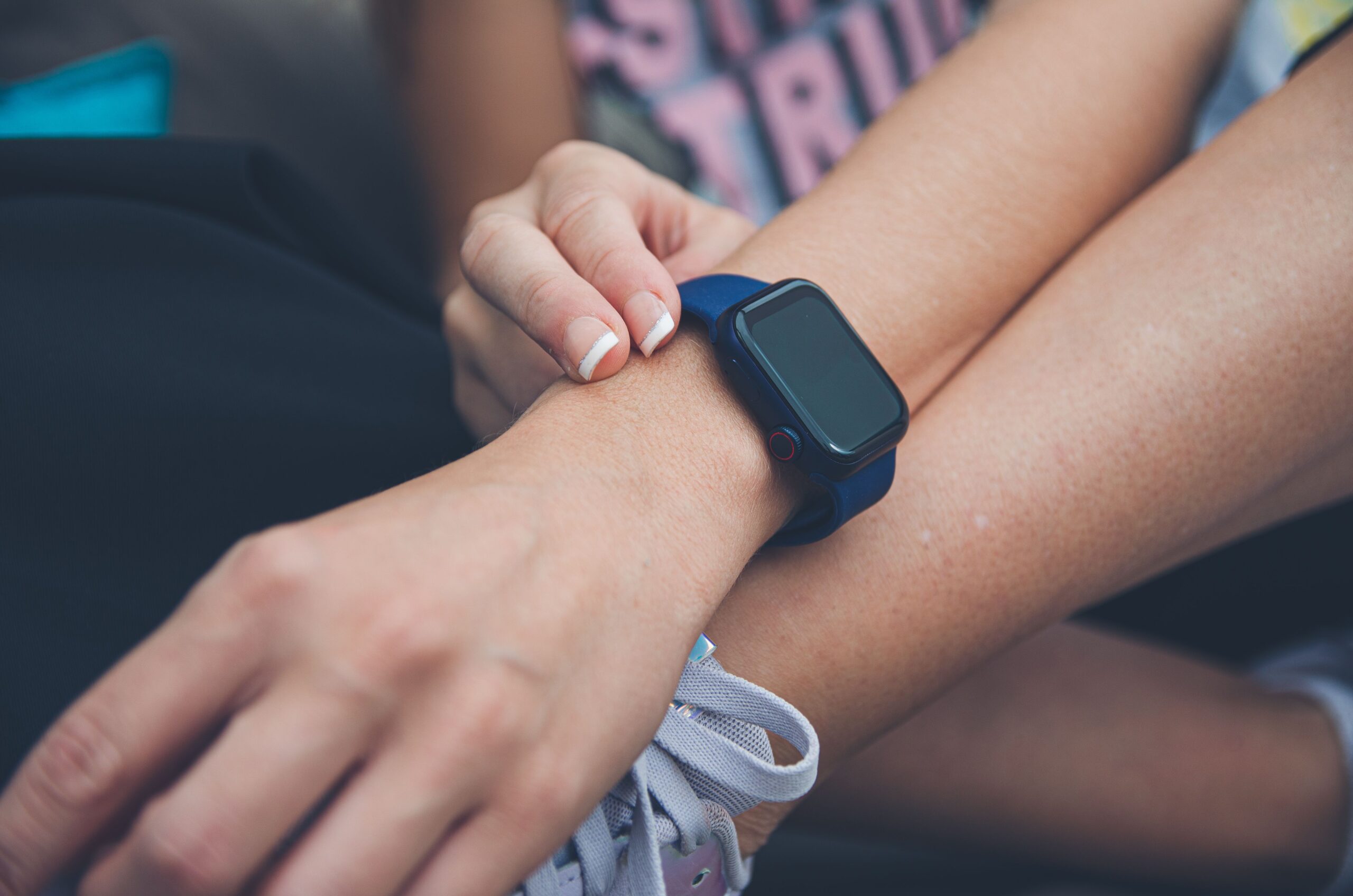
What can a wrist tracker count—and what can it miss?
A lab sleep study, called polysomnography, records brain waves, heart rate, breathing and blood oxygen through the night, according to the NHLBI. A wrist tracker estimates sleep from what it can sense at the wrist.
A 2025 review combining study results in the Journal of Clinical Sleep Medicine, by ear, nose and throat specialists at Soonchunhyang University in South Korea, compared wrist-worn devices with lab studies across studies involving about 800 people. The devices differed from the lab on total sleep time, by about 17 minutes on average, and on the proportion of time in bed spent asleep, time to fall asleep and time awake during the night. The authors concluded that the trackers are less reliable than a lab sleep study but can still help people follow their general sleep patterns. The tracker study details
What’s Interesting
Two federal health agencies answer this question an hour apart at the top end. The NIA says seven to nine; the CDC says seven to eight after 65. The CDC’s figures come from two 2015 expert consensus panels, and a one-hour gap is the size of the disagreement.
There’s also a small irony in the research. The number people most want, hours of sleep, is the number the big mortality studies measure least precisely. Many tracked tens of thousands of people for years by asking them to estimate their usual sleep. A sleep lab measures far more, but usually for a night or two and in far fewer people. That trade-off is a big part of why nobody can hand you a personal lifespan calculator.
What This Means in Practice
For living longer and better, the agencies above treat sleep as one part of the picture. Their practical advice:
- Keep a sleep diary for a couple of weeks if sleep is a problem, the NIA suggests. Note when you go to bed, when you wake during the night and when you get up, plus caffeine, alcohol and exercise. It helps you spot patterns to discuss with your doctor.
- Keep a regular schedule, going to sleep and getting up at the same time each day, even on weekends, per the NIA. ACOG suggests sleeping only as much as you need to feel refreshed during the day.
- Don’t use alcohol as a sleep aid. The NIA says to avoid it, even in small amounts.
- Bring your full medicine list to your doctor or pharmacist, including over-the-counter drugs and supplements.
- Treat tracker numbers as trends, not diagnoses.
“If you’re always sleepy or you find it hard to get enough sleep at night, it may be time to talk with a doctor,” the NIA says. A primary care clinician can be a first stop. A sleep medicine specialist can evaluate snoring, gasping, restless legs or acting out dreams.
Duration and sleep stages answer different questions; Low Deep Sleep on a Tracker explains why a stage estimate should not be read as a diagnosis.
Bottom Line
Sleep need doesn’t retire at 65. The NIA’s range for older adults is seven to nine hours; the CDC and the National Sleep Foundation put it at seven to eight. Aging tends to make sleep earlier, lighter and more broken, and researchers still debate whether that means less need or less ability. Long and short sleep are linked to higher death rates in older adults, but those studies can’t show that changing your hours helps you live longer. A regular schedule, a short sleep diary and attention to symptoms give a doctor more to work with than any single number.
A NOTE FROM LONGEVITY365
We read research, consult expert perspectives and work to make complicated health information easier to understand. What you’re reading here reflects how we’ve interpreted and organized that information. It is educational content—not personal medical advice, diagnosis or treatment guidance.
We’re not perfect, and neither is the available research. Evidence changes, new studies emerge and what’s appropriate for one person may not be appropriate for another.
Use this article as a starting point for your own research and conversations with qualified professionals. Always talk with your doctor or another trusted healthcare professional before making decisions that could affect your health, particularly if you take medications, are receiving treatment, have existing health conditions, are pregnant or have other circumstances that could affect what’s appropriate for you.
Reader Questions
A few questions to carry into the comments or your next conversation. Please leave out identifying or personal medical details.
- 01Which connection would you like to understand better: sleep timing, breathing, stress, medications, tracker readings, or how you feel during the day?
- 02Which part of the article helped separate a normal age-related change from something worth asking about?
- 03What question would make a sleep conversation more useful than just chasing a better score?
Extra Insights & Sources
For readers who want the details behind each claim above.
What We Know
- Expert bodies recommend seven to nine hours (NIA) or seven to eight hours from age 65 (CDC, National Sleep Foundation) for older adults. Supported (expert consensus).
- Sleep timing, continuity and structure commonly change with age, with large differences between individuals. Established.
- In older adults, long sleep, and more weakly short sleep, is associated with higher all-cause mortality. Supported (observational).
- Wrist-worn trackers differ from polysomnography on key sleep measures. Supported.
What We Don’t Know
- One sleep duration that maximizes lifespan for every older adult. Unknown.
- Whether deliberately moving from one sleep-duration category to another changes mortality. Unknown; no trial has tested it.
- Whether long sleep causes risk or mainly signals illness, fragmented sleep or low activity. Contested.
- Whether older adults need less sleep or have a reduced ability to generate it. Contested.
How the recommendations were made
NIA. As of September 25, 2026, the NIA’s “Sleep and Older Adults” page (content reviewed February 6, 2025) says older adults need seven to nine hours each night. It also says, “A good night’s sleep depends on sleeping when your body is prepared, sleeping seven to nine hours, and getting enough of each type of sleep.”
CDC. As of September 25, 2026, the CDC’s “About Sleep” page (last reviewed May 15, 2024) lists “7 or more hours” for adults 18 to 60, “7–9 hours” for 61 to 64, and “7–8 hours” for 65 and older.
The CDC page cites the National Sleep Foundation’s 2015 recommendations and the 2015 AASM–SRS consensus statement.
National Sleep Foundation, 2015. An 18-member multidisciplinary panel representing 12 stakeholder organizations used the RAND/UCLA Appropriateness Method (Hirshkowitz et al., Sleep Health, 2015). It concluded that 7 to 9 hours was appropriate for young adults and adults, and 7 to 8 hours for older adults. The panel wrote that sleep outside the recommended range may be appropriate but that straying far from the normal range is rare, and that people who habitually do so may be showing signs of serious health problems or, if by choice, may be compromising their health and well-being. (Note 1) The foundation’s current page defines older adults as “older than 65.”
National Sleep Foundation, 2026 re-certification. Dzierzewski and colleagues (Sleep Health, August 2026) searched PubMed, EMBASE and Web of Science in June 2025 and included 133 meta-analyses. Of these, 99 (74%) were consistent with the recommendations, 34 (26%) were inconclusive, and none were contradictory; most focused on adult age groups. Most meta-analyses reported nonsignificant sex differences. The review re-certifies the foundation’s sleep duration recommendations. Disclosures: five of the seven authors are affiliated with or employed by the National Sleep Foundation; lead author Joseph Dzierzewski served on an advisory panel for Apnimed, which the authors describe as outside the scope of the work. Sleep Health is the foundation’s journal.
AASM–SRS consensus, 2015. A 15-member panel convened by the American Academy of Sleep Medicine and Sleep Research Society (Watson et al., Sleep and Journal of Clinical Sleep Medicine, 2015) reviewed 5,314 articles and recommended that adults aged 18 to 60 regularly sleep seven or more hours a night. It said more than nine hours may be appropriate for young adults, people recovering from sleep debt and people with illnesses; for others, it called the health risk of sleeping more than nine hours uncertain. Funding came from the two societies and a CDC cooperative agreement. Several panelists disclosed industry ties, including consulting for companies such as Merck and Eisai and research support from companies such as ResMed and Philips-Respironics.
The need-versus-ability debate
Mander, Winer and Walker (Neuron, 2017) list nine characteristic changes in older adults’ sleep: advanced sleep timing, longer time to fall asleep, shorter overall sleep, more fragmentation, more fragile sleep, less slow-wave sleep, more time in lighter stages 1 and 2, shorter and fewer cycles between non-rapid eye movement (NREM) and rapid eye movement (REM) sleep, and more time awake during the night. Spindle density falls significantly as adults age, most over the frontal lobes.
In favor of reduced need, the review cites findings that older adults sleep less than younger adults when given enforced time in bed of more than 12 hours a day, show a smaller slow-wave rebound after deprivation, and report less sleepiness after slow-wave sleep deprivation. Against it, the authors argue that sleep need stays the same while the capacity to regulate or generate sleep declines. Their conclusion: there is still no complete consensus, but the current evidence most simply supports the view that older adults do not have a reduced sleep need, and instead have an impaired ability to register or generate the sleep they still need. The work was funded by NIH grants to Walker.
Sleep duration and mortality in detail
In this table, relative risk (RR) compares the proportion of people who died in each group. Hazard ratio (HR) compares how quickly deaths occurred over time. For either measure, 1 means no difference from the comparison group; a value above 1 indicates higher risk. The 95% confidence interval (CI) shows the uncertainty around each estimate. Each study chose its own sleep-duration comparison group.
| Study | Scope | Long sleep | Short sleep |
|---|---|---|---|
| da Silva et al., BMJ Open, 2016 | 27 cohorts, >70,000 adults 60+, 3.4–35 years of follow-up | RR 1.33 (95% CI 1.24–1.43) | RR 1.07 (95% CI 1.03–1.11) |
| He et al., BMC Public Health, 2020 | 28 articles, 95,259 older people | HR 1.24 (95% CI 1.16–1.33) | HR 1.04 (95% CI 1.00–1.09), P = .033 |
da Silva et al. (2016). Comparisons were against each study’s reference category. For cardiovascular death, long sleep carried RR 1.43 (95% CI 1.15–1.78); short sleep, RR 1.18 (95% CI 0.76–1.84), not statistically significant. Daytime napping of 30 minutes or more was associated with higher all-cause mortality (RR 1.27). Funding came partly from Brazil’s CNPq; competing interests: none declared.
He et al. (2020). Researchers at Beijing University of Chinese Medicine and the China-Japan Friendship Hospital found that the long-sleep association held in women (HR 1.48) and men (HR 1.31). The short-sleep association was significant in men (HR 1.13) but not women (HR 1.00). Publication bias was likely for long sleep, though a correction strengthened the result. The authors reported no funding and no competing interests.
Kurina et al. (2013). The University of Chicago review in Annals of Epidemiology covered 42 prospective studies from 35 study populations. It found that the literature does not consistently show an association between self-reported sleep duration and mortality, and noted that survey answers correlate only weakly with physiologic measurements. Its conclusion called for careful attention to measurement, response bias, confounding and cause-and-effect running backward when interpreting links between sleep duration and mortality. Funded by NIA and NIH grants; no conflicts declared.
Alcohol, medicines and menopause in detail
Ebrahim, Shapiro, Williams and Fenwick (Alcoholism: Clinical and Experimental Research, 2013) reviewed studies of alcohol and sleep in healthy volunteers. They found that at all doses alcohol shortened the time it took to fall asleep, made the first half of sleep more consolidated and increased sleep disruption in the second half. Moderate and high doses reduced total-night REM sleep in most studies. (Note 2)
The NIA’s medication guidance says, “mixing a drug you take to help you sleep (a sedative) and a drug you take for allergies (an antihistamine) can slow your reactions and make driving a car or operating machinery dangerous.” It advises that “Some medicines need to be stopped slowly.”
ACOG lists the sleep problems women report during menopause as trouble falling asleep, trouble staying asleep, waking up often during the night and getting up too early (page last reviewed August 2025).
The tracker study in detail
Lee, Lee, Cho, Kang and Choi (Journal of Clinical Sleep Medicine, 2025) searched databases through March 2024. Across 24 studies and 798 participants using devices including Fitbit, Garmin, WHOOP and Apple Watch, mean differences from polysomnography were −16.9 minutes for total sleep time (95% CI −26.3 to −7.4), −4.7 percentage points for sleep efficiency, 2.6 minutes for sleep latency and 13.3 minutes for wake after sleep onset. In subgroups, Fitbit did not differ significantly from polysomnography on wake after sleep onset, and other devices did not differ significantly on sleep latency. Funded by the Soonchunhyang University Research Fund; no conflicts reported.
Sources
- National Institute on Aging: Sleep and Older Adults
- National Institute on Aging: Taking Medicines Safely as You Age
- Centers for Disease Control and Prevention: About Sleep
- National Sleep Foundation: How Much Sleep Do You Really Need?
- Hirshkowitz M, et al. National Sleep Foundation sleep duration recommendations, Sleep Health, 2015: PubMed 29073412
- Dzierzewski JM, et al. 10-year systematic review of the NSF recommendations, Sleep Health, 2026: PubMed 42248743
- Watson NF, et al. AASM–SRS consensus statement, Journal of Clinical Sleep Medicine, 2015: PDF
- Mander BA, et al. Sleep and human aging, Neuron, 2017: PubMed 28384471
- da Silva AA, et al. Sleep duration and mortality in the elderly, BMJ Open, 2016: PubMed 26888725
- He M, et al. Sleep duration and all-cause mortality in older people, BMC Public Health, 2020: PubMed 32723316
- Kurina LM, et al. Sleep duration and all-cause mortality: a critical review, Annals of Epidemiology, 2013: PubMed 23622956
- Ebrahim IO, et al. Alcohol and sleep I, Alcoholism: Clinical and Experimental Research, 2013: PubMed 23347102
- Lee YJ, et al. Consumer wrist-worn sleep trackers vs. polysomnography, Journal of Clinical Sleep Medicine, 2025: PubMed 39484805
- National Heart, Lung, and Blood Institute: Sleep Apnea Symptoms, Sleep Studies and What Are Sleep Deprivation and Deficiency?
- National Institute on Aging: Sleep Problems and Menopause: What Can I Do?
- American College of Obstetricians and Gynecologists: Sleep Health and Disorders
Notes
Note 1: Funding and competing interests for the National Sleep Foundation panel papers aren’t listed in their public record. The panel was convened by the foundation itself.
Note 2: Competing interests for the Ebrahim review aren’t listed in its public record.
Photo credits
Images from Pexels.
- featured: Photo by Sam Jotham Sutharson — original Pexels photo.
- inline-1: Photo by Vitaly Gariev — original Pexels photo.
- inline-2: Photo by Nicolas Postiglioni — original Pexels photo.
Leave a Reply