
Deep & REM Sleep
Low Deep Sleep on a Tracker
A low deep-sleep estimate may reflect device error or age-related change. Trackers misclassify stages, so symptoms and longer patterns matter more.
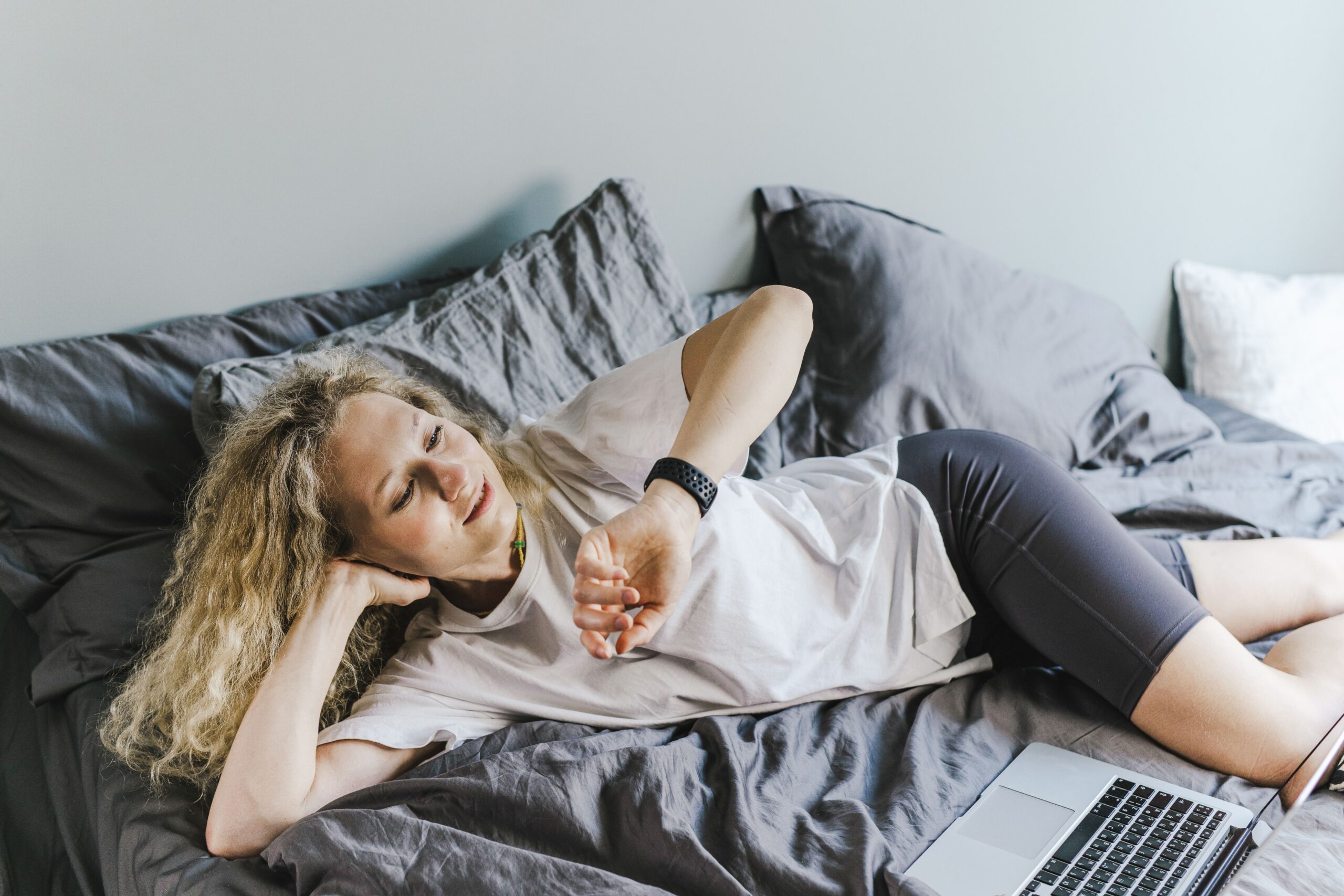
Few tracker readings can hijack a morning quite like a thin sliver of “deep sleep.” Humanic Blue examines what a low deep-sleep reading on a tracker can tell you, starting with whether the number is reliable and whether it is actually unusual for your age.
Consumer trackers are less dependable for sleep stages than for detecting sleep, and a 2026 study of three wearables found generally weak agreement with clinical sleep recordings at home. Deep sleep also tends to decline across adulthood: a meta-analysis of 65 studies found a lower share at older ages. The studies compared different people at different ages; they did not establish a target for each birthday. A higher tracker number is not automatically better, either; alcohol can alter the sequence of deep sleep and rapid eye movement (REM) sleep without improving the night overall. REM is the stage associated with vivid dreaming. For living longer and better, a low reading is a question about measurement, daytime function and symptoms—not a diagnosis or a stage score you must somehow win.
Key Takeaways
- Trackers estimate deep sleep inconsistently compared with lab sleep studies.
- Studies comparing healthy adults of different ages found a smaller share of deep sleep at older ages.
- Alcohol changes the pattern of sleep stages and reduces REM sleep. Reviews of the evidence do not show that a higher deep-sleep score means better sleep.
- Daytime symptoms and signs of sleep apnea warrant clinical attention regardless of a stage number. The NHLBI advises discussing these symptoms with a healthcare provider.
- Worrying about tracker scores can itself worsen sleep for some people. Clinicians have raised this concern, but the evidence does not establish cause.
- Nobody has established whether raising tracker-measured deep sleep helps anyone live longer.
Step 1: Is the number accurate?
Most trackers estimate sleep stages from movement and heart rate, not brain waves. A 2021 Navy study of seven devices found mixed results for sleep stages. In the 2026 study from King Abdulaziz University, Fitbit overestimated light sleep by about 58 minutes and Apple Watch underestimated it by about 74 minutes. When light sleep is misjudged, deep sleep often is too. Accuracy also varies by device, as covered in Best Sleep Trackers.
The King Abdulaziz researchers concluded that the watches they tested may be more appropriate for tracking your own patterns over time than for measuring sleep stages clinically. A repeated pattern on the same device may therefore be more useful than a single night’s estimate, but neither establishes how much deep sleep your brain actually produced.
What information would distinguish a low deep-sleep estimate from a low measured amount?
Step 2: Is it low for your age?
The 2004 meta-analysis combined 65 sleep-lab studies involving 3,577 healthy people ages 5 to 102. Among adults, the percentage of slow-wave, or deep, sleep was lower at older ages. Total sleep time and the share of time in bed spent asleep also decreased across adult ages, while lighter sleep and time awake increased. Because the analysis compared people of different ages and included studies published from 1960 through 2003, it cannot define one person’s trajectory or a universal age-specific cutoff for a consumer device.
Why this decline matters, including its links to dementia risk in cohort studies, is covered in Deep Sleep and Aging. That research used lab measurements, not consumer trackers.
How much can laboratory age averages tell us about a single night on a consumer device?
Step 3: What could lower it, or make it look low?
Alcohol. A 2025 systematic review and meta-analysis combined 27 studies in healthy adults. Even a low dose—roughly two standard drinks in the authors’ conversion—reduced REM sleep, with larger disruption at higher doses. High doses shortened the time to fall asleep and reach deep sleep, but effects on total sleep, sleep efficiency and time awake were too uncertain to resolve. In a separate 30-person crossover experiment, presleep alcohol changed how slow-wave sleep accumulated early in the night without increasing total slow-wave sleep. A tracker can therefore display a different stage pattern after alcohol without demonstrating better sleep.
Sleep apnea. Repeated breathing pauses fragment sleep. The National Heart, Lung, and Blood Institute (NHLBI) lists loud snoring, gasping and daytime sleepiness among symptoms to discuss with a healthcare provider; a sleep study may be needed. The longer-term evidence is covered in Sleep Apnea and Longevity.
Context. A changed device fit, firmware or algorithm can change the estimate even when your sleep has not changed. Illness, pain, schedule changes and medications may also affect sleep. Persistent changes in symptoms or function are questions for a clinician, not answers a tracker can supply.
Step 4: When should you see someone?
NHLBI guidance focuses on symptoms rather than a consumer sleep-stage number. The symptoms a clinician may need to assess include:
- persistent daytime sleepiness or trouble functioning,
- loud snoring, gasping or observed pauses in breathing,
- persistent trouble falling or staying asleep, especially with daytime effects,
- acting out dreams, which is covered in REM Sleep and Aging.
The NHLBI advises talking to a healthcare provider about possible sleep apnea symptoms, because a sleep study may be needed. A tracker can’t stand in for that test: a 2026 meta-analysis of wearables concluded that uneven performance keeps them, for now, from serving as stand-alone diagnostic tools or measuring sleep stages in detail. The NHLBI’s insomnia guidance also describes persistent sleep trouble and daytime effects; acting out dreams is a separate concern. Neither can be explained by a deep-sleep score.
A word on worry. Sleep clinicians use the term orthosomnia for an unhealthy preoccupation with optimizing tracker numbers. A 2023 editorial described concern that this pattern could worsen sleep or insomnia. This is an emerging concept, not a formal diagnosis established by a tracker. The editorial does not establish whether hiding stage data or pausing tracking improves sleep; when score-checking adds worry, its role in a person’s care is a question for a clinician.
What’s Interesting
The alcohol evidence exposes the problem with turning one sleep stage into a scoreboard. Alcohol can move deep sleep earlier while reducing REM and changing the rest of the night. The app may draw a larger deep-sleep bar after drinking; that does not mean the night was healthier.
What This Means in Practice
For living longer and better, a low deep-sleep estimate is a measurement to interpret, not a treatment target. The evidence separates several questions a clinician can help assess:
- One night or a longer pattern? The wearable-validation studies found stage-estimation errors; repeated estimates from the same device still do not measure brain-wave-defined deep sleep.
- What about daytime function? Feeling well makes an isolated low estimate less informative, but it does not rule out a sleep disorder.
- Could the number reflect something else? The alcohol studies found changes in sleep-stage timing without better sleep, and a device or algorithm change can alter an estimate.
- Are apnea symptoms present? The NHLBI lists loud snoring, gasping, breathing pauses and daytime sleepiness as possible signs and says a healthcare provider may recommend a sleep study.
- Would a supplement address a health outcome? The sources here do not establish that raising a tracker-measured deep-sleep score with supplements improves health or lifespan.
- Is score-checking itself adding worry? The orthosomnia editorial raises that concern but does not test a remedy.
A primary care clinician can assess symptoms and decide whether a sleep specialist or sleep study is appropriate.
Bottom Line
A low deep-sleep estimate may reflect device error, normal variation or an age-related pattern. Trackers classify stages imperfectly, and a higher number is not automatically better: alcohol can change the timing of deep sleep while reducing REM. The NHLBI identifies daytime sleepiness, loud snoring, gasping and witnessed breathing pauses as symptoms to discuss with a healthcare provider; a stage score cannot diagnose their cause. Whether raising tracker-measured deep sleep helps anyone live longer is unknown. Longer patterns and daytime function provide context for that clinical conversation.
A NOTE FROM LONGEVITY365
We read research, consult expert perspectives and work to make complicated health information easier to understand. What you’re reading here reflects how we’ve interpreted and organized that information. It is educational content—not personal medical advice, diagnosis or treatment guidance.
We’re not perfect, and neither is the available research. Evidence changes, new studies emerge and what’s appropriate for one person may not be appropriate for another.
Use this article as a starting point for your own research and conversations with qualified professionals. Always talk with your doctor or another trusted healthcare professional before making decisions that could affect your health, particularly if you take medications, are receiving treatment, have existing health conditions, are pregnant or have other circumstances that could affect what’s appropriate for you.
Reader Questions
A few questions to carry into the comments or your next conversation. Please leave out identifying or personal medical details.
- 01After reading this, what would you want a test result to actually help you decide?
- 02Which difference would you like to understand better: an unreliable stage estimate, an age-related pattern, or a symptom that needs assessment?
- 03What would you ask a clinician, lab, or qualified professional before letting a number change a health decision?
Extra Insights & Sources
The evidence summaries and linked sources behind this article. Polysomnography (PSG) means a clinical sleep study recording signals such as brain activity, eye movements, muscle activity and breathing. It supplies the reference measurements in the device comparisons below.
What We Know
- Tracker stage estimates, including deep sleep, are unreliable night to night. Supported.
- Cross-sectional evidence finds lower deep-sleep percentage at older adult ages. Supported.
- Alcohol reduces REM sleep and can change deep-sleep timing without increasing total deep sleep. Supported.
- Symptoms such as sleepiness, loud snoring, gasping and breathing pauses warrant evaluation regardless of a stage estimate. Established.
What We Don’t Know
- Whether any at-home method reliably increases deep sleep in a way that improves health. Unknown.
- How accurate each tracker is for deep sleep in older adults. Uncertain.
- Whether tracker-measured deep sleep predicts lifespan. Unknown.
Source Materials
- Alhejaili et al., 2026 — three wearables versus home polysomnography. Fifty-four healthy adults ages 18–45 used Apple Watch Series 7, Fitbit Charge 5 or Polar Vantage M2; agreement with home PSG was generally weak, with wide limits and model-specific bias. Each device subgroup was small, and findings cannot be transferred to every model, algorithm, older adult or clinical population.
- Chinoy et al., 2021 — seven consumer devices versus laboratory polysomnography. Thirty-four healthy young adults completed three nights while using four wearables and three nonwearables; sleep-stage performance was mixed and worsened on disrupted nights. The sample was small and the exact products are now older.
- Agostinho et al., 2026 — wearable sleep-tracker meta-analysis. Reviewed 16 PSG-comparison studies and pooled 10, finding no consistently superior device and important stage-estimation limitations. Mostly healthy samples, changing products and study bias prevent diagnostic use or universal deep-sleep cutoffs.
- Ohayon et al., 2004 — normative sleep changes across the lifespan. Meta-analysis of 65 sleep-lab studies involving 3,577 healthy people ages 5–102; slow-wave-sleep percentage was lower across older adult ages. Primarily cross-sectional studies published from 1960–2003 cannot define within-person decline or consumer-device targets.
- Gardiner et al., 2025 — alcohol and subsequent sleep. Systematic review and meta-analysis of 27 healthy-adult studies; alcohol delayed and reduced REM sleep, with dose-related disruption, while high doses shortened deep-sleep latency. Effects on several other sleep measures were too uncertain to resolve, and experimental dosing does not represent every real-world pattern.
- McCullar et al., 2024 — presleep alcohol crossover experiment. Thirty adults completed alcohol and control conditions across three laboratory nights; alcohol accelerated slow-wave-sleep accumulation early but did not change total nightly slow-wave sleep, while total REM decreased. This small acute experiment does not address long-term drinking or health outcomes.
- NHLBI — sleep-apnea symptoms, updated January 9, 2025. Current US government guidance identifies breathing pauses, loud snoring, gasping and daytime symptoms as reasons to discuss possible apnea with a healthcare provider; a sleep study may be needed. It does not validate consumer sleep stages.
- NHLBI — insomnia symptoms. US government guidance describes trouble falling or staying asleep and daytime effects, and advises sharing a symptom record with a healthcare professional; it does not interpret consumer deep-sleep scores.
- Jahrami et al., 2023 — orthosomnia editorial. Describes clinical concern about preoccupation with consumer sleep data. As an editorial about an emerging construct, it does not establish prevalence, diagnosis or causation.
Leave a Reply