
Bone Density & Osteoporosis
Protect Bone Density as You Age
Bone peaks in your 20s, drops fastest around menopause and erodes with smoking, heavy drinking and some drugs. Fracture is the outcome that counts.
Your skeleton works a bit like a savings account that stops taking big deposits sometime in your 20s. Nobody mails you a statement. For Humanic Blue, that raises a practical question: what keeps the balance from falling far enough to cause a fracture?
The National Institute of Arthritis and Musculoskeletal and Skin Diseases (NIAMS) describes bone protection across life: build bone during growth, then limit bone loss as you age. Bone mass typically peaks in your 20s, NIAMS says, and women lose it fastest around menopause, when menstrual periods end. NIAMS’s prevention list is ordinary: weight-bearing exercise such as walking, enough calcium and vitamin D, no smoking and moderate drinking. Some medicines, including steroid pills, also thin bone, and timely screening lets treatment start early. The goal isn’t a prettier scan. It’s avoiding fractures: a hip fracture late in life is linked to a sharp rise in the risk of dying, which puts bone in the story of living longer.
In This Article
- A hip fracture is linked to a steep, lasting rise in the risk of dying
- Bone peaks in your 20s, so the early years count
- Menopause brings the fastest loss; men lose bone more slowly
- Who should get a bone density scan, and when
- Medicines and habits that thin bone at any age
- Why calcium and vitamin D pills are less settled than the shelf suggests
- The studies and guidelines behind all of this
Key Takeaways
- Bone mass typically peaks in the 20s. Loss speeds up in women around menopause and runs more slowly in men. Established.
- In the first months after a hip fracture, older adults are roughly five to eight times as likely to die as people their age, and the extra risk lasts for years. Supported (pooled long-term studies; some of it may reflect the poor health behind the fracture).
- Walking and other weight-bearing exercise, enough calcium and vitamin D, not smoking and moderate drinking are the prevention basics NIAMS lists. Established.
- The US Preventive Services Task Force (USPSTF) recommends screening women 65 and older and younger postmenopausal women at higher risk. For men, it says the evidence is insufficient. Established (guideline).
- The USPSTF recommends against low-dose calcium and vitamin D pills to prevent fractures in healthy postmenopausal women living at home. Established (guideline).
Why do fractures matter more than a bone-density number?
Bone density is a means to an end. The end is not breaking a hip, spine or wrist.
The link to survival comes from a 2010 analysis in Annals of Internal Medicine by researchers at Universitair Ziekenhuis Brussel, a Belgian university hospital, with Patrick Haentjens as first author. They pooled 24 long-term studies that followed more than 700,000 older adults after a hip fracture and compared them with people of the same age and sex. In the first three months, the risk of dying was nearly six times higher for women and nearly eight times higher for men. The gap narrowed over time, but in the researchers’ estimates it still hadn’t closed ten years later. See the numbers
The authors flag a real limit. People who break a hip are, on average, sicker and more impaired than their peers, and the studies adjusted for that unevenly. So some of the extra risk may reflect the frailty behind the fall, not the broken bone alone. The numbers measure how much more often people die after a hip fracture, not how many of those deaths the break itself causes.
It isn’t only about survival. The USPSTF notes that many people who survive a hip fracture still can’t walk on their own a year later. That’s why bone belongs in a conversation about living longer and better.
No study in this article tested whether protecting bone density makes people live longer. The survival link runs through fractures.

When does the body build the most bone?
Bone mass “is gained during growth and typically peaks in one’s 20s,” NIAMS says. Peak bone mass is generally higher in men than in women. The higher that peak, the more reserve there is to spend later.
Osteoporosis is a condition in which bones become weaker and more likely to break. Diet counts from the start. NIAMS says a diet low in calcium and vitamin D raises the risk of osteoporosis “beginning in childhood and into old age,” and that excessive dieting or too little protein may do the same (NIAMS osteoporosis overview). Exercise counts early too: NIAMS calls weight-bearing exercise, “especially if you start at a young age,” a great way to strengthen bones.
The largest gains happen during growth, but reaching peak bone mass does not mean adults can never improve their bone density. The exercise trials discussed below found modest gains at some measured sites.
Hold: your 30s and 40s
Bone isn’t a finished product. It’s living tissue that’s constantly broken down and rebuilt, and NIAMS says almost all adult bone is replaced this way about every 10 years. Trouble starts when breakdown outpaces rebuilding.
Through midlife, the job shifts from building to holding. NIAMS lists the basics for preventing osteoporosis and fractures: weight-bearing exercise such as walking, drinking alcohol in moderation, not smoking, and a diet rich in calcium and vitamin D. It also warns that long stretches of inactivity can speed bone loss.
Weight-bearing exercise makes bones support the body against gravity; resistance exercise makes muscles work against a weight or other resistance. Any density gains occur mainly in the bones being loaded. Resistance and impact training produced modest density gains in some trials, covered in detail in Can Bone Density Improve?
Defend: menopause and after 50
Women. Bone loss speeds up around the final menstrual period. In the Study of Women’s Health Across the Nation (SWAN), researchers with UCLA’s Gail Greendale as first author followed about 860 women of four ethnic backgrounds for ten years. They lost about 11% of their spine density and 9% at the hip, most of it in a roughly three-year window from a year before the last period to two years after. That’s covered in When Should Women Get a Bone Density Test? NIAMS notes that for many women, osteoporosis “begins to develop a year or two before menopause.” How SWAN measured it
Men. Men start with more bone and lose it more slowly, so their fractures tend to come later. But NIAMS says men who have a major fracture, such as a hip fracture, “are more likely to have complications and to die as a result than women,” and that “men are less likely than women to be evaluated for osteoporosis after a fracture.” Its one-line rule applies to everyone: “A fracture after age 50 is an important signal that a person may have osteoporosis.”
Who should get screened, and when?
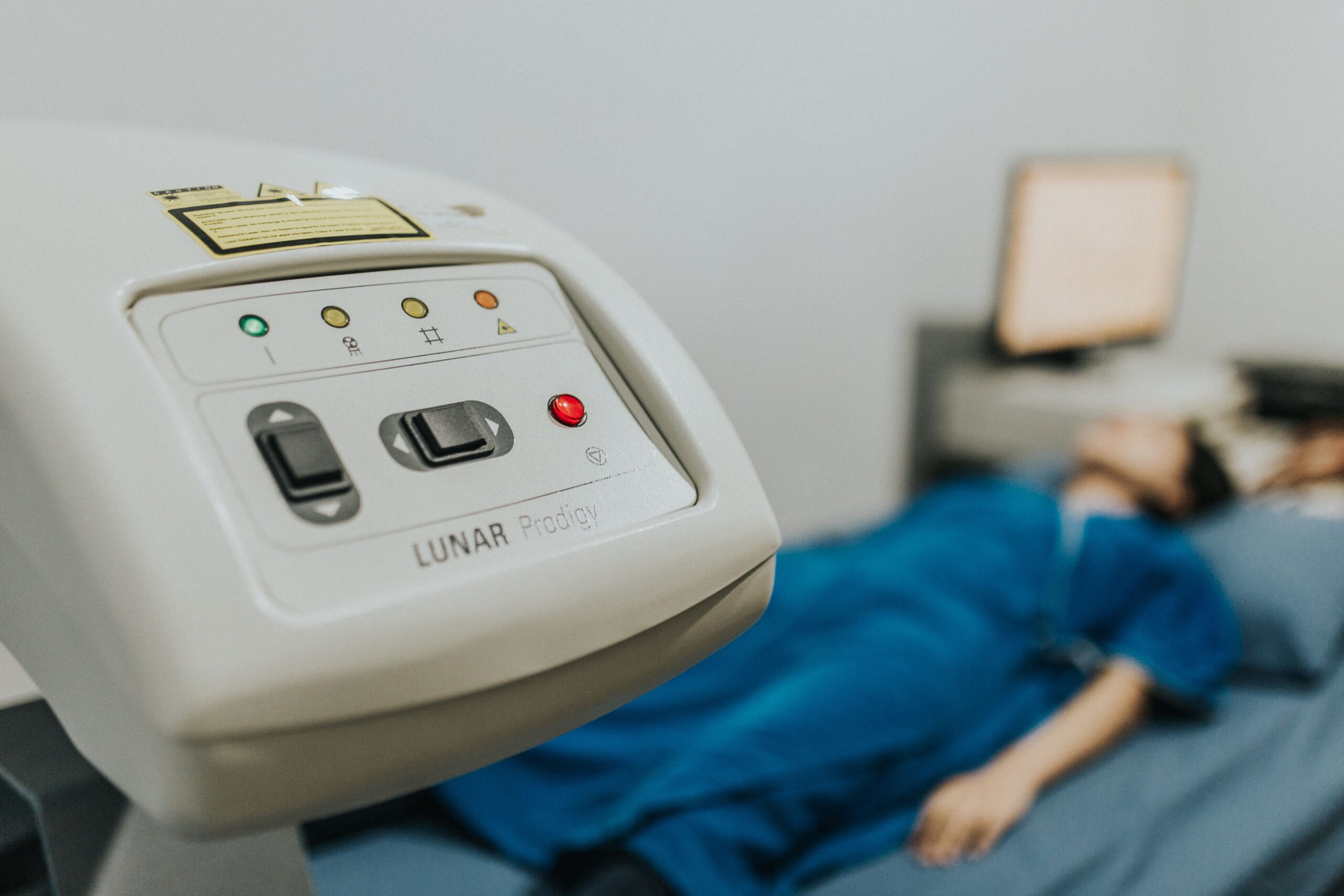
A DXA scan (also written DEXA) uses a low dose of X-rays to measure bone density. Two respected sets of advice differ mainly on men.
- The USPSTF (January 2025) recommends screening all women 65 and older, and postmenopausal women younger than 65 whose risk assessment shows higher fracture risk. For men, it says the evidence is insufficient to weigh benefits against harms.
- The Bone Health & Osteoporosis Foundation (BHOF), founded in 1984 and describing itself as the nation’s largest health organization devoted solely to osteoporosis and bone health, advises asking about a test if you’re a woman 65 or older, a man 70 or older, or anyone who has broken a bone after 50, and earlier (from 50) for people with risk factors. BHOF accepts corporate support and thanks Amgen and UCB, which both sell an osteoporosis drug, for backing its advocacy work.
The USPSTF screening advice is for people without known osteoporosis or a past fragility fracture—a break after a minor fall or injury that would not usually break a healthy bone. It doesn’t cover people who take bone-thinning medicines such as long-term steroids; they need their own conversation with a clinician. The screening details
How do the two guideline groups differ in their approach to screening men?
What erodes bone at any age
Some risks sit outside the life stages. NIAMS lists these among the factors that raise osteoporosis risk:
- Medicines taken long term, including glucocorticoids (steroid medicines), some seizure drugs, hormone-based breast and prostate cancer treatments, proton pump inhibitors (medicines that reduce stomach acid), some antidepressants and one class of diabetes drugs.
- Low estrogen, after menopause or when periods stop because of hormone disorders or extreme exercise.
- Low testosterone from a medical condition. NIAMS says the gradual drop with age probably isn’t a major cause of bone loss.
- Family history of osteoporosis or hip fracture in a parent.
- Diet low in calcium and vitamin D, excessive dieting or too little protein.
- Chronic heavy drinking and smoking. NIAMS calls heavy drinking “a significant risk factor.”
- Other conditions, such as rheumatoid arthritis, some hormonal and digestive diseases, and anorexia.
If you take a long-term steroid or one of these other medicines, ask the prescribing clinician whether you need a plan to protect your bones. NIAMS’s full wording
Supplements: less settled than the shelf suggests
Calcium and vitamin D are essential for bone, and NIAMS recommends a diet rich in both. Pills taken to prevent fractures are a different question.
In 2018, the USPSTF recommended against daily supplements of 400 international units (IU) or less of vitamin D and 1,000 mg or less of calcium to prevent fractures in postmenopausal women living at home. It found the evidence insufficient for higher doses, and for men and premenopausal women. A December 2024 draft goes further, recommending against vitamin D, with or without calcium, for fracture prevention in postmenopausal women and men 60 and older living at home. As of September 26, 2026, that draft hasn’t been finalized, and the 2018 statement remains the Task Force’s official position.
Neither version covers people with osteoporosis, vitamin D deficiency or a past fracture. For them, supplements are a separate clinical question. BHOF puts food first, too: it says “There is no added benefit to taking more calcium than you need.” The supplement guidance in full
What separates meeting calcium and vitamin D needs from demonstrating that supplements prevent fractures?
What’s Interesting
Men face a quieter version of the same problem. They start with more bone, lose it more slowly and break fewer bones. Yet they’re more likely to die after a hip fracture, and less likely to be checked for osteoporosis afterward.
The Brussels analysis found the early risk was higher for men, and the USPSTF’s 2025 statement makes the same point about fractures in general. It’s an odd gap: the group less likely to get screened is the one with more to lose after a fracture.
What This Means in Practice
- Activity and food. NIAMS lists weight-bearing activity, adequate calcium and vitamin D, and avoiding too little protein among its bone-health guidance. For someone with osteoporosis or a spine fracture, an exercise assessment can address whether heavy or high-impact movements are appropriate.
- Smoking and alcohol. NIAMS includes not smoking and moderate drinking in its prevention advice.
- Medicines. NIAMS identifies long-term steroids and several other medicines as bone-loss risks. A prescribing clinician can explain whether that risk affects the person’s treatment and bone care.
- Screening. The USPSTF recommends screening women 65 and older and younger postmenopausal women whose assessed risk is higher; it finds the evidence insufficient for routine screening in men. BHOF lists men 70 and older, women 65 and older, and younger adults from 50 with specified risk factors.
- Fractures after 50. NIAMS calls a fracture after 50 “an important signal” of possible osteoporosis.
Every body is different, and these are averages from large groups. A primary care clinician can assess your risk and order a DXA scan. An endocrinologist or rheumatologist often manages osteoporosis treatment. A physical therapist can design safe loading exercise. Fall prevention, the other half of fracture prevention, is covered in How Can Older Adults Prevent Falls?
Bottom Line
Protecting bone density as you age means building it early, holding it through midlife and defending it after 50. NIAMS’s list is loading exercise; enough calcium, vitamin D and protein from food; no smoking; moderate or no alcohol; and attention to bone-thinning medicines. The link to living longer runs through fractures: people who have a hip fracture have a sharply higher risk of dying, although the fracture alone does not explain that whole difference. Supplement evidence for fracture prevention is weaker than many people assume, and screening advice for men is still unsettled. A clinician can match screening and prevention to your age, sex and medicines.
A NOTE FROM LONGEVITY365
We read research, consult expert perspectives and work to make complicated health information easier to understand. What you’re reading here reflects how we’ve interpreted and organized that information. It is educational content—not personal medical advice, diagnosis or treatment guidance.
We’re not perfect, and neither is the available research. Evidence changes, new studies emerge and what’s appropriate for one person may not be appropriate for another.
Use this article as a starting point for your own research and conversations with qualified professionals. Always talk with your doctor or another trusted healthcare professional before making decisions that could affect your health, particularly if you take medications, are receiving treatment, have existing health conditions, are pregnant or have other circumstances that could affect what’s appropriate for you.
Reader Questions
A few questions to carry into the comments or your next conversation. Please leave out identifying or personal medical details.
- 01Which part of bone, joint, or fall prevention feels most actionable without becoming overwhelming?
- 02What would you want clarified before changing exercise, testing, or supplements around this topic?
- 03What question would help a clinician or physical therapist connect the evidence to day-to-day function?
Extra Insights & Sources
For readers who want the details behind each claim above.
What We Know
- Bone mass peaks in the 20s, then declines, faster in women around menopause. Established.
- Older adults with hip fracture have 5 to 8 times the short-term death risk of peers without hip fracture, and a higher risk persists for years. Supported.
- Glucocorticoids and several other long-term medicines, some cancer drugs, low sex hormones, smoking, heavy drinking and poor diet raise osteoporosis risk. Established.
- The USPSTF recommends osteoporosis screening for women 65 and older and for younger postmenopausal women at increased risk. Established (guideline).
- Low-dose calcium and vitamin D supplements aren’t recommended to prevent fractures in community-dwelling postmenopausal women. Established (guideline).
What We Don’t Know
- How much of the excess mortality after hip fracture is caused by the fracture versus the frailty behind it. Uncertain.
- Whether routine DXA screening in men prevents fractures. The USPSTF finds the evidence insufficient. Unknown.
- How much exercise, and what kind, older adults need to protect bone without supervision. Uncertain.
- Whether the USPSTF’s 2024 draft on vitamin D and calcium will be finalized as written. Uncertain.
- Whether protecting bone density, by itself, extends lifespan. No study cited here tested it. Unknown.
Hip fracture and mortality
A 2010 meta-analysis in Annals of Internal Medicine (first author Patrick Haentjens, Universitair Ziekenhuis Brussel and Vrije Universiteit Brussel) pooled prospective cohort studies of adults 50 and older with hip fracture: 22 cohorts of women and 17 of men from 24 published articles, covering 578,436 women and 154,276 men, each compared with age- and sex-matched controls (Note 1).
- In the first 3 months, the relative hazard of death from any cause was 5.75 (95% CI, 4.94 to 6.67) in women and 7.95 (CI, 6.13 to 10.30) in men. A relative hazard compares how quickly deaths occurred in the fracture and comparison groups during that period; 1 would mean no difference. CI means confidence interval: the range expressing statistical uncertainty around each estimate. These ratios are not percentages of people who died.
- Relative hazards “decreased substantially over time but did not return to rates seen in age- and sex-matched control groups.”
- For white women who break a hip at 80, the investigators estimated excess annual mortality of 8%, 11%, 18% and 22% at 1, 2, 5 and 10 years after injury. For men with a hip fracture at 80, the figures were 18%, 22%, 26% and 20%. Here, excess mortality means the difference in the absolute risk of death between the fracture and comparison groups, rather than the total proportion who died. These were modeled estimates for white US adults, not individual predictions.
The authors concluded: “Older adults have a 5- to 8-fold increased risk for all-cause mortality during the first 3 months after hip fracture. Excess annual mortality persists over time for both women and men, but at any given age, excess annual mortality after hip fracture is higher in men than in women.”
Limitations, in the authors’ words: the cohort studies “varied, sometimes markedly, in size, duration of observation, selection of control populations, ascertainment of death, and adjustment for comorbid conditions,” and publication bias was possible. In the discussion they add that “Patients with hip fracture are, on average, more functionally impaired and have more comorbid conditions than similar-aged patients without hip fracture.”
The USPSTF’s 2018 supplement statement adds the functional picture: “Twenty percent to 30% of patients die within 1 year of a hip fracture, with significantly higher mortality rates in men than in women. Nearly 40% of persons who experience a fracture are unable to walk independently at 1 year.”
Bone loss around menopause
The SWAN bone analysis (Greendale and colleagues, Journal of Bone and Mineral Research, 2012) included 242 African American, 384 white, 117 Chinese and 119 Japanese women who were pre- or early perimenopausal at the start and whose final menstrual period could be dated (Note 2). Over the 10-year observation period:
- Cumulative lumbar spine (lower back) density loss was 10.6%, with 7.38% of starting density lost during the transmenopause (1 year before through 2 years after the final period).
- Cumulative femoral neck (the narrow part of the thighbone near the hip joint) density loss was 9.1%, with 5.8% of starting density lost during the transmenopause.
- Loss began 1 year before the final period and slowed, but didn’t stop, 2 years after it. Higher body mass index and African American heritage were linked to slower loss; Japanese and Chinese ancestry to faster loss.
Risk factors in NIAMS’s words
| Factor | What NIAMS says |
|---|---|
| Medications | “Certain medications, such as some cancer medications and glucocorticoid steroids, may increase the risk of developing osteoporosis.” The overview lists long-term glucocorticoids and adrenocorticotropic hormone, antiepileptic medicines, hormone-based breast and prostate cancer medications, proton pump inhibitors, selective serotonin reuptake inhibitors and thiazolidinediones. |
| Low estrogen | After menopause, and in premenopausal women whose periods stop “due to hormone disorders or extreme levels of physical activity” |
| Low testosterone | “Men with conditions that cause low testosterone are at risk,” though “the gradual decrease of testosterone with aging is probably not a major reason for loss of bone” |
| Family history | Risk “may increase if one of your parents has a history of osteoporosis or hip fracture” |
| Diet | “Beginning in childhood and into old age, a diet low in calcium and vitamin D can increase your risk for osteoporosis and fractures.” “Excessive dieting or poor protein intake may increase your risk for bone loss and osteoporosis.” |
| Smoking and alcohol | “Chronic heavy drinking of alcohol is a significant risk factor for osteoporosis.” Smoking is a risk factor, though researchers are still studying whether that’s tobacco alone or other risk factors smokers share. |
| Inactivity | “Low levels of physical activity and prolonged periods of inactivity can contribute to an increased rate of bone loss.” |
NIAMS’s prevention list, verbatim from its overview: “Staying physically active by participating in weight-bearing exercises such as walking,” “Drinking alcohol in moderation,” “Quitting smoking, or not starting if you don’t smoke,” and “Eating a nutritious diet rich in calcium and vitamin D.” Its men’s page adds that “Weight-bearing exercise, especially if you start at a young age, is a great way to strengthen bones and to help prevent osteoporosis,” and that “Almost all bone in adults is remodeled every 10 years.” The overview page was last reviewed in December 2022 and the men’s page in May 2023. In the medication list, antiepileptic medicines treat seizures; selective serotonin reuptake inhibitors are a type of antidepressant; and thiazolidinediones are a type of diabetes medicine. Adrenocorticotropic hormone is a hormone medicine that stimulates the adrenal glands.
Screening guidance in detail
The USPSTF uses Grade B when it recommends a service based on evidence of a meaningful net benefit. An I statement means the evidence cannot establish the balance of benefits and harms. In the supplement guidance below, Grade D means the Task Force recommends against the preventive use described. BMD means bone mineral density.
USPSTF, final recommendation, January 14, 2025 (Osteoporosis to Prevent Fractures: Screening):
- Women 65 and older: “The USPSTF recommends screening for osteoporosis to prevent osteoporotic fractures in women 65 years or older.” Grade B.
- Postmenopausal women younger than 65 with 1 or more risk factors: screening when they “are at increased risk for an osteoporotic fracture as estimated by clinical risk assessment.” Grade B.
- Men: “the current evidence is insufficient to assess the balance of benefits and harms of screening for osteoporosis to prevent osteoporotic fractures in men.” I statement.
- Scope: adults 40 or older “without known osteoporosis or history of fragility fractures.” It does not apply to secondary osteoporosis from an underlying condition or “chronic use of a medication (eg, glucocorticoids) associated with bone loss.”
- On men, the statement notes that “excess mortality related to osteoporosis and fragility fractures is greater in men.”
- On intervals, it says cohort studies “suggest that repeating BMD testing at an interval of 4 to 8 years does not result in additional accuracy in predicting fractures.” (NIAMS’s men’s page describes the Task Force as recommending “annual DXA testing in women by age 65”; the Task Force’s own statement sets no annual interval.)
Bone Health & Osteoporosis Foundation (bone density testing page, last reviewed March 8, 2022) lists: women 65 and older; men 70 and older; “Anyone who has broken a bone after age 50 years”; women 50 to 64 with risk factors; and men 50 to 69 with risk factors. Its risk-factor examples include family history, frequent falling, vitamin D deficiency, smoking, excessive alcohol, malabsorption and some medicines such as prednisone. BHOF’s advocacy page states: “BHOF gives special thanks to Amgen and UCB for support of our advocacy efforts.” Both companies list the osteoporosis drug Evenity (romosozumab) among their products. BHOF’s about page says it “accepts support from a wide breadth of diversified sources, including individuals, foundations, government sources and corporations,” and that it “does not endorse any particular product, service or point of view.”
Supplement guidance in detail
USPSTF, final recommendation, April 17, 2018 (Vitamin D, Calcium, or Combined Supplementation for the Primary Prevention of Fractures):
- “The USPSTF recommends against daily supplementation with 400 IU or less of vitamin D and 1000 mg or less of calcium for the primary prevention of fractures in community-dwelling, postmenopausal women.” Grade D.
- Insufficient evidence (I statements) for doses above 400 IU of vitamin D and 1,000 mg of calcium in postmenopausal women, and for men and premenopausal women.
- The statement names kidney stones as the harm to weigh, citing the Women’s Health Initiative trial’s increase in kidney stones among women taking vitamin D and calcium.
- It does not apply to people with “a history of osteoporotic fractures, increased risk for falls, or a diagnosis of osteoporosis or vitamin D deficiency.”
USPSTF draft, December 17, 2024 (draft recommendation): “The USPSTF recommends against supplementation with vitamin D with or without calcium for the primary prevention of fractures in community-dwelling postmenopausal women and men age 60 years or older.” Grade D (draft). It excludes people with a history of osteoporotic fractures, conditions linked to vitamin D deficiency or malabsorption, or a diagnosis of osteoporosis or vitamin D deficiency. It adds that “ensuring adequate vitamin D and calcium intake is important for bone and overall health,” citing National Academy of Medicine allowances of 600 to 800 IU of vitamin D and 1,000 to 1,200 mg of calcium a day from all sources. As of September 26, 2026, the USPSTF site lists the topic as an update in progress, with the 2018 statement as the current final recommendation.
Bone Health & Osteoporosis Foundation (calcium and vitamin D page, last reviewed May 23, 2023): calcium 1,000 mg a day for women 50 and younger and men 70 and younger, and 1,200 mg for women 51 and older and men 71 and older, from food and supplements combined; vitamin D 800 to 1,000 IU a day from age 50. It advises getting calcium from food first and says: “There is no added benefit to taking more calcium than you need. Doing so may even carry some risks such as constipation, kidney stones and perhaps excess heart calcification.”
Sources
- National Institute of Arthritis and Musculoskeletal and Skin Diseases: Osteoporosis (last reviewed December 2022)
- National Institute of Arthritis and Musculoskeletal and Skin Diseases: Osteoporosis in Men (last reviewed May 2023)
- Haentjens P, et al. Excess mortality after hip fracture, Annals of Internal Medicine, 2010: PubMed 20231569
- Greendale GA, et al. SWAN bone loss and the final menstrual period, Journal of Bone and Mineral Research, 2012: PubMed 21976317
- US Preventive Services Task Force: Osteoporosis to Prevent Fractures: Screening (2025)
- US Preventive Services Task Force: Vitamin D, Calcium, or Combined Supplementation for the Primary Prevention of Fractures (2018)
- US Preventive Services Task Force: Draft recommendation on vitamin D, calcium or combined supplementation for falls and fractures (2024)
- Bone Health & Osteoporosis Foundation: Bone Density Testing, Calcium and Vitamin D and Advocacy
Notes
Note 1: Funded by the Fund for Scientific Research (Belgium), Leuven University, the US National Institutes of Health, the Paul B. Beeson Award and the Willy Gepts Foundation of Universitair Ziekenhuis Brussel. The paper says the funders had no role in the analysis; individual author disclosures were filed with the journal rather than printed in the paper.
Note 2: Funded by the US National Institutes of Health through the National Institute on Aging, the National Institute of Nursing Research and the NIH Office of Research on Women’s Health. The authors report no conflicts of interest.
Photo credits
Images from Pexels.
- featured: Photo by iam vumilia — original Pexels photo.
- inline-1: Photo by Charlss GonzHu — original Pexels photo.
- inline-2: Photo by elif tekkaya — original Pexels photo.
Leave a Reply