
Food
Should You Eat More Protein as You Age?
Maybe—but age alone does not settle it. Intake, illness, activity, food source and kidney health matter more than a birthday-based rule.

Eating more protein has become one of the most repeated pieces of aging advice. Humanic Blue is asking whether you should eat more protein as you age, and the answer is that age alone cannot settle it. Your current intake, activity, appetite, illness, food sources and kidney health all matter.
Low intake, appetite loss, training, illness and recovery are different reasons protein enters the discussion. The 2013 PROT-AGE geriatric expert group recommends 1.0–1.2 grams per kilogram of body weight per day after 65 and more during many illnesses, while the 2025–2030 US Dietary Guidelines use a general target of 1.2–1.6 g/kg/day. A 2025 overview of earlier research reviews found no clear overall supplement benefit in healthy older groups, but did not analyze their usual diets; healthy cannot be assumed to mean well-nourished. Observational evidence generally favors plant sources, but it cannot prove that changing protein source extends life. Current kidney guidance recommends about 0.8 g/kg/day for many adults with moderate-to-advanced chronic kidney disease and cautions against high intake. For living longer and better, the useful question is not whether everyone should eat more with each birthday, but whether your present intake fits your health and goals.
Key Takeaways
- After 65, a geriatric expert group recommends more protein than the general Recommended Dietary Allowance (RDA), while current federal guidance uses a higher target for adults generally. This is guidance, not proof of an individual requirement.
- Trials have found benefits from added nutrition in selected people with low intake, nutritional risk or illness. They often tested comprehensive care rather than protein alone.
- In midlife, observational mortality findings leave uncertainty about the effects of higher protein intake.
- Analyses combining observational studies associate plant protein with fewer deaths from any cause and from cardiovascular disease. This does not establish cause and effect.
- KDIGO kidney guidance suggests about 0.8 g/kg/day for adults with moderate-to-advanced chronic kidney disease (stages G3–G5) and advises those at risk of progression to avoid more than 1.3 g/kg/day; dialysis needs differ.
- No trial shows that eating more protein extends lifespan.
What do the official protein numbers say?
- National Academies Recommended Dietary Allowance (RDA), healthy adults: 0.8 g/kg/day, intended to meet the needs of nearly all healthy adults. It was derived largely from studies of nitrogen balance, a way to estimate protein needs from nitrogen entering and leaving the body.
- 2025–2030 Dietary Guidelines for Americans: 1.2–1.6 g/kg/day as a general federal policy target.
- PROT-AGE expert consensus, over 65: 1.0–1.2 g/kg/day when generally healthy and 1.2–1.5 g/kg/day during many acute or chronic illnesses.
These numbers come from different authorities and methods; none is an individualized prescription. What they mean in grams is covered in Protein Needs After 40.
In midlife: muscle and mortality ask different questions
This is where the evidence is least settled. A 2014 University of Southern California study of US adults aged 50 and older found that people aged 50 to 65 who got 20% or more of their calories from protein had higher mortality, but the association weakened or disappeared for plant protein. The study relied on a single day’s diet record and couldn’t show cause and effect. Its details and limits are in Protein Needs After 40.
Protein supplements can add a small benefit during resistance training, but the often-cited 1.6 g/kg/day breakpoint is a statistical estimate across trials with a wide range of uncertainty, not a hard ceiling. Short-term single-meal studies compared men averaging 22 and 71; they do not establish that needs begin rising at 50. Those limits are covered in Protein Needs After 50.
Does the case for more get stronger after 65?
The same USC analysis reported the opposite association after 65, but that subgroup finding came from the same single-day dietary recall and observational design. It does not prove that high protein protects older adults or that the true relationship changes direction at 65. The PROT-AGE group separately recommended higher intake to support function and recovery; that is expert consensus, not a mortality trial.
A 2025 overview of 33 meta-analyses found no overall muscle, strength or performance benefit from protein supplements in healthy older groups, while reporting small benefits in groups with long-term conditions. Most of the included reviews were rated critically low quality, so even that distinction remains less secure than a slogan suggests. The overview did not analyze habitual diet and cannot identify an adequate-intake subgroup. How it plays out by situation is covered in Protein Needs After 60.
What would establish whether an age-related difference in protein associations reflects a treatment benefit?

After 70: making sure it’s enough
During illness and hospitalization, eating too little can become the urgent problem. A 2026 Cochrane analysis found low-certainty evidence that oral nutrition formulas may reduce 30-day mortality in hospitalized adults aged 65 or older at nutritional risk; evidence for added protein alone was very uncertain. The EFFORT trial also reduced short-term adverse outcomes with individualized calorie, protein and micronutrient care. These are nutrition-support findings, not evidence that all adults over 70 should add protein. Details are covered in Protein Needs After 70.
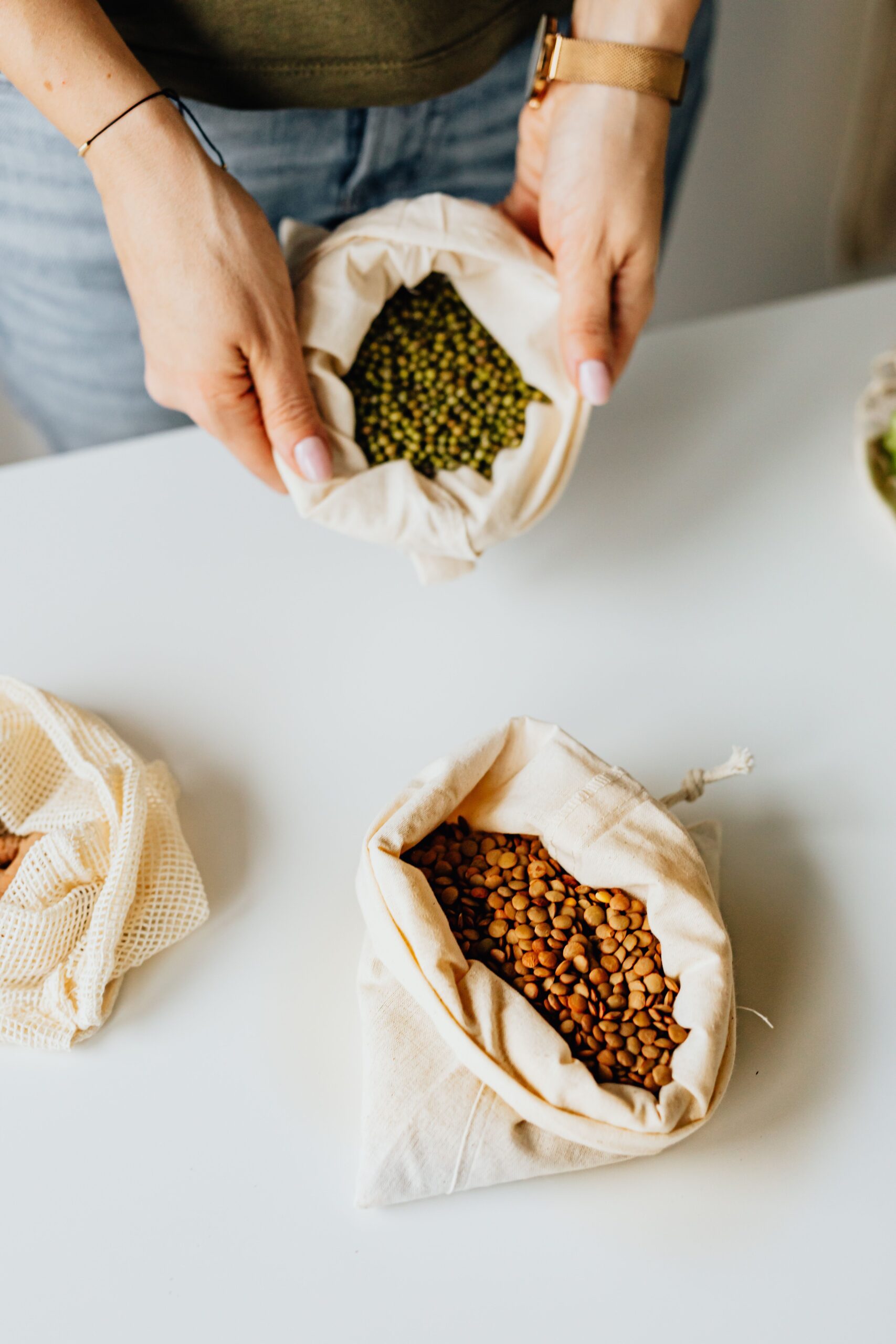
At every age: where the protein comes from
A 2020 BMJ analysis combined results from studies following people’s diets over time. Higher total protein was associated with a small reduction in all-cause mortality. Higher plant protein was associated with lower all-cause and cardiovascular mortality; each additional three percentage points of the daily calorie share from plant protein was associated with about 5% lower all-cause mortality. This means a change in the share of all daily calories, not 3% more than someone’s existing protein intake. Animal protein was not clearly associated with cardiovascular or cancer mortality.
A 2026 meta-analysis of nine cohorts with more than a million participants estimated 9% lower mortality when plant protein statistically replaced animal protein representing 3% to 5% of all daily calories. This was a modeled substitution, not an observed effect of a food swap. Both analyses are observational. Specific food sources are compared in Best Protein Sources for Healthy Aging.
How does considering protein sources change a discussion focused only on grams?
What changes if you have kidney disease?
The 2024 Kidney Disease: Improving Global Outcomes (KDIGO) guideline suggests 0.8 g/kg/day for adults with CKD G3–G5 and advises those at risk of progression to avoid more than 1.3 g/kg/day. It also guards against low-protein diets in people whose metabolism is unstable during illness and weighs the risks of malnutrition and age-related muscle loss. Dialysis can raise protein needs. Anyone with known kidney disease should get an individualized target.
What’s Interesting
Protein priorities can change with age, but the evidence does not flip at a precise birthday. Midlife mortality concerns come from observational data with major measurement limits. Later-life recommendations place more weight on maintaining function and avoiding malnutrition, while supplement trials in healthy older groups did not show a clear overall benefit. Those groups were not classified by adequate starting intake. Those differences explain why the findings do not yield one birthday-based intake target.
What This Means in Practice
For living longer and better, the findings describe different nutritional questions at different stages:
- In midlife, the mortality findings are observational, while supplement trials tested muscle gains alongside resistance training. Neither establishes a lifespan target.
- After 65, PROT-AGE’s 1.0–1.2 g/kg/day is an expert-consensus reference point for generally healthy older adults, with separate illness and kidney considerations.
- After 70, hospital and recovery trials concern people at nutritional risk and often test calories, protein and other support together.
- At every age, cohort findings about protein sources describe associations. They cannot establish a personal benefit from replacing one food with another.
- With kidney disease, a clinician or renal dietitian can explain the disease-specific target before a protein increase.
A registered dietitian can discuss how intake, activity, health and food preferences relate to these different reference points.
Bottom Line
The evidence does not establish an automatic protein increase with every birthday. A geriatric expert group recommends 1.0–1.2 g/kg/day after 65, and current US guidance uses 1.2–1.6 g/kg/day more broadly, but healthy older groups have not consistently benefited from routine supplements. Trials have found benefits from added nutrition when intake is low or illness creates nutritional risk, and those interventions often include much more than protein. Plant protein is associated with lower mortality, but that is observational evidence. CKD can require lower targets. No trial shows that higher protein extends human lifespan.
A NOTE FROM LONGEVITY365
We read research, consult expert perspectives and work to make complicated health information easier to understand. What you’re reading here reflects how we’ve interpreted and organized that information. It is educational content—not personal medical advice, diagnosis or treatment guidance.
We’re not perfect, and neither is the available research. Evidence changes, new studies emerge and what’s appropriate for one person may not be appropriate for another.
Use this article as a starting point for your own research and conversations with qualified professionals. Always talk with your doctor or another trusted healthcare professional before making decisions that could affect your health, particularly if you take medications, are receiving treatment, have existing health conditions, are pregnant or have other circumstances that could affect what’s appropriate for you.
Reader Questions
A few questions to carry into the comments or your next conversation. Please leave out identifying or personal medical details.
- 01Which part of this food question feels most practical in real life: what to eat, how much, timing, cost, or consistency?
- 02Where do you still see a gap between population evidence and the way one person actually eats?
- 03What would make "Should You Eat More Protein as You Age" easier to discuss without turning food into another thing to optimize perfectly?
Extra Insights & Sources
The evidence summaries and linked sources behind this article.
What We Know
- After 65, an expert group recommends 1.0–1.2 g/kg/day and more during many illnesses. Consensus, not an individual requirement.
- Trials in selected people with low intake or nutritional risk have found benefits from added nutrition; the protein-specific contribution is often uncertain. These studies do not establish a ranking for everyone. Supported with limits.
- Plant protein is associated with lower mortality. Supported (association).
- CKD G3–G5 changes the target, and dialysis differs again. Current guideline.
What We Don’t Know
- Whether increasing protein alone extends lifespan. Unknown. Short-term mortality has been measured in nutrition-support trials, including the hospital studies above, but those interventions contained calories, protein and other support. Their survival findings do not establish a protein-only effect or years added to life.
- The best intake in midlife. Contested.
- Whether food and supplements differ in their effects. Uncertain.
Sources
Here, g/kg/day means grams of protein per kilogram of body weight per day. The figures describe research intakes or guidance for specified groups, not personal prescriptions.
- National Academies, Dietary Reference Intakes (2005): defines the adult RDA of 0.8 g/kg/day and its evidence basis. https://nap.nationalacademies.org/read/11537/chapter/14
- Dietary Guidelines for Americans, 2025–2030: current federal policy document presenting a general protein target of 1.2–1.6 g/kg/day. https://cdn.realfood.gov/DGA_508.pdf
- PROT-AGE Study Group position paper (2013): expert consensus recommending 1.0–1.2 g/kg/day after 65 and 1.2–1.5 g/kg/day during many illnesses; not a trial or official US guideline. https://pubmed.ncbi.nlm.nih.gov/23867520/
- Levine et al., Cell Metabolism (2014): observational analysis of 6,381 adults aged 50+ in the US National Health and Nutrition Examination Survey (NHANES III), based on one 24-hour dietary recall, with age-stratified mortality associations and laboratory/animal experiments that do not establish human causality. https://pubmed.ncbi.nlm.nih.gov/24606898/
- Obasi et al., Age and Ageing (2025): overview of 33 meta-analyses and 441 unique studies; healthy older groups showed no overall supplement benefit, while long-term-condition groups showed small gains. Twenty-eight reviews were critically low quality. Habitual diet was not analyzed, so healthy participants cannot be assumed to have had adequate starting protein intake. https://pubmed.ncbi.nlm.nih.gov/41385355/
- Kiesswetter et al., Cochrane Review (2026): 21 trials and 3,309 hospitalized adults aged 65+; oral nutrition formulas may reduce 30-day mortality, but evidence was low certainty and added-protein evidence was very uncertain. https://pubmed.ncbi.nlm.nih.gov/41886673/
- Naghshi et al., BMJ (2020): dose-response meta-analysis of 32 prospective cohorts, with 31 in quantitative synthesis, 715,128 participants and 113,039 deaths. Plant-protein associations cannot establish causal or source-specific effects. https://pubmed.ncbi.nlm.nih.gov/32699048/
- Zhao et al., Clinical Nutrition (2026): substitution meta-analysis of nine prospective cohorts and 1,036,799 participants; replacing animal protein that supplied 3%–5% of total daily calories with plant protein was associated with lower all-cause mortality. Observational substitution modeling, not a feeding trial. https://pubmed.ncbi.nlm.nih.gov/41996864/
- KDIGO CKD guideline (2024): suggests 0.8 g/kg/day for CKD G3–G5 and advises those at risk of progression to avoid more than 1.3 g/kg/day, with malnutrition safeguards and different needs during dialysis. https://kdigo.org/wp-content/uploads/2024/03/KDIGO-2024-CKD-Guideline.pdf
Photo credits
Images from Pexels.
- featured: Photo by cottonbro studio — original Pexels photo.
- inline-1: Photo by Anna Pou — original Pexels photo.
- inline-2: Photo by https://kaboompics.com/ — original Pexels photo.
Leave a Reply