
Biological Age Tests
Best Biological Age Tests
Six biological age tests compared on validation, reliability, price and availability. No test predicts an individual lifespan; here is what each one has shown.
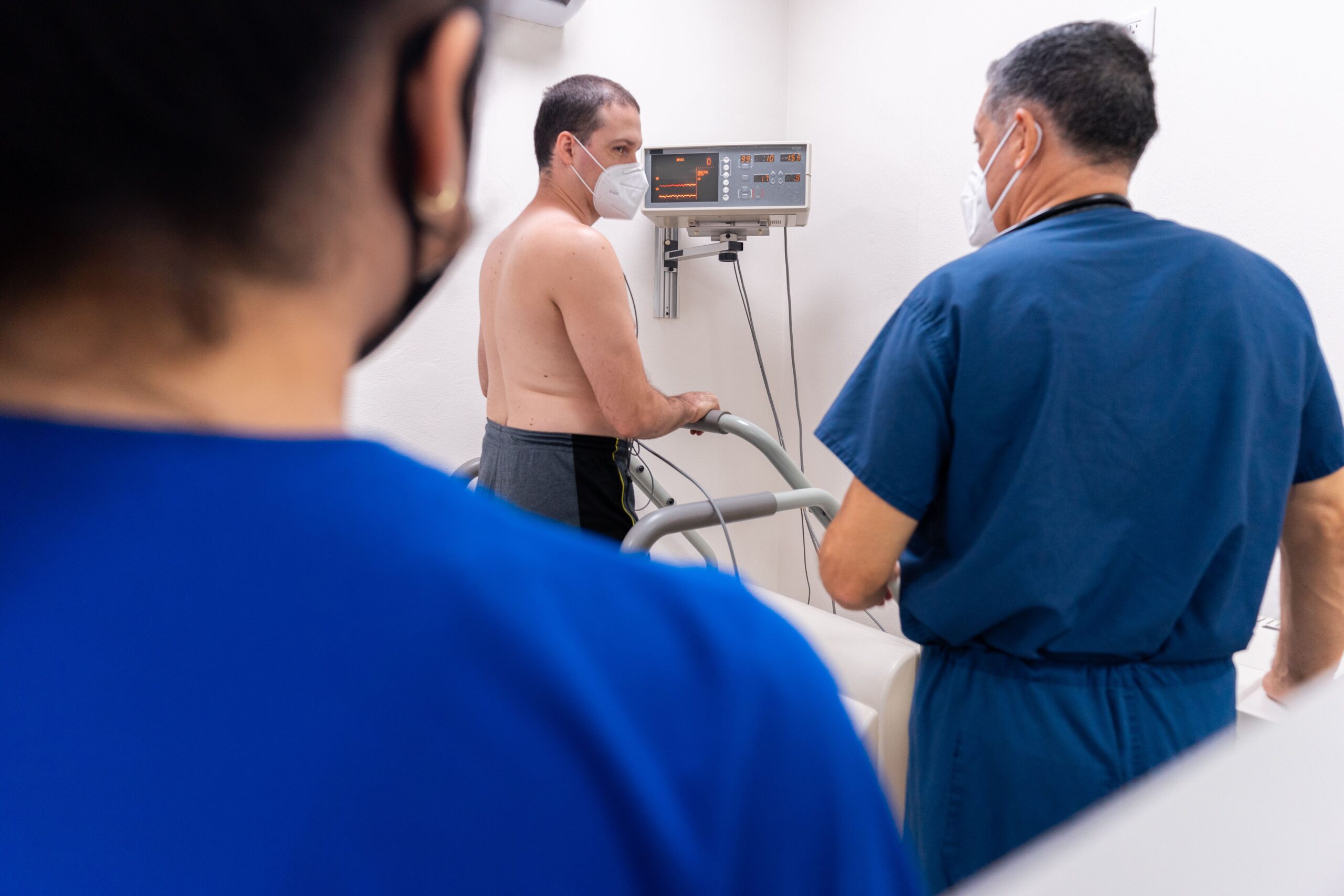
You’ve got the kit in your cart, or a number already on the screen, and you want to know whether this one is the good one. A search for the best biological age tests turns up plenty of rankings. Which is a little funny, because the tests don’t always agree with each other, or even with themselves. Humanic Blue starts by separating what the tests measure before comparing the kits.
The people who build these tests have been fairly candid on the record, and their answer is less tidy than a ranking. None of the six options below has been shown to predict how long any one person will live, or to help anyone live longer. Two lab measures, DunedinPACE and PhenoAge, plus three fitness checks do track illness and death across large groups. The two DNA-based mail-in kits cost $299 to $499, aren’t FDA-approved diagnostics, and can disagree with themselves by years.
In This Article
Key Takeaways
- No biological age test has been shown to predict how long one person will live. Horvath, Herzog, de Magalhães, Shalev and Apsley each say so. Unknown.
- DunedinPACE and PhenoAge track illness and death across large groups. In Morgan Levine’s data, each extra year of phenotypic age went with about 9% higher risk of dying during follow-up. Supported for groups.
- Fitness, grip strength and walking speed have death-risk data from 34,000 to 140,000 people and cost little or nothing to measure. Established as risk markers.
- Repeatability varies. Older clocks drifted by up to 9 years on the same sample, and Matt Kaeberlein’s eight same-day consumer results spanned 18 years. Supported.
- The two DNA-based mail-in kits cost $299 to $499 as of September 2026, and none is sold as an FDA-approved diagnostic. Established.
- Several researchers and companies behind these tests have financial ties to them. Each disclosure sits with its option.
What would a “best” test have to show?
The researchers who invented these tests tend to ask three things of one. Fair questions for anything that offers you a second birthday.
Does it track real outcomes over time? Daniel Belsky, an associate professor of epidemiology at Columbia’s Mailman School of Public Health, built DunedinPACE by following about 1,000 people born in Dunedin, New Zealand, from age 26 to 45 and measuring how fast 19 markers of organ health declined. Belsky and five co-authors are named inventors on the licensed technology, and TruDiagnostic says it holds an exclusive license from Duke University.
Does it give the same answer twice? Yale psychiatry researcher Albert Higgins-Chen reported in 2022 that six widely used DNA-based clocks could differ by up to 9 years when the same sample was run twice. “We found epigenetic clocks that could say you are biologically 50 years old on one test, and then 59 on the next,” he said in Yale’s announcement. The error has to be smaller than the change you’re hoping to see.
Is there a reference standard? Steve Horvath is a former principal investigator at Altos Labs and longtime UCLA professor; MIT Technology Review says his 2013 clock “marked the birth of ‘clock world.'” At a 2026 conference reported by The Scientist, he said the field has not yet achieved “what one would call reference standards.” Two companies can both say “biological age” and be using different rulers.
A little vocabulary. DNA methylation is a chemical tag on DNA that shifts with age. An epigenetic clock is an algorithm that reads thousands of those tags and outputs an age.
Six tests compared, $499 kit to stopwatch
At a glance:
- TruDiagnostic TruAge Test (formerly COMPLETE): finger-prick blood, read for DNA methylation. $499.
- Elysium Index: saliva, read for DNA methylation. $299.
- GlycanAge: finger-prick blood, read for sugar chains on antibodies. About €499, $499–$549 or £449–£499, per the vendor’s FAQ.
- PhenoAge: a routine blood panel run through a free, published formula. The cost of the panel.
- InsideTracker InnerAge 2.0: a lab blood draw scored against people your age. $249.
- Fitness, grip and walking speed: a treadmill test, a grip gauge or a stopwatch. Free to the cost of a clinical test.
Prices were seen on 25 September 2026 and can change, so check the seller’s current price before buying. The full table, with study sizes
TruDiagnostic TruAge Test (formerly COMPLETE)
This $499 finger-prick kit bundles several answers: a biological age, ages for 11 organ systems and DunedinPACE, which estimates pace rather than accumulated age. DunedinPACE was developed from about 1,000 people followed from age 26 to 45 and later tracked illness, disability and death in older US groups. OMICmAge was associated with chronic disease and death in groups ranging from roughly 3,500 to 18,700 people. That supports group comparisons, not a personal forecast.
The catch is the commercial web around the science. DunedinPACE is licensed to TruDiagnostic; OMICmAge research was sponsored by the company and included company employees; researchers behind a repeatability study have also received company fees. TruDiagnostic itself says the results support rather than replace clinical judgment. It ships from the US, with a partner serving the UK and Europe. The validation data and disclosures
Elysium Index
Index is the least expensive mail-in option here at $299. It uses saliva and reports an overall age, a cumulative rate and nine system ages. Elysium licenses a Yale reliability method, but we found no independent outcome study of the finished Index product. The method is supported; the product remains preliminary.
Saliva is convenient, but it contains a different mix of cells from blood, so the clock must account for that. Elysium also sells supplements, and Levine was a paid scientific adviser from 2019 to 2021. None of that proves the result is wrong. It does mean the incentive structure should be visible while you read it. Index is sold through the US store and was not listed on the Canadian store we checked. The saliva evidence and disclosures
GlycanAge
GlycanAge reads sugar chains attached to antibodies, not DNA methylation. Its founding study included about 5,100 people across four European populations and found that three glycans explained much of the variation in calendar age. That is interesting biology, but it is not evidence that the test predicts survival. The company’s own FAQ says it cannot provide an exact biological age or diagnose individual disease.
The vendor listed prices around €499, $499–$549 or £449–£499. Co-founder and chief scientific officer Gordan Lauc also helped develop the underlying research, and we found no outcome study comparable with DunedinPACE or PhenoAge. The study links the sugar-chain patterns to calendar age; it does not establish whether buying the test changes health outcomes. The study and company relationship
PhenoAge from routine bloodwork (free)
PhenoAge turns nine familiar lab values plus your calendar age into one score. Levine’s team built it with about 9,900 US adults followed for more than 23 years and checked it in about 6,200 more. Each extra phenotypic year was associated with roughly 9% higher risk of death during follow-up. That makes it supported for comparing groups, not for predicting one life.
The formula is free and the inputs may already be in your chart. They also move: inflammation and fasting status can change a result, so one draw can be noisy. No trial has shown that lowering PhenoAge lengthens life. Still, the numbers underneath it are ones a clinician can interpret without first consulting the Department of Extremely Fancy Clocks. The formula and validation numbers
InsideTracker InnerAge 2.0
InnerAge is a proprietary score built from 13 to 17 blood markers, not a DNA clock. The underlying values include established clinical risk markers, but the product page cites no published outcome validation for the combined score. The ingredients can be useful even when the combined formula has not been independently tested.
The listed price was $249 with a lab draw, or a $149 annual membership plus $99 per calculation. It is offered in the US and Canada, with some Canadian testing limits. If the panel contains all nine PhenoAge inputs, the published formula may give you a free comparison.
Fitness, grip strength and walking speed
The decidedly unglamorous options measure fitness, grip and usual walking speed. They also have the largest human datasets here: about 122,000 treadmill patients followed for roughly eight years, nearly 140,000 people in 17 countries followed after a grip test, and about 34,500 adults over 65 pooled across walking-speed studies. Better performance tracked with longer survival in each case.
These are fitness and frailty markers, not molecular clocks, and the analyses report associations rather than proving that a faster walk or stronger squeeze extends life. But there is no proprietary algorithm between you and the result. Grip and gait need little more than a gauge, a measured path and a stopwatch. The populations and results
Why did the same blood come back 18 years apart?
Because there are two kinds of noise. Lab noise is what happens when the same sample is run twice; Higgins-Chen’s 2022 method brought most repeat results within about a year and a half. Body noise is what happens when the same living person is sampled again. A 2026 Yale study found clocks could repeat beautifully in the lab yet only moderately well when people were re-sampled. Its authors have received TruDiagnostic fees and co-invented one clock they evaluated. The reliability studies and disclosures
Kaeberlein tried the consumer version on himself, sending duplicate same-day samples to four unnamed tests. The eight answers ranged from age 43 to 61, an 18-year spread wrapped around one 53-year-old human. His company, Optispan, says it no longer recommends these tests in its programs. One person is not a validation study, but as demonstrations of the word wobble go, it has range.
Which uncertainty matters here: variation in the lab or variation between samples from the same person?
Can a younger score mean a longer life?
Not on current evidence. Idan Shalev and Abner Apsley, who use these clocks in research, write that they were not designed to make individual health claims. King’s College London researcher Chiara Herzog told MIT Technology Review: “They’re not yet individually predictive.” A clock can identify groups with different average risks without reliably predicting one person’s health.
Levine adds another wrinkle: different clocks can assign different ages to the same person. And in a 2024 survey of about 100 aging researchers, no question about what aging biomarkers should measure won a majority answer. The field is still debating the assignment while companies are already handing out grades. What the researchers said and their commercial ties
What would a test need to demonstrate beyond predicting outcomes in a research group?
What does the FDA cover?
None of these kits is sold as an FDA-approved diagnostic. The FDA tried to bring lab-developed tests under its device rules in 2024; a federal court vacated that rule in March 2025, and the agency reverted it that September, according to its lab-developed tests page.
“CLIA-certified,” which TruDiagnostic and GlycanAge both advertise, refers to federal rules that, in the CDC’s words, “establish quality standards for laboratory testing.” That covers how the lab runs the test. It isn’t a review of what the score predicts.
Ethics researchers Michael Hauskeller and Liam Shore argue that companies should disclose reliability and limitations more clearly. The regulatory history and ethics argument
What’s Interesting
Among these six, the measures with death-risk data from 34,000 to 140,000 people involve walking across a room and squeezing a gauge. One of the priciest kits on the list now includes a “Grip Strength & Gait Speed” report of its own. The humble stopwatch has been quietly building an impressive résumé.
Belsky’s team engineered DunedinPACE for lab repeatability before it was ever sold. Then Sehgal’s 2026 study, which re-sampled real people, placed it near the low end for body-level repeatability. Reliable in the lab and reliable in a living person turned out to be two different tests.
And the inventors are among the most-quoted skeptics in this article. Levine, who built PhenoAge and helped build Index, is the one warning that different clocks give different answers.
What This Means in Practice
The researchers above supply the criteria; you apply them.
- Decide what the number is for. Kaeberlein to NPR: “Biological age tests are a part of the equation, but at this point, I don’t think they’re particularly actionable.” Belsky’s group designed DunedinPACE to track change over time. PhenoAge runs on a panel your doctor can read. Fitness, grip strength and walking speed measure physical performance; repeating those measurements still does not turn them into lifespan forecasts.
- Ask the vendor how repeatable the score is in real people, re-sampled, not just in lab re-runs. Sehgal’s 2026 paper is a reference point: research clocks landed in the “moderate” to “good” range.
- Was the clock designed for this sample? Horvath warns that applying a blood-trained clock to saliva without correction can produce substantial errors.
- Read the disclosures. Licensing, company sponsorship, consulting fees and supplement sales do not automatically invalidate research. They do tell you who benefits if a score becomes the next must-have number.
- What happens to the sample and data? Before sending blood or saliva, ask who can access the sample and results, whether data may be shared or sold, how long both are kept, and whether you can request deletion.
- If you already have a number you don’t like, remember what Luigi Ferrucci, Scientific Director of the National Institute on Aging, told NPR: “At this point, if you want to do it, it must be based on curiosity.” NPR reported that he cautions people to be open to a result they don’t like. The reliability studies above show why a single reading cannot establish that someone is aging unusually quickly.
The studies behind this comparison describe how groups fared, not how any one member will. A test that sorts those crowds well can still read one person, with their own genes and medical history, quite differently.
For the practical fork between mail-in options, start with Best At-Home Longevity Tests; How Accurate Are Biological Age Tests? takes the next question, which is how much confidence to place in the result.
Bottom Line
Two lab measures and three fitness measures track illness and death across large groups. None has shown it can forecast one person’s life or help anyone live longer, the consumer kits can disagree with themselves by more than a decade, and no regulator has signed off on any of them as a diagnostic.
The open question is the one Belsky, Horvath and Levine are working on: whether a clock can be made reliable enough to guide an individual, and then whether changing its score corresponds to better health or a longer life.
Routine bloodwork and physical tests answer different questions from a DNA kit. Blood values can contribute to a clinical assessment; grip strength and walking speed measure function. None establishes that lowering a biological-age score will lengthen life.
A physician in geriatrics or preventive or internal medicine is the professional to take a result to. Questions worth bringing: which of these inputs are already in my chart? How repeatable is this product’s score? And what would you do differently because of this number that you wouldn’t do because of my blood pressure, cholesterol and glucose?
A NOTE FROM LONGEVITY365
We read research, consult expert perspectives and work to make complicated health information easier to understand. What you’re reading here reflects how we’ve interpreted and organized that information. It is educational content—not personal medical advice, diagnosis or treatment guidance.
We’re not perfect, and neither is the available research. Evidence changes, new studies emerge and what’s appropriate for one person may not be appropriate for another.
Use this article as a starting point for your own research and conversations with qualified professionals. Always talk with your doctor or another trusted healthcare professional before making decisions that could affect your health, particularly if you take medications, are receiving treatment, have existing health conditions, are pregnant or have other circumstances that could affect what’s appropriate for you.
Reader Questions
A few questions to carry into the comments or your next conversation. Please leave out identifying or personal medical details.
- 01After reading this, what would you want a test result to actually help you decide?
- 02Which distinction changed how you read the evidence: "What would a 'best' test have to show" or "What does the FDA cover"?
- 03What would you ask a clinician, lab, or qualified professional before letting a number change a health decision?
Extra Insights & Sources
For readers who want the details behind each claim above.
What We Know
- DunedinPACE (Dunedin, Framingham, Normative Aging Study) and PhenoAge (NHANES) have outcome validation in groups of thousands, as population-level links with disease and death. Supported.
- VO2max, grip strength and gait speed have outcome data from 34,000 to 140,000 people across many countries. Established as risk markers.
- Technical noise in first-generation clocks reached 9 years between replicates; principal-component clocks bring most lab replicates within 1.5 years. Supported.
- Saliva and blood can give different answers for the same person, per Horvath and per Shalev and Apsley. Supported.
- None of the consumer tests here is sold as an FDA-approved diagnostic. Established.
What We Don’t Know
- Whether any test predicts an individual’s lifespan. Herzog, de Magalhães, Horvath, Shalev and Apsley each say it hasn’t been shown. Unknown.
- Whether lowering a score changes outcomes. No randomized trial has used a consumer clock as an endpoint and followed people to hard outcomes. Unknown.
- The day-to-day biological reliability of the commercial products themselves. Sehgal’s 2026 data are for research versions of the clocks; Kaeberlein’s eight numbers are one man’s samples. Preliminary.
- What GlycanAge and InnerAge predict beyond chronological age or their own inputs. Unknown.
The six options side by side
| Option | Sample | What it reports | Largest validation data we found | Price seen (25 Sept 2026) |
|---|---|---|---|---|
| TruDiagnostic TruAge Test (formerly COMPLETE) | Finger-prick blood | OMICmAge, SYMPHONYAge, DunedinPACE + reports | Dunedin cohort n=1,037; OMICmAge cohorts n=3,451 / 14,213 / 18,672 | $499 one-time |
| Elysium Index | Saliva | Biological age, “cumulative rate of aging,” 9 system ages | Cites Higgins-Chen 2022 (reliability method) | $299 per kit |
| GlycanAge | Finger-prick blood | Glycan-based biological age, glycan indexes | Krištić 2014, n=5,117 | approx. €499 / $499–$549 / £449–£499 (vendor FAQ) |
| PhenoAge (routine bloodwork) | Standard blood panel | Phenotypic age from 9 markers + age | NHANES III n=9,926; NHANES IV n=6,209 | Cost of a blood panel; formula is free |
| InsideTracker InnerAge 2.0 | Lab blood draw | Composite “InnerAge” from 13–17 markers | None published on the product page | $249 with lab draw; $99 add-on with $149/yr membership |
| Functional tests (VO2max, grip, gait) | None | Fitness, strength, speed | n=122,007 / n=139,691 / n=34,485 | $0 to the cost of a treadmill test |
Two terms used below: ICC (intraclass correlation) is a repeatability score where 1.0 is perfect. A hazard ratio (HR) compares the rate of an outcome between groups during follow-up. A value of 1.09 means a 9% higher rate for the comparison stated; it does not mean an extra 9 in every 100 people died.
TruAge in detail: DunedinPACE, OMICmAge and SYMPHONYAge
DunedinPACE (eLife, 2022). Belsky’s group tracked 19 biomarkers of cardiovascular, metabolic, renal, hepatic, immune, dental and pulmonary health in the Dunedin Study’s 1,037 members, born in 1972–1973, at ages 26, 32, 38 and 45. They distilled that two-decade Pace of Aging into a blood test using “a DNA-methylation dataset restricted to exclude probes with low test-retest reliability.” The abstract reports that DunedinPACE “showed high test-retest reliability, was associated with morbidity, disability, and mortality.” Reliability was an ICC of 0.96 in 36 replicate blood samples (lab re-runs, not repeat draws). Mortality hazard ratios were 1.26 in the Normative Aging Study (n=771 older men) and 1.65 in the Framingham Heart Study Offspring cohort (n=2,471).
OMICmAge (Nature Aging, 2026). Qingwen Chen and colleagues (senior author Jessica Lasky-Su, Channing Division of Network Medicine, Brigham and Women’s Hospital and Harvard Medical School) report that OMICmAge and a sibling measure are “strongly associated with incident and prevalent chronic diseases and mortality” across a discovery cohort of 3,451 (Mass General Brigham Aging Biobank Cohort) and validation cohorts of 14,213 (TruDiagnostic) and 18,672 (Generation Scotland).
SYMPHONYAge / Systems Age (Nature Aging, 2025). TruDiagnostic’s product page describes SYMPHONYAge as organ ages “from Yale’s system-specific clocks.” The underlying Systems Age paper, by Raghav Sehgal and colleagues with Levine as senior author, built methylation clocks for 11 physiological systems from one blood draw.
How TruDiagnostic’s scores fared on re-sampling. In Sehgal’s 2026 Aging Cell study, GrimAge (versions I and II), DNAmEMRAge and DunedinPACE generally sat near the lower end of biological reliability, the authors reported, while the PC-based and later-generation clocks (such as PCGrimAge, SystemsAge and OMICmAge) did somewhat better but still fell short of how well they repeated on technical replicates. Under short-term stress exposure, the paper places DunedinPACE and GrimAge in the poor reliability range. See the disclosures below.
TruDiagnostic’s disclaimer, in full. “DNAm biomarker outputs are intended to support, not replace, clinical judgment. They should be interpreted within the full clinical context, including history, physical examination, conventional laboratory testing, and imaging studies where clinically indicated. They should not be used as the sole basis for diagnosis or treatment decisions.”
Elysium Index in detail
Horvath’s full answer to The Scientist, from a follow-up interview: “Saliva, by contrast, is a mixture of approximately 65 percent immune cells and 35 percent buccal epithelial cells. Those two cell types have fundamentally different methylation signatures. When you apply a blood-trained clock to saliva without correction, the errors can be substantial.” Shalev and Apsley make the same point in The Conversation: “testing epigenetic age in saliva versus blood samples can yield substantially different results for the same person.”
Kaeberlein’s full remark on NPR (February 2024): “I’m really worried about the idea of a test of uncertain validity or precision, and then you take the test, and then they tell you to buy their supplement, right? I mean, it really seems problematic to me.” His concern is the pairing of test and product, not any one result.
Elysium’s full FDA statement: “Index has not been reviewed or approved by the FDA as it is not a medical device. Index is not intended to screen, diagnose, treat, cure, or prevent any disease or condition or assess risk of any disease or condition.”
GlycanAge in detail
Krištić and colleagues analyzed IgG glycosylation in 5,117 people from four European populations. They reported that three glycans combined explained up to 58% of the variation in chronological age, significantly more, in their account, than other biological-age markers such as telomere length. The paper’s competing-interests field on PubMed reads “None”; its first and senior authors list Genos Glycobiology Laboratory as an affiliation. Lauc’s affiliation in a 2024 Expert Opinion on Therapeutic Targets interview is the Faculty of Pharmacy and Biochemistry and Genos Glycoscience Research Laboratory, University of Zagreb. GlycanAge’s team page lists him as “CSO, Co-Founder” and, on its advisory board, as “Founder of Genos.”
PhenoAge in detail
Levine’s team selected the nine biomarkers from 42 candidates using NHANES III, “a nationally-representative sample, with over twenty-three years of mortality follow-up,” with 9,926 adults with complete data. Validation used NHANES IV: 6,209 US adults with up to 12 years of follow-up. The paper reports: “a one-year increase in phenotypic age is associated with a 9% increase in the risk of all-cause mortality (HR=1.09, p=3.8E-49).” The same 2018 paper used phenotypic age to build DNAm PhenoAge, an epigenetic clock; the University of California owns a provisional patent application on that invention, with Levine and Horvath named as inventors.
Fitness, grip and gait in detail
Cardiorespiratory fitness (Mandsager, 2018). A retrospective study of 122,007 consecutive adults referred for symptom-limited treadmill testing at the Cleveland Clinic between 1991 and 2014, median follow-up 8.4 years, 13,637 deaths. Fitness was estimated from peak treadmill workload (metabolic equivalents), not measured directly as VO2max. Low performers (below the 25th percentile for age and sex) had an adjusted HR of 5.04 for death compared with elite performers (97.7th percentile and above). The authors concluded: “Cardiorespiratory fitness is inversely associated with long-term mortality with no observed upper limit of benefit.” Conflict-of-interest disclosures: none reported.
Grip strength (Leong, PURE, 2015). 139,691 participants aged 35 to 70 in 17 countries, median follow-up 4.0 years, 3,379 deaths. Grip strength was inversely associated with all-cause mortality (HR 1.16 per 5 kg reduction) and, the authors reported, predicted all-cause and cardiovascular death more strongly than systolic blood pressure did. They described measuring grip as a simple, inexpensive way to sort people by risk of death from any cause, cardiovascular death and cardiovascular disease, and said further research was needed on what determines muscle strength and on whether improving strength reduces deaths and cardiovascular disease.
Gait speed (Studenski, 2011). A pooled analysis of nine cohorts with 34,485 community-dwelling adults aged 65 and older, followed for 6 to 21 years. Pooled HR per 0.1 m/s faster was 0.88. The paper reports that “predicted life expectancy at the median for age and sex occurs at about 0.8 m/s.” Studenski reported consulting fees from Merck, Novartis and GTx, among other disclosures listed in the paper.
The reliability studies in detail
Higgins-Chen, Nature Aging, 2022. Higgins-Chen (first author, Yale) and Levine (senior author) report that “technical noise produces deviations up to 9 years between replicates for six prominent epigenetic clocks, limiting their utility.” Their principal-component versions “show agreement between most replicates within 1.5 years.” In Yale’s release, Higgins-Chen also said: “Relatively little attention has been paid to the test-retest reliability of epigenetic clocks.”
Sehgal, Aging Cell, 2026. The authors reported that most clocks reached excellent technical reliability (ICC above 0.9). Across four independent studies of repeated biological samples, most clocks reached only moderate to good reliability (ICC about 0.4–0.7), and no clock reached the excellent range. Technical and biological ICCs showed no clear correlation with each other (r = 0.0168).
Kaeberlein’s self-test. Optispan’s March 2025 newsletter: “At the time, I was 53.51 years old. The ‘biological age’ results I got back were: 43, 45, 47.8, 56.2, 56.6, 59.8, 60.7, and 61. That’s all over the place. You don’t need a degree in statistics to see this is just noise.” He went on: “Direct-to-consumer biological age tests are not just unreliable – they’re harmful.” The newsletter adds: “Optispan previously included epigenetic age tests as part of our clinical programs. Based on what we’ve learned, we’ve stopped recommending them.”
What the researchers said about individual prediction
- Shalev and Apsley, The Conversation, 4 May 2026: epigenetic clocks “are highly effective research tools to study aging at the population level, they aren’t designed to make claims about the health of individuals,” and “these clocks can provide faulty results at the individual level, and they do not meet the standards required of common medical tests.”
- Herzog, MIT Technology Review, 14 October 2025: “They’re not yet individually predictive. We don’t know what [a clock result] means for a person, [or if] they’re more or less likely to develop disease.”
- de Magalhães, same article (paraphrased by the magazine): even if a clock told someone they were five years younger than their chronological age, that wouldn’t necessarily mean the person could expect to live five years longer.
- Horvath, The Scientist (April 2026, reporting a Precision Medicine World Conference 2026 panel): “There’s no question that epigenetic clocks perform very well in epidemiological studies. But what the field has not yet achieved is really what one would call reference standards. It’s not yet possible that you can go to different validated labs and get the same readout.”
- Levine, AFAR: “Often, we find that different clocks predict different biological ages for the same person or group. Not only do the clocks sometimes give different answers, but they also have different associations with aging outcomes.”
- Gladyshev and colleagues, PNAS Nexus, 2024: The authors reported no consensus on these and other core questions; none of the questions drew a majority opinion, including whether consensus is needed at all. Respondents were about 30% professors, 25% postdoctoral fellows, 22% graduate students and 14% industry professionals.
Regulation and ethics in detail
The FDA’s lab-developed tests page (content current as of 19 September 2025): on May 6, 2024, the agency issued a final rule adding “including when the manufacturer of these products is a laboratory” to the definition of in vitro diagnostic products. “On March 31, 2025, a federal district court vacated that final rule. On September 19, 2025, the FDA issued a final rule reverting to the text of the regulation as it existed prior to the effective date of the May 2024 final rule.”
Hauskeller and Shore’s commentary, in full: “Tests of biological age, for example, can easily lead to patient misunderstandings that can increase risks of psychological harm and make age-related discrimination seem justifiable.” They suggest “that companies offering epigenetic testing should be more transparent about these tests’ reliability and limitations.”
Disclosures in full
- DunedinPACE (eLife 2022): “AC, DC, DWB, KS, RP, and TEM are listed as inventors on a Duke University and University of Otago invention that was licensed to a commercial entity” (Avshalom Caspi, David Corcoran, Daniel Belsky, Karen Sugden, Richie Poulton and Terrie Moffitt). TruDiagnostic’s DunedinPACE announcement: “This algorithm is part of an exclusive license agreement between TruDiagnostic and Duke University.”
- OMICmAge (Nature Aging 2026): “This work was completed under a sponsored research agreement between Brigham Women’s Hospital and TruDiagnostic.” Several authors are TruDiagnostic employees; Lasky-Su is a scientific advisor to TruDiagnostic; Lasky-Su, Chen and others have filed patents on the work; “TruDiagnostic generated the DNAm and proteomic data,” and its investigators co-analyzed and co-wrote the paper. The statement also lists Raghav Sehgal among TruDiagnostic employees and as a paid scientific advisor.
- Systems Age (Nature Aging 2025): Levine, Sehgal, Higgins-Chen and one other author are named inventors on a Yale provisional patent application. Higgins-Chen “has received consulting fees from TruDiagnostic and FOXO Biosciences.” Sehgal “is a Scientific Advisor for TruDiagnostic and has received consulting fees from the company.” Levine “was a Scientific Advisor for Elysium Health from July 2019 to October 2021”; the 2025 paper lists her as an employee of Altos Labs at the time.
- Sehgal (Aging Cell 2026): Sehgal and Higgins-Chen are named co-inventors of the Systems Age framework, which is the subject of a patent application; both have received consulting fees from TruDiagnostic.
- Higgins-Chen (Nature Aging 2022): Levine’s and Higgins-Chen’s aging metrics “are licensed by Elysium Health through Yale University. Elysium provided paired blood and saliva replicate datasets reported in this study, but otherwise did not fund the study.” Levine “previously acted as a Scientific Advisor for, and received consulting fees from, Elysium Health, Inc.” One co-author was previously an Elysium employee.
- PhenoAge (Aging 2018): University of California provisional patent application on DNAm PhenoAge, Levine and Horvath named inventors. Luigi Ferrucci, quoted above, is a co-author of the PhenoAge and gait-speed papers.
- Kaeberlein: CEO of Optispan, which sells health-optimization services and says it stopped recommending epigenetic age tests.
- Lauc: co-founder and chief scientific officer of GlycanAge; founder of Genos.
- Shalev and Apsley: The Conversation lists NIH funding for both, and National Science Foundation funding for Apsley.
Sources
- Belsky DW, et al. DunedinPACE, eLife, 2022: PubMed 35029144
- Levine ME, et al. An epigenetic biomarker of aging for lifespan and healthspan (PhenoAge), Aging, 2018: PubMed 29676998
- Higgins-Chen AT, et al. Reliability of epigenetic clocks, Nature Aging, 2022: PubMed 36277076
- Chen Q, et al. OMICmAge, Nature Aging, 2026: PubMed 41741793
- Sehgal R, et al. Systems Age, Nature Aging, 2025: PubMed 40954326
- Sehgal R, et al. Biological versus technical reliability of epigenetic clocks, Aging Cell, 2026: PMC13418614
- Krištić J, et al. Glycans as a biomarker of chronological and biological ages, J Gerontol A Biol Sci Med Sci, 2014: PubMed 24325898
- Mandsager K, et al. Cardiorespiratory fitness and long-term mortality, JAMA Network Open, 2018: PubMed 30646252
- Leong DP, et al. Grip strength, PURE study, The Lancet, 2015: PubMed 25982160
- Studenski S, et al. Gait speed and survival in older adults, JAMA, 2011: PubMed 21205966
- Gladyshev VN, et al. Disagreement on foundational principles of biological aging, PNAS Nexus, 2024: PubMed 39660064
- Hauskeller M, Shore L. Ethically salient implications of epigenetic age testing, AMA Journal of Ethics, 2025: PubMed 41411396
- Gilroy R, Lauc G. Interview with Gordan Lauc, Expert Opinion on Therapeutic Targets, 2024: PubMed 38965995
- Yale School of Medicine: A computational solution for bolstering reliability of epigenetic clocks
- The Scientist (April 2026): Epigenetic clocks power biological age data, but why do results differ across tests?
- NPR, Allison Aubrey (February 2024): You can order a test to find out your biological age. Is it worth it?
- MIT Technology Review (October 2025): Aging clocks
- The Conversation, Shalev and Apsley (May 2026): Biological age tests are useful only for researchers, not consumers
- AFAR: Ask the Expert: Morgan Levine, PhD
- Optispan: The Big O, March 2025 newsletter
- Levels: Matt Kaeberlein on longevity science
- FDA: Laboratory Developed Tests
- CDC: About CLIA
- MedlinePlus: C-reactive protein test; Blood glucose test
- TruDiagnostic: TruAge COMPLETE; TruAge; DunedinPACE announcement
- Lola Health: TruDiagnostic UK partner page
- Elysium Health: Index; Science behind Index; Basis
- GlycanAge: Homepage; FAQ; Team
- InsideTracker: InnerAge 2.0; Membership; Where you can test
Related product and service comparisons
The companion comparison explains how sample type, testing method and report format differ among named biological-age tests.
Leave a Reply