
Tech
Can Wearables Estimate Biological Age?
Wearables turn fitness and cardiovascular signals into age-like scores. Their inputs track group-level risk; the consumer age labels are not clinical outcomes.
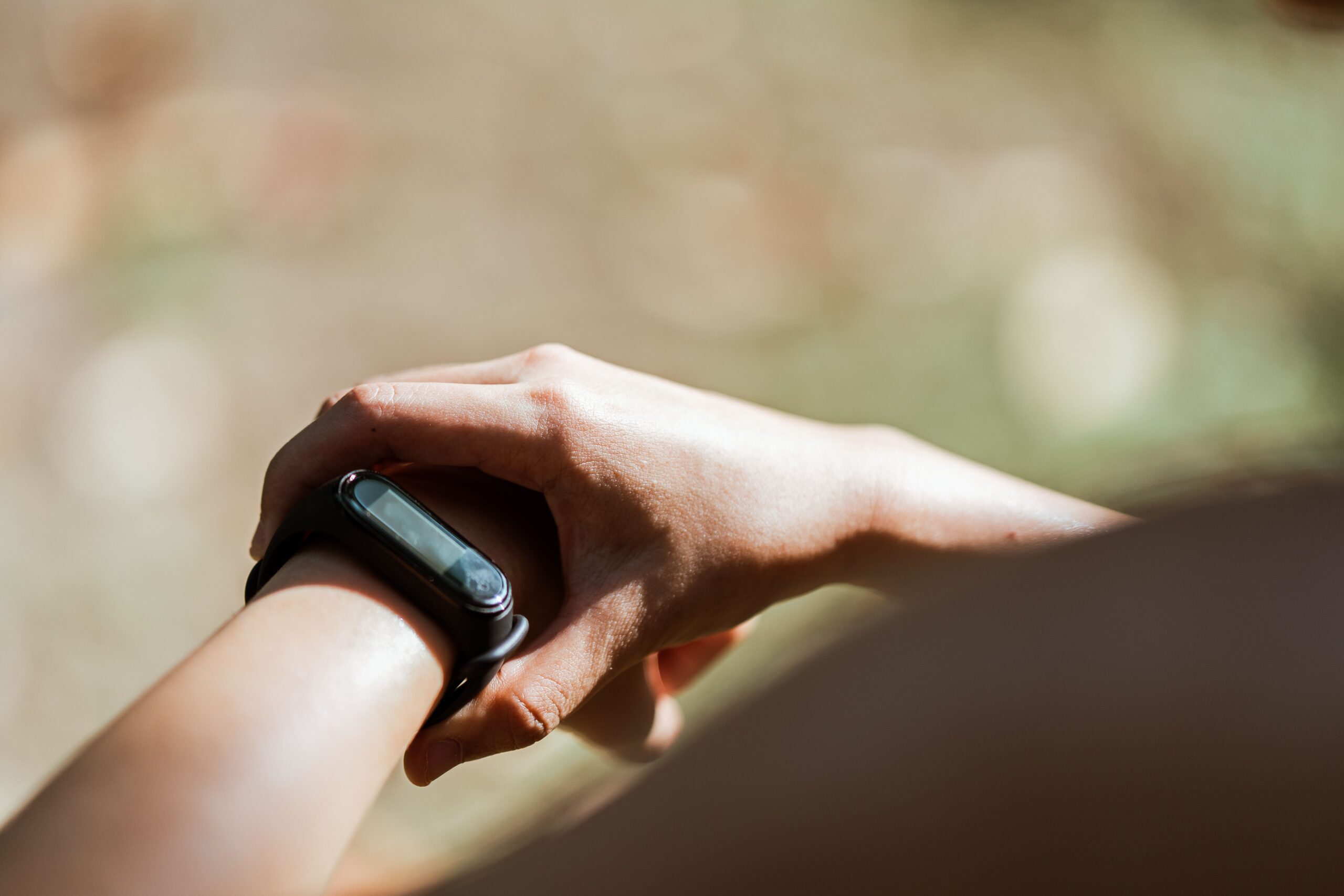
You went for a run, and your watch told you that you’re 47. You are 39. Or the ring on your finger announced that your heart is younger than you are, which was nice of it. Humanic Blue is asking what a wrist or finger sensor can really know about biological age.
It’s a slightly strange moment in history: the same gadget that counts your steps now has thoughts about your age. And since the question underneath is really about living longer and better, we wanted to know what’s behind those numbers.
The short answer is mixed. Wearables can estimate a fitness-related age, and measures behind it—treadmill-assessed fitness and resting heart rate—are associated with mortality in large groups, including a 2018 study of about 122,000 patients in JAMA Network Open and a 2016 meta-analysis of 1.2 million people in CMAJ.
What they can’t do is measure epigenetic biological age. The wearable features reviewed here do not read the chemical marks on DNA called methylation, and none of the consumer “age” features we reviewed has published validation against death, heart attack or disability. A 2026 study showed that Oura Ring pulse signals can support vascular-age estimation, but it tested a research model rather than Oura’s proprietary consumer score and did not study clinical outcomes. WHOOP’s white paper lists longitudinal validation as future work.
Each device gets to its number a different way. So we went through the manuals, the white papers and the validation studies, one route at a time.
In This Article
- How do Garmin Fitness Age and Apple Cardio Fitness differ?
- Is Oura’s Cardiovascular Age or WHOOP Age the same thing?
- Has any wearable “age” been tested against actual outcomes?
- Why do VO2 max and resting heart rate matter so much anyway?
- When the number is most likely to be wrong
- Evidence, limitations and sources
Key Takeaways
- Wearables can estimate fitness age from VO2 max, resting heart rate and activity, but they do not measure DNA methylation or epigenetic age. Established.
- VO2 max and resting heart rate predict mortality in large groups; a device’s age label has not been shown to add predictive value beyond those inputs. Supported for the inputs; unknown for the label.
- Published validation studies find useful group averages but wide error for an individual watch-based VO2 max estimate. Supported.
- Oura and WHOOP use different proprietary recipes, so their age numbers are not interchangeable. A 2026 independent study supports vascular-age estimation from Oura Ring pulse signals, not outcome prediction by Oura’s consumer score. Established for the product difference; promising for ring-based vascular-age estimation.
- No trial shows that lowering a consumer wearable’s age score helps a person live longer. Unknown.
How do Garmin Fitness Age and Apple Cardio Fitness differ?
The first route estimates VO2 max—the maximum oxygen your body can use per minute and kilogram—then looks up the age when that value would be typical. A laboratory measures VO2 max with graded exercise and a face mask. Your watch has no mask, which is an important plot point.
Garmin uses a proprietary Firstbeat algorithm to interpret heart rate and pace, then compares the estimate with age-and-sex tables. Apple also estimates VO2 max from heart-rate response during qualifying outdoor walks, runs or hikes with adequate GPS and signal quality; treadmill workouts do not count. Garmin expresses a comparison as Fitness Age. Apple’s current support page describes a VO2 max estimate and categories compared with people of the same age and sex, rather than a native “fitness age” in years. Neither is an age measured inside you.
The scientific ancestor is Norway’s HUNT Fitness Study and its free NTNU Fitness Calculator, built from several thousand adults who completed treadmill testing. Fitness age repackages a serious clinical measure. The open question is how well the wrist guesses it.
How wrong is the watch’s VO2 max?
Evidence label: Supported, with wide individual error.
Across five validation studies, the average error ranged from small to an underestimation of roughly 4 to 6 ml/kg/min. The spread around those averages was wider, which is the part that matters when one person looks at one watch. The newest Apple Watch studies, for example, found enough individual variation to limit the estimate’s clinical use even when it remained useful for studying groups.
Because a fitness age is a lookup of that estimated VO2 max, the error travels with it. Two people with identical lab results can get different fitness ages from the same brand of watch. The study-by-study numbers are below.
Con: the algorithm is licensed and proprietary, the population tables aren’t yours, and a software update can move your number without your body changing.
One Garmin study added a wrinkle for anyone who’s highly trained: its estimates were less accurate in that group than among moderately trained athletes. In this study, the better-trained participants were more likely to have their fitness underestimated.
Is Oura’s Cardiovascular Age or WHOOP Age the same thing?
No. Oura and WHOOP take two different routes.
Oura’s Cardiovascular Age uses the ring’s light-based pulse signal to estimate pulse-wave velocity, the speed at which a pulse travels through arteries, which tends to rise as arteries stiffen. It needs at least 14 nights of recent data and reports whether cardiovascular age is below, aligned with or above calendar age. Oura says the ring does not directly measure pulse-wave velocity, is not a medical device and may not give valid results for some conditions or pacemakers.
A 2026 study of about 160 adults showed that a research model could estimate chronological age from Oura pulse signals with about seven years of average absolute error, and older-looking signals were associated with higher systolic blood pressure. It did not test Oura’s proprietary feature or future clinical outcomes. One senior author advised Oura, and two authors later joined an Oura–university laboratory.
WHOOP Age is closer to a scorecard. It combines nine sleep, activity, fitness and body-composition metrics, compares them with recommendations and converts estimated risk into years. Meet every recommendation and WHOOP Age equals calendar age. Company questionnaire data linked the score with self-rated health and chronic conditions, but WHOOP’s own white paper says longitudinal validation is future work.
So the ring’s vascular estimate and the strap’s guideline score cannot be compared with each other. Neither formula is fully auditable by the wearer—which is quite a lot of trust to place in a number that may start commenting on your birthday. The product methods, samples and disclosures
What would make two wearable age labels meaningfully comparable?
Has any wearable “age” been tested against actual outcomes?
Yes, in research rather than a current consumer feature. CosinorAge used one week of wrist movement from about 76,000 UK Biobank participants and about 3,400 US adults. Each additional model year was associated with 8–12% higher mortality risk. The evidence is promising, but the UK sample was overwhelmingly White and healthier than average, and one week may not represent a person’s usual rhythm.
Separate Stanford research repeatedly sampled about 100 adults and found that molecular changes clustered in the mid-40s and early 60s rather than moving smoothly. That suggests a single polished “age” may iron out the biologically interesting wrinkles. Neither study validates a current consumer age feature. Research showing a pattern can be detected is different from evidence that a device’s commercial score predicts health outcomes.
What separates an age model used in research from an age feature sold on a device?
Why do VO2 max and resting heart rate matter so much anyway?
Because both are well-documented risk markers. In about 122,000 treadmill patients followed for a median 8.4 years, higher fitness tracked with lower mortality. A meta-analysis of 46 cohorts covering 1.2 million people likewise associated each additional ten resting beats per minute with 9% higher mortality risk.
Those are strong population associations, not proof that a consumer “age” adds information beyond its ingredients. The raw measurements have evidence. The birthday costume still needs to earn its keep.
When the number is most likely to be wrong
If you take a beta blocker or calcium channel blocker, Apple’s paper reports estimated error fell “from 11.8 ± 4.0 ml/kg/min to 1.6 ± 3.1 ml/kg/min” only once the medication was entered in the Health app. That shows why medication information can materially affect the estimate. It does not provide a fixed conversion from the error to years of fitness age.
If you’re highly trained, Engel’s Forerunner data shows underestimation of 9 to 10%, which could turn a VO2 max of 55 into an estimate near 50 millilitres per kilogram per minute. Those are fitness units, not ages.
And if the number is sitting on your mind, Doherty’s advice applies: “Use your fitness tracker as a guide, but not as your coach, your doctor, or your judge.”
One observation about the situation. Several of these features refresh weekly, and one projects your aging pace from the last 30 days. It’s possible to spend an hour a week managing a number whose error band is wider than the change you’re chasing. Optimizing every second of your existence is probably not the purpose of having more seconds.
What’s Interesting
The research-grade version already exists. Shim’s CosinorAge shows a wearable-derived age can be tied to mortality in a 76,000-person cohort using nothing more than a week of accelerometer data. No blood, no spit, just the rhythm of when a person moves and rests across the day. Your wrist, it turns out, has been taking notes.
Snyder’s team found molecular changes around midlife and the early 60s. Whether continuously worn sensors can detect those same transitions remains a research question; the molecular study did not establish that link.
What This Means in Practice
How should you read the age on your wearable?
The age is a model estimate, not a second birthday. A change in the number can reflect a change in the data going into the model as well as a change in fitness.
Those population tables are averages, too, so the same sensor reading can land differently for people who differ in medication, training history, heart health or build. A heart-rate-limiting drug, as Apple’s own data above shows, is enough on its own to swing the estimate.
Apple describes its VO2 max number as an estimate derived from certain outdoor walking, running or hiking workouts. Its calculation uses profile details, including height, weight and heart-rate-limiting medication, and depends on GPS and heart-rate signal quality. Those are conditions of the estimate, not an exercise prescription; a difference in inputs or measurement conditions can change the number. Apple’s current support page explains the inputs and eligible workouts.
Cardiopulmonary exercise testing measures respiratory gases during graded exercise rather than inferring oxygen use from wrist signals. That distinction can matter when a precise fitness measurement would answer a clinical or research question. It does not mean an app score calls for a laboratory test; whether testing is appropriate depends on the person and the decision at hand.
The NTNU Fitness Calculator is another non-exercise estimate, based on information such as age, activity and resting heart rate. Its result is not a direct measurement or an independent check of the watch’s accuracy; CERG lists its validation papers on that page.
If an age estimate might affect a training or health decision, a sports-medicine physician or qualified exercise professional can help determine whether a directly measured VO2 max would answer a relevant question. The conversation can start with what the wearable actually measured, how uncertain the estimate is and whether any result would change care.
To put a wearable estimate beside the wider testing field, How Accurate Are Biological Age Tests? explains the difference between population prediction, repeatability and personal meaning.
Bottom Line
The age on your wrist translates measurements that genuinely matter through an algorithm you usually cannot inspect. Published studies put the error for watch-estimated VO2 max at several ml/kg/min for an individual, and nobody has shown that a consumer wearable’s age predicts anything its raw inputs do not.
The number may be useful for observing a trend under consistent conditions, but it is neither a second birthday nor a promise about living longer. Whether a measured VO2 max would add useful information to a health decision is a question for a qualified professional, alongside the raw measurements and the person’s circumstances.
A NOTE FROM LONGEVITY365
We read research, consult expert perspectives and work to make complicated health information easier to understand. What you’re reading here reflects how we’ve interpreted and organized that information. It is educational content—not personal medical advice, diagnosis or treatment guidance.
We’re not perfect, and neither is the available research. Evidence changes, new studies emerge and what’s appropriate for one person may not be appropriate for another.
Use this article as a starting point for your own research and conversations with qualified professionals. Always talk with your doctor or another trusted healthcare professional before making decisions that could affect your health, particularly if you take medications, are receiving treatment, have existing health conditions, are pregnant or have other circumstances that could affect what’s appropriate for you.
Reader Questions
A few questions to carry into the comments or your next conversation. Please leave out identifying or personal medical details.
- 01After reading this, what would you want a test result to actually help you decide?
- 02Which distinction changed how you read the evidence: "How do Garmin Fitness Age and Apple Cardio Fitness differ" or "How should you read the age on your wearable"?
- 03What would you ask a clinician, lab, or qualified professional before letting a number change a health decision?
Extra Insights & Sources
The evidence summaries and linked sources behind this article.
What We Know
VO2 max and resting heart rate are well-documented predictors of all-cause mortality in very large cohorts (Mandsager 2018; Zhang 2016). Wrist estimates of VO2 max carry an individual error of roughly ± 5 to 10 ml/kg/min in published validation, with small average bias (Lambe 2025; Lambe 2026; Engel 2026).
Garmin Fitness Age expresses estimated fitness in age-like years. Apple Cardio Fitness instead reports an estimated VO2 max and compares it with age- and sex-based categories. Oura’s Cardiovascular Age is derived from PPG waveform features related to vascular aging. WHOOP Age is a guideline-based composite expressed in years, per its own white paper.
None of these features reads DNA methylation, so none of them is an epigenetic biological age. And none has published a validation of its “age” against mortality.
What We Don’t Know
Whether any consumer “age” predicts death, heart attack or disability better than its raw inputs do. No manufacturer evidence we reviewed establishes that. WHOOP says longitudinal validation is future work. The 2026 Oura Ring study independently supports estimating vascular age from ring PPG, but it tested a separate research algorithm in 160 mostly healthy adults and did not study clinical outcomes.
We also don’t know whether these numbers are stable across firmware versions, or whether moving a device’s age moves anything real. No trial has tested that.
Wearable VO2 max validation details
These studies compared a watch estimate with a laboratory measurement. Group averages can look close while the result for one person is considerably farther away. In the table, MAPE means mean absolute percentage error: the average size of the difference as a percentage of the laboratory value, without canceling overestimates against underestimates.
| Study | Device | Who | Error vs lab test |
|---|---|---|---|
| Apple internal validation, 2021 | Apple Watch | 221 people, mean age 55 ± 17; about 10% with known coronary artery disease | Mean error 1.4 ± 4.7 ml/kg/min |
| Lambe et al., 2025, PLOS One | Apple Watch Series 9 / Ultra 2 | 28 analyzed of 30 recruited, mean age 32 | Underestimated by 6.07 ml/kg/min on average; limits of agreement -6.11 to +18.26; MAPE 13.31% |
| Lambe et al., 2026, Mayo Clinic Proceedings: Digital Health | Apple Watch Series 10 | 35 analyzed of 40 adults, mean age 22.7 | Underestimated by 6.25 ml/kg/min; limits -18.23 to +5.73; MAPE 13.2% |
| Engel et al., 2026, European Journal of Applied Physiology | Garmin Forerunner 245 | 35 endurance athletes, mean age 25 | Underestimated by 4.05 to 4.73 ml/kg/min overall, and by 6.3 ml/kg/min in the highly trained; error 2.8 to 4.1% in moderately trained, 9.4 to 10.4% in highly trained |
| Carrier et al., 2025, Sensors | Garmin fēnix 6 | 19 people | Mean absolute percentage error 7.05%; concordance 0.73 |
In the mortality study described above, the adjusted hazard ratio for the least-fit group versus the elite group was 5.04. That is an association from an observational cohort, not evidence that changing a wearable score causes longer life.
Source Materials
- Mandsager et al., JAMA Network Open (2018) — Primary observational cohort of 122,007 clinically referred adults, supporting the association between treadmill-measured cardiorespiratory fitness and mortality. It does not validate a consumer age score or prove that changing a score changes survival.
- Zhang et al., CMAJ (2016) — Meta-analysis of 46 prospective cohorts, 1,246,203 participants and 78,349 deaths, supporting resting heart rate as a group-level mortality marker. It does not establish causality or validate a wearable age label.
- Garmin — Fitness Age support and Venu Sq manual — Current vendor documentation for the VO2-max-based and improved Fitness Age methods, including required profile data and Firstbeat/Cooper Institute attribution. Vendor documentation explains the product; it is not independent outcome validation.
- Apple — Using Apple Watch to Estimate Cardio Fitness with VO2 max (2021) and Apple Support (updated September 16, 2026) — Vendor method and validation document plus current workout eligibility, supported range and medication inputs. The internal validation is manufacturer-run, and indoor workouts do not count toward the current estimate.
- NTNU Cardiac Exercise Research Group — Fitness Calculator and Norwegian SciTech News interview with Ulrik Wisløff (2020) — University sources for the calculator’s inputs, HUNT research lineage and the quoted explanation of VO2 max. The calculator estimates rather than measures VO2 max.
- Lambe et al., PLOS One (2025) — Independent Apple Watch Series 9/Ultra 2 comparison with laboratory CPET; 28 participants were analyzed. Supports underestimation on average and wide individual agreement limits in a small sample.
- Lambe et al., Mayo Clinic Proceedings: Digital Health (2026) — Apple Watch Series 10 comparison with laboratory CPET; 35 young adults were analyzed. Supports group-level underestimation and substantial individual error; the narrow age range limits generalization.
- Engel et al., European Journal of Applied Physiology (2026) — Garmin Forerunner 245 comparison in 35 endurance athletes. Supports larger underestimation among highly trained participants; it does not represent the general population.
- Carrier et al., Sensors (2025) — Small Garmin fēnix 6 validation arm with 19 participants. Supports moderate agreement with laboratory measurement but is too small for precise subgroup conclusions.
- Oura Member Care — Cardiovascular Age (updated May 29, 2026) — Current vendor source for availability, 14-night calibration, category bands, estimated-PWV method, medical-condition limitations and non-medical-device status.
- Yilmaz et al., PLOS Digital Health (2026) — Peer-reviewed study of simultaneous overnight ring and fingertip PPG in 160 nominally healthy adults. A research model estimated age from ring PPG with a 7.25-year mean absolute error and found cross-sectional blood-pressure associations. It did not test Oura’s proprietary app algorithm, reference pulse-wave velocity, or prospective clinical outcomes. The paper reports Oura-related author ties but says Oura did not design, fund or execute the study.
- Oura — All About Cardiovascular Age (2025) — Vendor explainer for the commercial feature and its intended interpretation. Used only for product framing, not as independent evidence of accuracy.
- WHOOP Healthspan white paper (2025) and WHOOP Support (updated April 21, 2026) — Manufacturer sources for the nine inputs, six-month window, scoring rationale and cross-sectional member questionnaire. The white paper is authored by WHOOP staff; it identifies longitudinal validation as future work.
- Doherty, The Conversation (2025) — Expert commentary based on a systematic review of composite wearable scores, used for the transparency limitation. This is commentary, not a primary validation study.
- Shim et al., npj Digital Medicine (2024) — Primary research on CosinorAge using accelerometry from 76,026 UK Biobank participants and 3,371 US adults in NHANES. Supports mortality associations for a research model; it is not a feature available on the consumer devices discussed.
- Shen et al., Nature Aging (2024) and Stanford Medicine summary (2024) — Longitudinal multi-omics study of 108 adults and institutional explanation of its nonlinear-age findings. This molecular work does not validate any wearable age score; the paper’s commercial conflicts are disclosed in the article.
Related product and service comparisons
These companion comparisons explain age-style outputs, readiness scores and ring hardware, with named devices and their different definitions.
Leave a Reply